Clogged Fuel Filter Diagnostic Tool
Select the symptoms you're experiencing. This tool will assess whether you likely have a clogged fuel filter and recommend next steps.
Diagnostic Results
If your car sputters on the highway, struggles to start in the morning, or loses power when you step on the gas, it might not be the fuel pump. It could be something smaller, cheaper, and way easier to fix: a clogged fuel filter.
How a Fuel Filter Works
Your fuel filter sits between the fuel tank and the engine. Its job is simple: trap dirt, rust, and debris before they reach the fuel injectors or fuel pump. Modern filters are fine-meshed, catching particles as small as 10 microns. Over time, that gunk builds up. When it does, fuel flow gets restricted. The engine doesn’t get enough fuel to run smoothly - and that’s when problems start.
Signs Your Fuel Filter Is Clogged
Here’s what happens when the filter starts to choke off fuel:
- Engine misfires or sputters - Especially under load, like when you’re accelerating or climbing a hill. The engine gets a burst of fuel, then nothing. That’s the filter clogging and unclogging in real time.
- Hard starting - You turn the key and the engine cranks but won’t catch. Not always a dead battery. If the filter’s blocked, the fuel pump can’t push enough fuel to the injectors fast enough to ignite the mixture.
- Loss of power during acceleration - You press the pedal, but the car hesitates. It feels like driving through syrup. This isn’t a transmission issue. It’s the filter starving the engine of fuel when it needs it most.
- Stalling at idle - The car runs fine at speed but dies when you stop at a light. Idle requires a steady, low flow of fuel. A partially blocked filter can’t keep up.
- Check Engine light comes on - The ECU detects lean fuel mixtures (too much air, not enough fuel) and throws a code. Common ones include P0171 (System Too Lean) or P0300 (Random Misfire). These aren’t diagnostic on their own, but paired with other symptoms, they point to fuel delivery.
- Fuel pump works harder - and gets noisy - When the filter clogs, the pump has to push harder to get fuel through. You might hear a louder whining noise from the rear of the car when you start it. That’s the pump straining. If ignored, it can burn out. Replacing a fuel pump costs 3-4 times more than replacing a filter.
- Reduced fuel efficiency - Your car starts gulping more fuel to compensate for the restricted flow. You might notice your tank empties faster than usual, even with no change in driving habits.
What Doesn’t Cause These Symptoms
It’s easy to blame the fuel pump. But a failing pump usually gives different signs: total loss of power, no fuel pressure at all, or complete engine failure to start - even after cranking for a long time. A clogged filter lets fuel through, just not enough. It’s a slow choke, not a sudden stop.
Spark plugs? They cause misfires, but usually across all cylinders and with a rough idle even at rest. A bad oxygen sensor? It throws lean codes too, but the car will run fine under acceleration. A clogged fuel filter is specific: problems get worse when you demand more fuel.
How Often Should You Replace It?
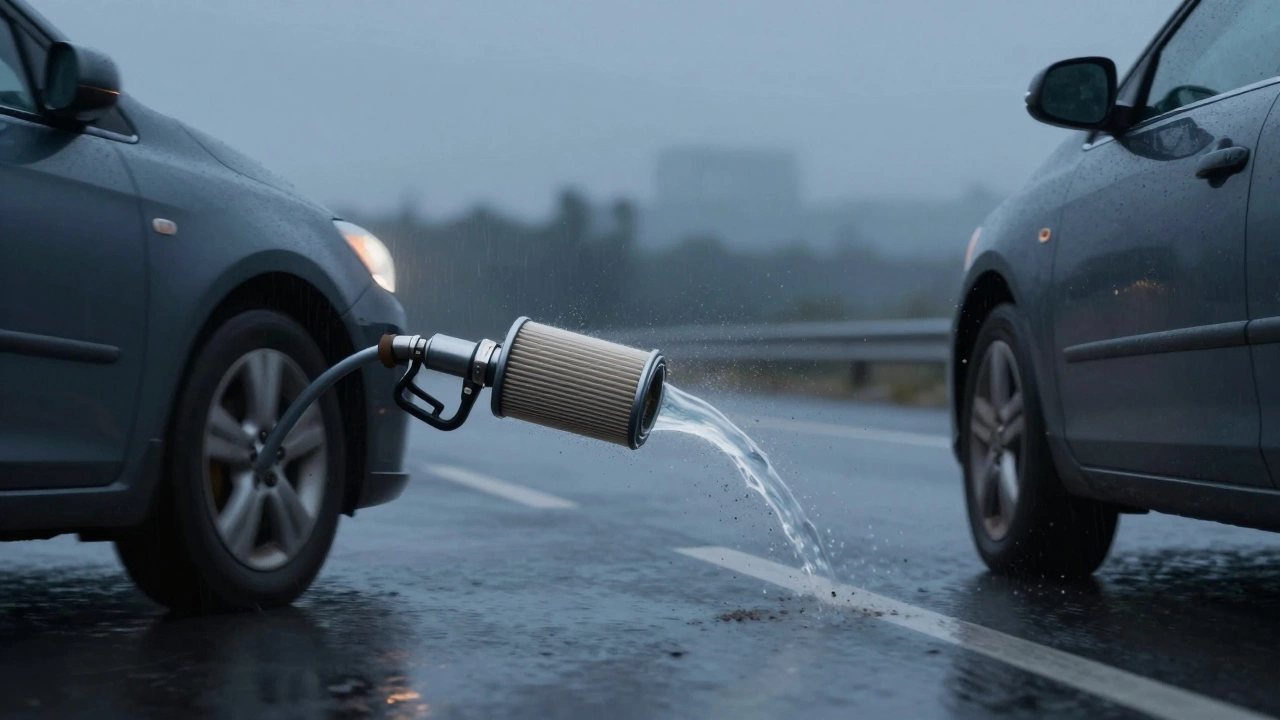
Most manufacturers recommend replacing the fuel filter every 20,000 to 40,000 miles. But that’s a baseline. If you drive in dusty areas, use cheap fuel, or have an older car (pre-2010), you might need to replace it every 15,000 miles. In the UK, where winter condensation and old fuel tanks are common, filters clog faster than you think.
Some cars have in-tank filters that last the life of the vehicle. But even then, they can fail. If your car’s over 10 years old and you’ve never changed the filter, it’s probably overdue.
What Happens If You Ignore It
Ignoring a clogged filter doesn’t just make your car run poorly. It puts stress on the entire fuel system.
- The fuel pump overheats and burns out - replacement cost: £400-£800.
- Debris gets pushed into the fuel injectors - cleaning or replacing them costs £200-£600.
- Long-term lean running can damage the catalytic converter - £1,000+ repair.
It’s not just about convenience. It’s about avoiding a cascade of expensive failures.
How to Check It Yourself
You don’t need a garage to test your fuel filter. Here’s how:
- Locate the filter. It’s usually along the fuel line under the car or near the fuel tank. Some are under the hood - check your manual.
- Disconnect the fuel lines carefully. Use safety goggles and have a container ready - fuel will spill.
- Hold the filter up to a light. If you can’t see light through it, it’s clogged. If it’s dark brown or black inside, it’s full of gunk.
- Blow through it gently. If you can’t blow air through it easily, it’s blocked.
Don’t try to clean it. Fuel filters are disposable. Once clogged, they’re done.
What to Look for When Buying a Replacement
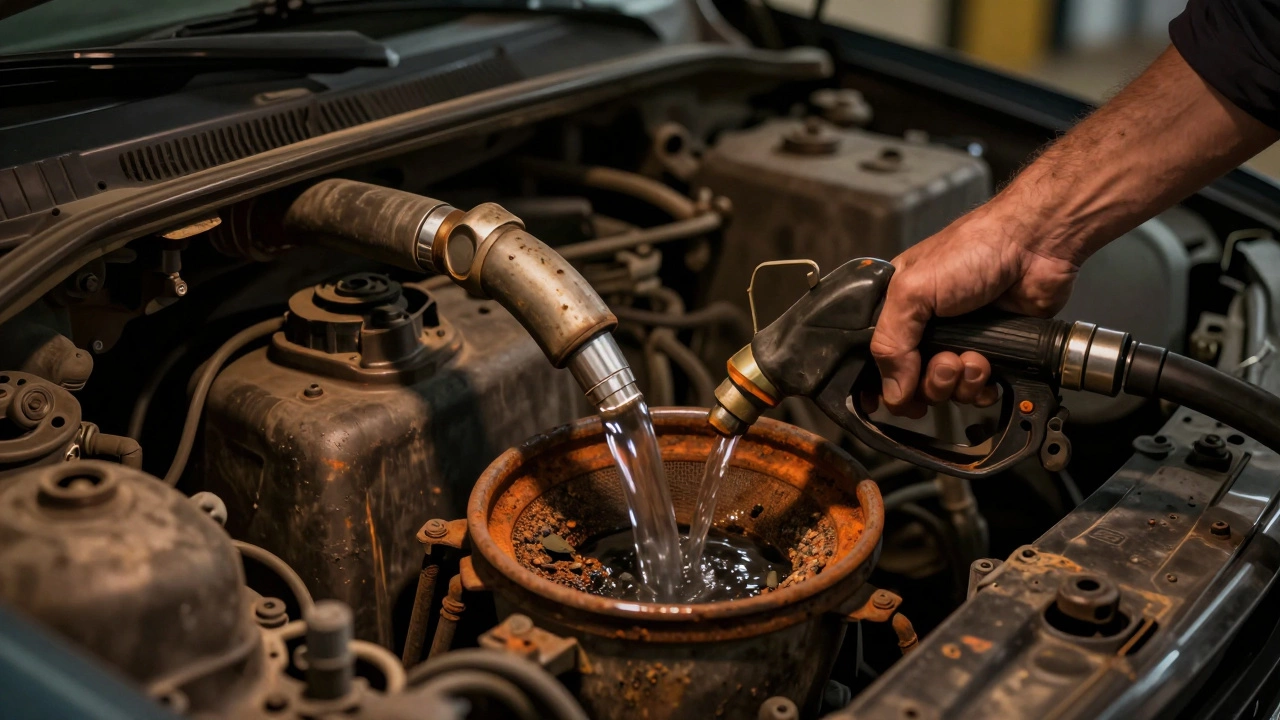
Not all filters are equal. Cheap ones might have thin mesh that tears or doesn’t catch fine particles. Stick to brands like Bosch, Mann-Filter, or Mahle. Make sure the filter matches your car’s make, model, and year. Use your VIN or check the part number on the old filter.
Some filters come with a built-in water separator - useful if you’ve ever filled up with bad fuel. Worth the extra few pounds.
Real-World Example
A customer in Bristol brought in a 2012 Ford Focus that wouldn’t start after a weekend trip. The battery was fine. The starter turned over. But no fire. We checked the fuel pressure - it was 30% below spec. Replaced the filter. Car started on the first try. The old filter was packed with black sludge. The owner had never changed it in 80,000 miles.
It wasn’t the pump. It wasn’t the injectors. Just a £20 filter that had been ignored for too long.
Prevention Tips
- Use quality fuel from busy stations. Less chance of water or sediment.
- Don’t let your tank run below 1/4 full. Sediment sinks to the bottom. Running low stirs it up.
- If you store your car for winter, use a fuel stabilizer. Old fuel breaks down into gummy residue.
- Keep a record of when you last changed the filter. Set a reminder in your phone.
A clogged fuel filter doesn’t make headlines. But it’s one of the most common - and cheapest - reasons cars break down. Fix it early, and you save time, money, and frustration.