Brake Pad Lifespan Calculator
Calculate your estimated brake pad lifespan based on your driving style, vehicle type, and pad material. All values are based on average real-world data from the article.
Enter your details to see your estimated brake pad lifespan.
Note: Actual lifespan may vary based on driving conditions and maintenance
Most drivers don’t think about brake pads until they start squealing or the car takes longer to stop. But knowing how many miles brake pads last isn’t just about saving money-it’s about safety. On average, brake pads last between 25,000 and 70,000 miles. That’s a huge range, and the reason isn’t magic-it’s how you drive, where you live, and what kind of car you own.
Why Brake Pad Lifespan Varies So Much
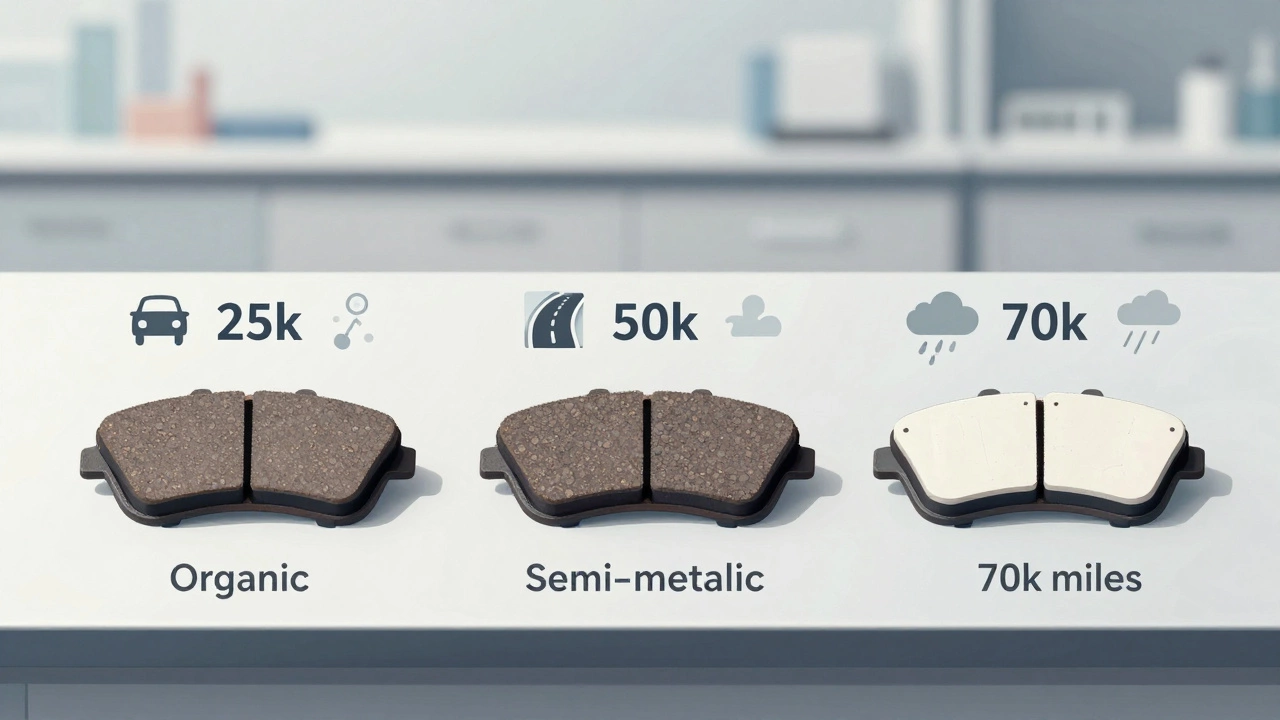
Not all brake pads are made the same. There are three main types: organic, semi-metallic, and ceramic. Organic pads are softer and quieter, but they wear out faster-often under 30,000 miles. Semi-metallic pads are tougher and handle heat better, making them common in trucks and performance cars. They usually last 40,000 to 60,000 miles. Ceramic pads are the premium choice: they last longer (up to 70,000 miles), produce less dust, and are quieter. But they cost more upfront.But material is only half the story. Your driving habits matter more. If you live in a city like Bristol and spend most of your time stuck in traffic, your brake pads are working harder. Every stop, even gentle ones, adds up. City driving can cut pad life in half compared to highway driving. One study from the Society of Automotive Engineers found that drivers in urban areas replaced pads 30% more often than those who drove mostly on open roads.
What Really Wears Them Down
Heavy braking isn’t the only culprit. Carrying extra weight-like a full roof rack, towing a trailer, or hauling groceries every day-puts more stress on the brakes. A car that weighs 4,000 pounds needs more stopping force than one that weighs 3,000. That means more friction, more heat, and faster wear.Weather plays a role too. In damp climates like the UK, moisture can cause corrosion on brake rotors. When rotors get pitted or uneven, the pads wear unevenly. You might notice a vibration when braking, or a grinding noise that sounds like metal on metal. That’s not just the pads-it’s the rotor paying the price for neglected maintenance.
And don’t forget brake fluid. Old or contaminated brake fluid doesn’t transfer pressure as well. That means you have to press harder on the pedal, which puts more strain on the pads. Most manufacturers recommend flushing brake fluid every two years. Skip that, and you’re silently shortening your pad life.
Signs It’s Time to Replace Your Brake Pads
You don’t need a mechanic to tell you when your pads are worn out. There are clear warning signs:- Squealing or squeaking when you brake-this is often caused by a wear indicator tab rubbing against the rotor. It’s designed to make noise before the pads are completely gone.
- Grinding noise-this means metal is hitting metal. You’ve passed the point of no return. Rotors are probably damaged now, and repair costs jump from £100 to £400+.
- Longer stopping distance-if you feel like you’re pressing harder or the car doesn’t slow down as quickly, don’t wait. Test it safely on an empty road.
- Warning light-some cars have a dashboard indicator that comes on when pads are thin. If it lights up, get them checked within a week.
- Visible thinning-if you can see the pad through the wheel spokes and it’s less than 3mm thick, it’s time.
Don’t wait for the noise to get unbearable. By the time you hear grinding, you’ve already damaged the rotors. Replacing both pads and rotors at once costs more than replacing pads alone-but it’s cheaper than replacing a warped rotor, calipers, or even a brake line later.
How to Check Your Brake Pads Yourself
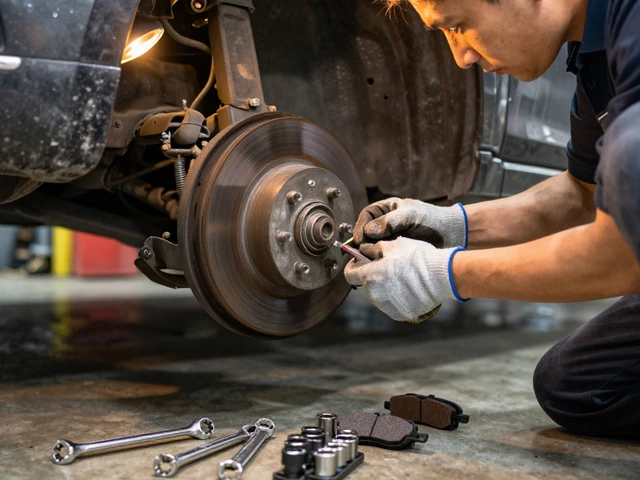
You don’t need special tools to check your pads. Here’s how:- Look through the spaces between your wheel’s spokes. You should see a flat, rectangular piece of material pressing against a shiny metal disc-that’s the brake pad.
- Measure the thickness. If it’s less than 1/4 inch (about 6mm), start planning a replacement. If it’s under 3mm, replace them now.
- Check for uneven wear. If one side is worn down more than the other, your caliper might be sticking. That’s a sign of deeper trouble.
- Look for cracks or chunks missing. Ceramic pads can crack under extreme heat. If you see that, replace them even if they still look thick.
Do this every time you get your tires rotated-usually every 6,000 to 8,000 miles. It takes two minutes and could save you hundreds.
How Often Should You Replace Them?
There’s no universal schedule. But here’s a realistic guide based on driving patterns:- City drivers (stop-and-go traffic, frequent braking): every 25,000-35,000 miles
- Suburban drivers (mostly short trips, some highway): every 40,000-50,000 miles
- Highway drivers (long commutes, light braking): 50,000-70,000 miles
These numbers assume normal driving and regular maintenance. If you drive aggressively-hard stops, racing to lights, tailgating-you might need new pads every 20,000 miles. And if you drive a heavy SUV or tow regularly, expect to replace them closer to the lower end of the range.
What Happens If You Wait Too Long?
Ignoring worn brake pads doesn’t just mean a noisy ride. It’s dangerous. As pads wear down, braking performance drops. In wet conditions, stopping distance can increase by 30% or more. A study by the UK’s Institute of Advanced Motorists found that vehicles with worn brake pads were 40% more likely to be involved in rear-end collisions.And the damage doesn’t stop at the pads. Once the friction material is gone, the metal backing plate grinds against the rotor. This scratches the rotor surface, warps it from heat, and can even crack it. Replacing a rotor costs £80-£150 per wheel. Replacing both rotors and pads? That’s £300-£600. Do the math: replacing pads early saves you money.
Worn pads also strain the brake fluid system. When pads are thin, the caliper piston extends further to reach the rotor. That pulls more fluid into the system, which can cause leaks or air bubbles over time. A spongy brake pedal? That’s a red flag.
How to Make Your Brake Pads Last Longer
You can’t stop driving, but you can drive smarter:- Anticipate stops-look ahead and lift off the gas early instead of slamming the brakes.
- Use engine braking-downshift on hills instead of riding the brake.
- Avoid carrying unnecessary weight-clear out the trunk, remove roof racks when not in use.
- Get brake fluid flushed every two years-this keeps the system efficient and reduces strain on the pads.
- Choose quality pads-cheap pads might save £20 now but cost you £200 later in rotor damage.
Brake pads are one of the most overlooked parts of car maintenance. But they’re also one of the most critical. A car can run without a working radio. It can’t stop safely without working brakes.
What About Brake Pad Warranty?
Many brake pads come with a mileage warranty-sometimes up to 80,000 miles. But here’s the catch: those warranties assume normal driving conditions. If you drive in the city, carry heavy loads, or brake hard often, the warranty won’t cover you. Manufacturers know this. They design warranties to cover the average driver, not the aggressive one.Don’t rely on warranty promises. Track your own mileage and inspect your pads regularly. That’s the only way to know when they’re truly done.
How many miles do brake pads last on average?
On average, brake pads last between 25,000 and 70,000 miles. City drivers typically get 25,000-35,000 miles, while highway drivers can reach 50,000-70,000 miles. The exact number depends on driving habits, vehicle weight, brake pad material, and climate.
Can brake pads last 100,000 miles?
It’s rare, but possible. High-end ceramic pads on a light vehicle driven mostly on highways with gentle braking can reach 80,000-100,000 miles. But this requires ideal conditions: no heavy loads, no frequent stops, and regular brake fluid maintenance. Most drivers won’t see this.
Do brake pads wear out faster in winter?
Yes, indirectly. Cold weather doesn’t directly wear pads, but snow, ice, and road salt cause more frequent braking and increase corrosion on rotors. Wet conditions also make braking less efficient, leading to harder pedal pressure and faster pad wear.
Is it safe to drive with worn brake pads?
No. Driving with pads under 3mm thick is unsafe. Stopping distances increase significantly, especially in rain. You risk damaging rotors, calipers, and brake lines. If you hear grinding, stop driving and get it fixed immediately.
How much does it cost to replace brake pads?
Replacing just the pads costs between £100 and £250 per axle, depending on the car and pad quality. If rotors are damaged, expect to pay £300-£600 for both pads and rotors. DIY replacement can cut costs by half, but only if you have experience.
Next Steps
If you’re unsure about your brake pads, don’t guess. Check them visually every 6,000 miles. Listen for noises. Feel for changes in stopping distance. If you’re not comfortable doing it yourself, ask a trusted mechanic to show you the pads during your next service. A quick look takes seconds and could prevent a costly or dangerous failure.Brakes are not a "set it and forget it" part. They’re your car’s most important safety system. Treat them that way.