Fuel Pump Longevity Estimator
How Long Will Your Fuel Pump Last?
Enter your current habits to get a realistic estimate of your fuel pump's remaining lifespan based on expert advice from the article.
If your car sputters on the highway, stalls at stoplights, or won’t start after sitting overnight, you might be dealing with a bad fuel pump. It’s not always obvious-until you’re stranded. And no, pouring in fuel injector cleaner won’t fix a dead pump. But there are things you can do to help, delay a replacement, or make sure you don’t get fooled by a simple fix that won’t work.
How a Bad Fuel Pump Acts Up
A failing fuel pump doesn’t always die with a bang. More often, it fades out slowly. You might notice the engine hesitates when accelerating, especially uphill or under load. The check engine light might come on with codes like P0191 (fuel pressure sensor range) or P0087 (fuel system pressure too low). Sometimes, the car starts fine when cold but struggles after it’s been running and the pump heats up. That’s a classic sign-the internal motor is wearing out and can’t keep up when it’s hot.Most fuel pumps are inside the gas tank, submerged in fuel. That fuel isn’t just fuel-it’s also coolant and lubricant. When the tank runs low often, the pump runs dry, overheats, and wears out faster. A pump that’s lasted 120,000 miles on full tanks might die at 80,000 if you’re always running on fumes.
What Doesn’t Work (And Why)
A lot of people hear ‘fuel pump’ and think ‘add fuel cleaner’. That’s a trap. Fuel injector cleaners like Gumout or Sea Foam help dissolve carbon deposits in injectors and intake valves. They don’t clean a mechanical pump. If the pump’s impeller is cracked, the motor’s brushes are worn, or the pressure regulator is stuck, no chemical will bring it back.Same goes for ‘fuel pump boosters’ or aftermarket voltage regulators sold online. These claim to ‘increase pressure’ but often just overload the pump’s weak motor, making it burn out faster. I’ve seen three cars come in with melted fuel pump connectors because someone tried to ‘fix’ a failing pump with a cheap module.
What Actually Helps a Bad Fuel Pump
The only real help for a bad fuel pump is either replacing it-or buying time until you can afford to.Keep your tank at least half full. This isn’t just advice-it’s a lifeline. Fuel cools the pump. Running on low fuel means the pump runs hotter, and heat kills electric motors. If your pump is already failing, keeping the tank above half can extend its life by months, sometimes over a year. One customer in Bristol drove his 2014 Ford Focus with a weak pump for 14 months just by never letting the tank drop below 40%.
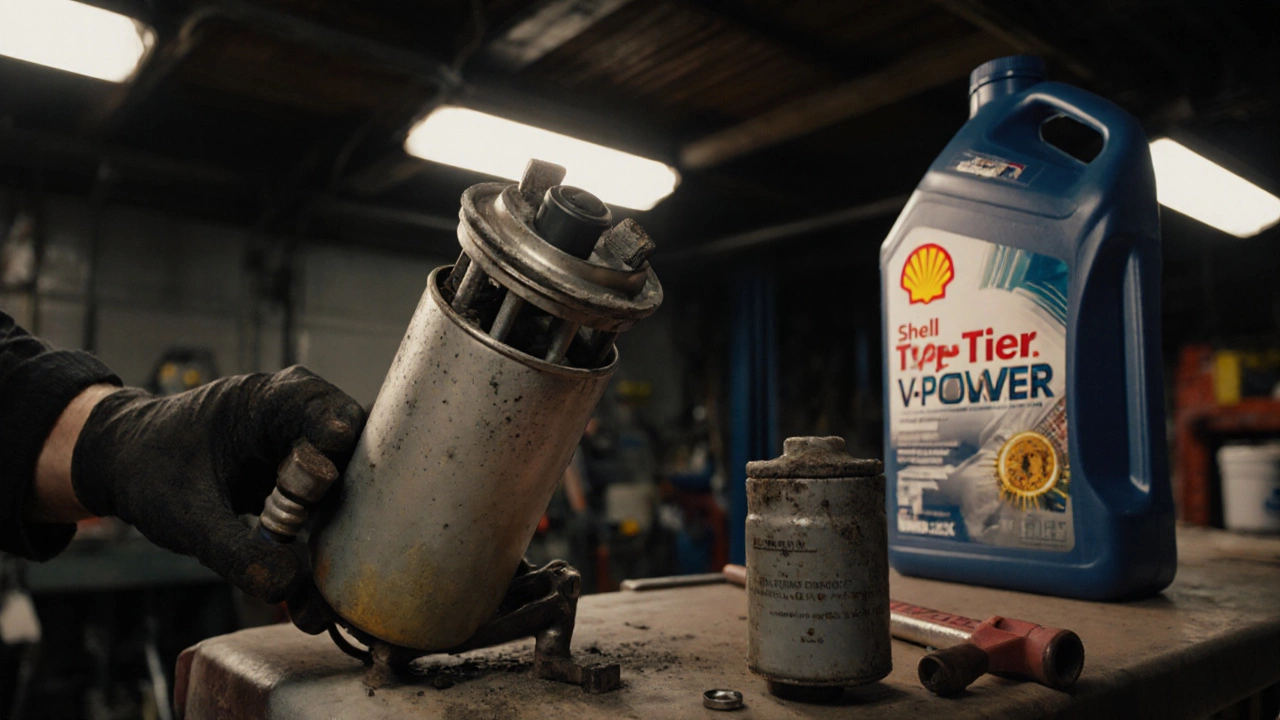
Use high-quality fuel. Cheap fuel often has more contaminants and less detergent. Over time, gunk builds up in the pump’s inlet screen. It’s not the pump itself that’s bad-it’s the screen clogging. You can’t clean it without removing the pump, but using premium fuel (with Top Tier detergent standards) slows the buildup. Brands like Shell V-Power, BP Ultimate, or ExxonMobil Synergy are worth the extra 5p per litre if your pump is on its last legs.
Check the fuel filter. Most modern cars have an in-line fuel filter between the tank and engine. If it’s clogged, the pump has to work harder to push fuel through. That extra strain wears it out faster. The filter should be replaced every 40,000 to 60,000 miles. If yours hasn’t been changed in 80,000, that’s likely adding stress to your pump. Replacing it is cheap-£20 to £40-and might be the only thing you need to do.
Listen for the fuel pump prime. When you turn the key to ‘on’ (before starting), you should hear a low hum for 2-3 seconds. That’s the pump priming the system. If you don’t hear it, or it’s louder than usual-like a whine or buzz-there’s a problem. A quiet hum means the pump is still alive. No sound? It might be dead. A loud whine? It’s struggling. Use that as your daily diagnostic.
When to Replace It
If your car is over 10 years old and the pump is original, replacement is inevitable. You can delay it with the tips above, but you’re just buying time. Don’t wait until it dies on the motorway. A failed fuel pump can leave you stranded with no warning.Replacement isn’t cheap-£300 to £700 depending on the car-but it’s better than a tow bill. If you’re doing it yourself, make sure you get the exact OEM part or a reputable aftermarket brand like Bosch, Denso, or Delphi. Cheap no-name pumps fail in under 10,000 miles. I’ve seen it too many times.
Some cars have a fuel pump module that includes the sender unit and filter. If you’re replacing the pump, replace the whole module. It saves labor and prevents future issues. And always replace the fuel tank seal and locking ring when you pull the pump out. They crack with age, and a leaky seal means air gets in, causing vapor lock and more stalling.
Preventing the Next One
The best way to help a fuel pump isn’t to fix it after it fails-it’s to keep the next one alive.- Never let your tank go below a quarter full.
- Use Top Tier fuel regularly.
- Replace the fuel filter every 40,000 miles, even if the manual says longer.
- Avoid filling up after a tanker has just refilled the station’s tanks-disturbances stir up sediment at the bottom.
- Don’t ignore the check engine light if it’s related to fuel pressure.
These habits won’t make your pump last forever, but they’ll get you 20,000 extra miles out of it. That’s £500 saved.

What to Do Right Now
If you suspect your fuel pump is failing:- Check your fuel level. Fill up if it’s below half.
- Listen for the prime hum when you turn the key.
- Check your fuel filter’s service history. If it’s overdue, replace it.
- Use a fuel injector cleaner only if you’re also getting rough idle or poor acceleration-this helps injectors, not the pump.
- Book a fuel pressure test. A mechanic can hook up a gauge to the fuel rail and tell you if pressure is dropping under load.
If the pressure is low and the pump is old, start saving for a replacement. Don’t gamble on another 100 miles.
Common Misconceptions
Some people think a bad fuel pump always means no start. Not true. Many pumps fail gradually. The car might start fine in the morning but die after a 20-minute drive. That’s the pump overheating and shutting down.Others believe a noisy fuel pump means it’s about to die. Not always. A little hum is normal. A loud, high-pitched whine or grinding noise? That’s the motor bearing failing. That’s the end.
And no, you can’t fix a bad fuel pump with a magnet, a battery booster, or a ‘fuel system revitalizer’. Those are scams sold on YouTube ads.
Can fuel injector cleaner fix a bad fuel pump?
No. Fuel injector cleaner removes carbon deposits from fuel injectors and intake valves, not the mechanical parts of a fuel pump. If the pump’s motor, impeller, or pressure regulator is worn out, no chemical will restore it. Using cleaner won’t hurt, but it won’t fix the problem either.
How long does a fuel pump usually last?
Most fuel pumps last between 100,000 and 150,000 miles. But if you frequently drive with a low fuel level, that lifespan can drop to 60,000 miles or less. The pump relies on fuel for cooling and lubrication-running dry overheats it and shortens its life.
Is it safe to drive with a bad fuel pump?
It’s risky. A failing pump can cause sudden stalling, especially at highway speeds. That’s dangerous. You might also damage the catalytic converter if the engine runs lean from lack of fuel. If you notice hesitation, misfires, or hard starting, get it checked before it leaves you stranded.
Can a clogged fuel filter cause symptoms like a bad fuel pump?
Yes. A clogged fuel filter forces the pump to work harder to push fuel through, which can mimic low fuel pressure symptoms. The engine may sputter, stall, or lose power under load. Replacing the filter is cheap and easy-do it before assuming the pump is bad.
How much does it cost to replace a fuel pump?
The cost ranges from £300 to £700, depending on the car. The pump itself is £150 to £400, and labor is £150 to £300 because the tank often has to be dropped. Some cars have an access panel under the rear seat, which cuts labor time. Others require full tank removal, which takes longer and costs more.