HVAC Filter Finder
Enter your filter dimensions (width x height x depth) in inches.
Measure from inside edge to inside edge as shown in the article.
Higher MERV ratings capture smaller particles but restrict airflow. Check your HVAC system's maximum MERV rating in the manual.
Your Recommended Filter
Note: Always check your HVAC system's maximum MERV rating before installing.
Warning: Using a filter with higher MERV rating than your system can handle may cause reduced airflow, increased energy bills, and system damage.
Every three months, your HVAC system quietly pulls in air from your home-dust, pet dander, pollen, and even tiny bits of skin. But if you don’t have the right air filter, all that gunk just piles up inside your system, making it work harder, use more energy, and break down faster. So how do you actually know what AC filter you need? It’s not as simple as grabbing the cheapest one at the store. You need the right size, the right MERV rating, and the right fit for your system.
Start by checking your old filter
The easiest way to find your correct filter size is to look at the one you already have. Most filters have the dimensions printed right on the frame. Look for a number like 16x20x1, 20x25x4, or 14x14x1. That’s your filter size: width x height x depth. The first two numbers are the face dimensions, and the last one is the thickness. If your filter is 1 inch thick, you need a 1-inch filter. If it’s 4 inches thick, you need a 4-inch filter. Don’t guess. Measure it yourself if the label is faded or missing.
Use a tape measure to confirm. Slide it across the opening where the filter sits. Measure from inside edge to inside edge. Don’t measure the frame or the slot-measure the actual space the filter fills. A filter that’s even 1/8 inch too big won’t fit. One that’s too small will let air leak around it, defeating the whole purpose.
Understand MERV ratings-not all filters are created equal
Size is just the start. The next thing you need to know is the filter’s efficiency, measured by MERV-Minimum Efficiency Reporting Value. MERV ranges from 1 to 16. Higher numbers mean better filtration, but also more resistance to airflow.
Most homes use MERV 8 to MERV 13. MERV 8 catches larger particles like dust and lint. MERV 11 catches pollen, mold spores, and pet dander. MERV 13 is hospital-grade and traps smoke, bacteria, and fine dust. If you have allergies, asthma, or pets, MERV 11 or 13 is a good choice. But here’s the catch: your HVAC system has to be able to handle it.
Older systems or those with weaker fans can’t push air through a high-MERV filter. If you install a MERV 13 filter on a system designed for MERV 8, your blower motor will strain. Your energy bills will go up. You might hear strange noises. In extreme cases, the coil can freeze or the motor burns out. Check your owner’s manual or look for a sticker on the furnace that says "Maximum MERV Rating". If it says "Max MERV 8", stick to MERV 8.
Don’t confuse furnace filters with AC filters-they’re the same thing
Many people think they need a different filter for their air conditioner and their furnace. They don’t. In most homes, there’s one filter that serves both. Whether it’s summer and the AC is running, or winter and the heat is on, the same filter sits in the return air duct. That’s why it’s often called an HVAC filter, not just an AC filter.
If you’re replacing your filter in July and the AC is running, you’re still using the same filter you used in January. The only difference is how often you change it. If you have pets or live in a dusty area, change it every 60 days. If you don’t, every 90 days is fine. If you use a MERV 13 filter, check it monthly-high-efficiency filters clog faster.
Know your filter type: disposable vs. reusable
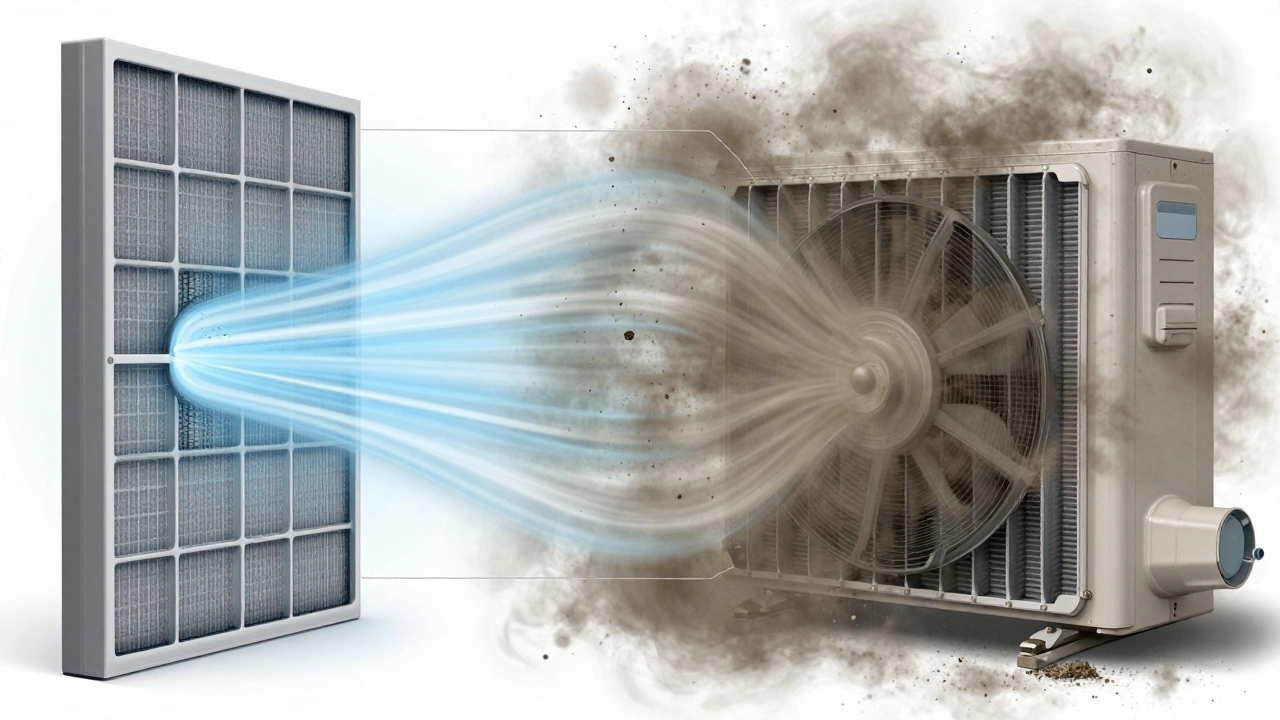
There are two main types: disposable and washable. Disposable filters are the most common. They’re cheap, easy to replace, and come in every size and MERV rating. You buy one, install it, and throw it away when dirty.
Reusable filters-often called washable or permanent filters-are made of aluminum or synthetic mesh. You take them out, rinse them, let them dry, and put them back. They cost more upfront-sometimes $50 or more-but last for years. But here’s the downside: they rarely match the efficiency of a good disposable MERV 11 or MERV 13 filter. Most reusable filters are MERV 4 or MERV 5, which only catch big dust particles. If you want real air quality improvement, disposable filters are still the better choice.
Also, if you go reusable, make sure your system can handle the airflow resistance. Some reusable filters are thicker and can restrict airflow if not designed properly.
Check your system’s manual or manufacturer specs
If you still aren’t sure, find your HVAC system’s model number. It’s usually on a sticker inside the air handler or furnace panel. Look up the manual online-most manufacturers offer free PDF downloads. Search for "filter size" or "airflow requirements" in the manual. You’ll often find a diagram showing exactly where the filter goes and what size and type it needs.
Some systems, especially newer ones, have filters built into the return air grille. These are often 1-inch thick and slide into a metal frame. Others have a filter rack in the side of the furnace. If you can’t find it, turn off the system and look along the return duct-usually near the biggest vent in your home, often in a hallway or central room.
What happens if you use the wrong filter?
Using the wrong filter can cause real problems. Too small? Air leaks around it. Dust gets into your blower, your ducts, your coils. Your system gets dirty faster. Too big? It won’t fit. You might force it in, which can crack the frame or damage the housing. Too high MERV? Your system struggles. Your energy bills spike. Your home doesn’t cool or heat properly. Too low MERV? You’re not filtering out allergens or pollutants. You might as well not have a filter at all.
I’ve seen homes where people used 1-inch filters in a 4-inch slot because they thought "it’ll just fit". It didn’t. The air bypassed the filter entirely. Dust built up on the evaporator coil. The system froze over in July. The repair bill was $800.
It’s not worth the risk. Take five minutes to measure. Check the label. Look up the MERV rating your system can handle. It’s the cheapest maintenance you’ll ever do.
Where to buy the right filter
You can buy filters at hardware stores, big-box retailers, or online. But don’t just grab the first one you see. Look at the packaging. It should clearly list the dimensions and MERV rating. Avoid filters that say "high efficiency" without a MERV number-that’s marketing, not fact.
Brands like Filtrete, Honeywell, and Nordic Pure are reliable. Amazon and Home Depot have wide selections. If you’re buying online, double-check the dimensions before you click "buy". A 20x25x1 filter is not the same as a 25x20x1. Order the wrong one, and you’ll have to wait days for a return.
Consider signing up for a subscription service. Many companies will send you new filters every 30, 60, or 90 days based on your size and MERV preference. You’ll never forget to replace it. And you’ll save 10-20% off retail prices.
Keep a record
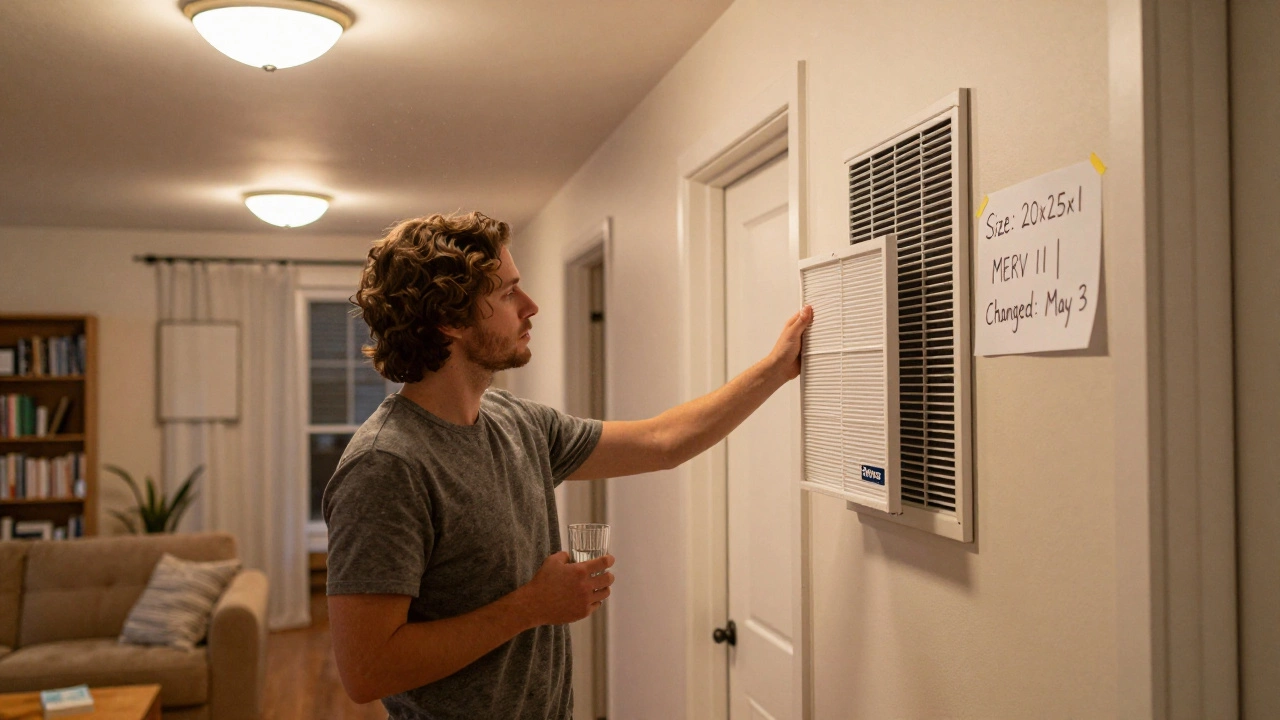
Once you find the right filter, write it down. Tape a note to your furnace or keep a small card in your tool drawer. Include: size, MERV rating, brand, and when you last changed it. That way, next time you’re standing in the store with no idea what you need, you’ll know exactly what to grab.
And if you’re ever unsure? Call an HVAC technician. Most will tell you for free. They’ve seen every mistake possible. They’ll tell you if your system can handle a MERV 13 or if you’re better off with a MERV 10. It’s not a service call-it’s just advice.
Can I use a filter with a higher MERV rating than recommended?
Not without risk. A higher MERV rating means the filter traps smaller particles, but it also restricts airflow. If your HVAC system wasn’t designed for it, the blower motor will work harder, your energy bills will rise, and you could damage the system. Always follow the manufacturer’s maximum MERV rating.
Do I need a different filter for summer and winter?
No. Your home’s HVAC system uses the same filter year-round, whether it’s running the air conditioner or the furnace. The filter sits in the return air duct and cleans the air no matter which mode is active. Just replace it based on how dirty it gets, not the season.
How often should I change my AC filter?
Every 30 to 90 days, depending on your situation. If you have pets, live in a dusty area, or have allergies, change it every 30-60 days. If you live alone with no pets and clean regularly, every 90 days is fine. High-MERV filters (13+) clog faster-check them monthly.
Are washable filters better than disposable ones?
Not usually. Washable filters are reusable and save money over time, but they typically have low MERV ratings (4-5), meaning they don’t catch small allergens like pollen or smoke. Disposable filters with MERV 11 or higher offer far better air quality. Washable filters are only worth it if you’re okay with basic dust filtration.
What if my filter doesn’t have a size label?
Measure the opening with a tape measure. Measure the width, height, and depth in inches. Round to the nearest whole number. For example, if it measures 15.75 x 24.5 x 1, you need a 16x25x1 filter. Never round down-always round up to the next whole inch to ensure a snug fit.