Engine Oil Condition Checker
This tool helps you determine if your engine oil is still good based on real-world conditions described in the article. Use it to check your oil before your next service.
Enter your oil test results to get an assessment
When was the last time you checked your engine oil-not just looking at the dipstick, but really asking: is this oil still doing its job? Most people change oil based on mileage or time, but that’s not always accurate. Your oil might be fine at 5,000 miles, or it could be done at 3,000. The truth is, you don’t need a mechanic to tell you. You can check it yourself with just a few simple steps.
Look at the Color and Clarity
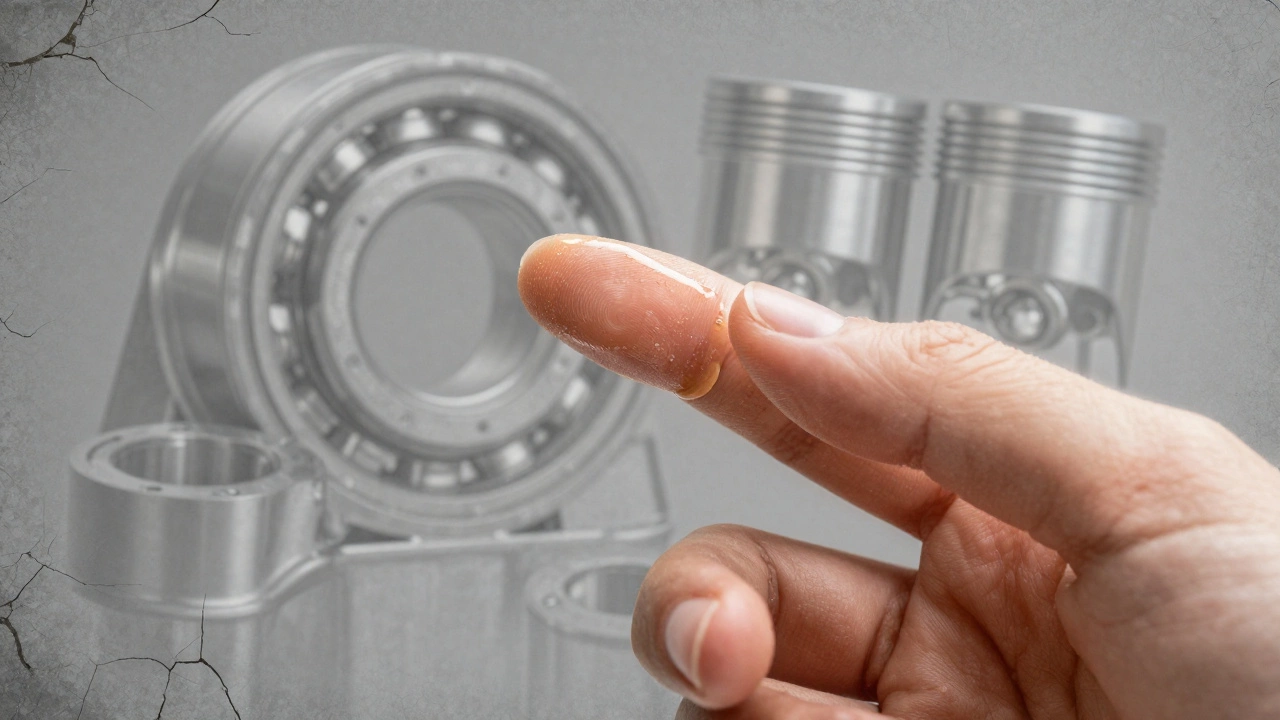
New engine oil is usually amber or light brown, almost see-through. If you pull out the dipstick and it’s pitch black, that doesn’t automatically mean it’s bad. High-quality synthetic oils darken faster because they’re better at picking up dirt and contaminants. But if the oil looks like tar-thick, sticky, and opaque-it’s likely done. The real red flag is when the oil is too dark and gritty. Rub a drop between your fingers. If it feels gritty or leaves residue, there’s metal or dirt in it. That’s a sign the oil’s additives are spent and it’s no longer protecting your engine.
Check the Viscosity
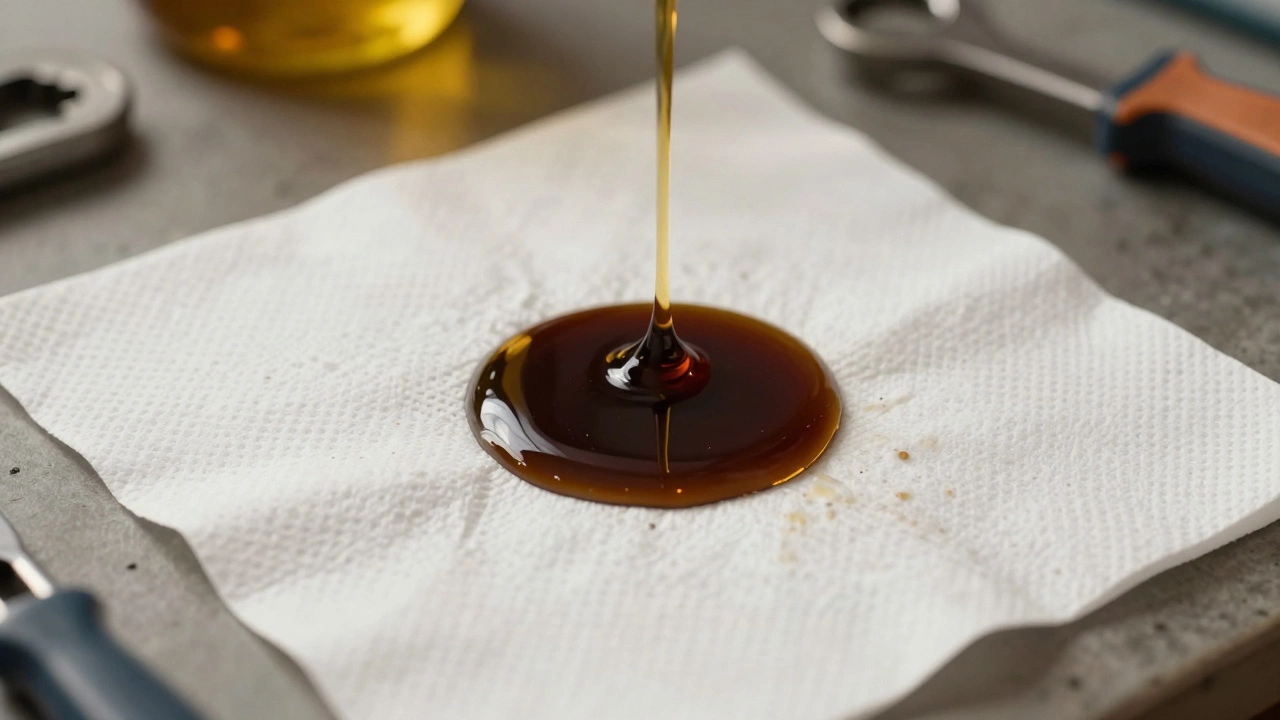
Engine oil’s job isn’t just to lubricate-it has to flow properly under heat and cold. If your oil feels unusually thick or syrupy, it might be oxidized or contaminated with fuel. On the flip side, if it feels thin and watery, it could mean fuel dilution. This happens when unburned gas leaks past the piston rings, especially in short-trip driving. To test this, put a drop of oil on a paper towel. If it spreads quickly and leaves a dark center with a light ring, it’s probably clean. If it doesn’t spread much and stays clumped, the oil has lost its ability to flow. That’s a problem.
Smell It
Oil shouldn’t smell like gasoline. If you catch a strong fuel odor when you check the dipstick, you’ve got fuel dilution. This is common in cars that make a lot of short trips-like commuting under 5 miles. The engine never gets hot enough to burn off the fuel that seeps into the oil. Over time, this thins out the oil and reduces lubrication. It can also wash away the protective film on cylinder walls, leading to increased wear. A smell test takes two seconds and can save you thousands in engine repairs.
Watch for Warning Signs in Your Car
Your car will tell you if the oil is failing, even if you don’t check it. If you hear ticking or knocking from the engine, especially at startup, it could be low oil pressure from degraded oil. If your oil light flickers, even when the level is fine, the oil might be too thin to maintain pressure. Modern cars have oil life monitors, but they’re not magic. They estimate based on driving patterns, not actual oil condition. If you drive hard, tow, or haul heavy loads, your oil breaks down faster than the computer thinks. Don’t rely on the dashboard alone.
Use a Paper Towel Test
This is one of the easiest and most reliable DIY tests. Take a clean paper towel, drip a drop of oil onto it, and let it sit for a minute. Look at the pattern:
- Clear ring with dark center: Good oil. The dark center is dirt, but the outer ring shows the oil is still fluid.
- Uniform dark stain with no ring: Oil is worn out. It’s lost its ability to suspend particles and has likely degraded.
- Large light ring with oily center: Fuel dilution. The fuel evaporated, leaving the oil too thin.
- Grainy texture or metal flakes: Contamination. This means metal particles from engine wear are in the oil. Time for an oil change-and maybe an inspection.
This test works because it shows how well the oil can hold contaminants. Good oil keeps dirt suspended. Bad oil lets it settle out-or worse, lets metal grind through your bearings.
Don’t Trust the Mileage Clock Alone
Most manufacturers say to change oil every 7,500 to 10,000 miles. That’s fine if you drive on smooth highways at steady speeds. But if you drive in stop-and-go traffic, haul trailers, drive in extreme heat or cold, or take lots of short trips, your oil breaks down faster. Real-world data from the American Automobile Association shows that drivers with frequent short trips (under 4 miles) need oil changes every 3,000 to 5,000 miles-regardless of what the manual says. Synthetic oil lasts longer, but it doesn’t last forever. Even the best synthetics lose additives over time.
When in Doubt, Change It
If you’re not sure, err on the side of caution. Old oil doesn’t just reduce performance-it increases engine wear. Studies from the Society of Automotive Engineers show that driving with degraded oil can increase engine wear by up to 40% compared to fresh oil. That’s not a small difference. Replacing oil is cheap. Rebuilding an engine isn’t. If your oil is over 6 months old, even if you haven’t hit the mileage, consider a change. Oil doesn’t wear out from driving-it wears out from heat, contamination, and time.
What About Oil Life Monitors?
Many modern cars have oil life monitors that track engine load, temperature, and driving habits to estimate when to change oil. They’re smarter than old mileage-based systems. But they’re not perfect. They assume normal driving. If you’re towing, racing, or driving in dusty conditions, your oil degrades faster than the system predicts. Always double-check with the dipstick and paper towel test. Use the monitor as a guide, not a rule.
What Kind of Oil Should You Use?
Not all oils are the same. Look for the API service rating on the bottle. For most modern cars, you want API SP-the latest standard as of 2026. It’s designed for better protection against low-speed pre-ignition (LSPI), which is common in turbocharged engines. If your car is older (pre-2010), API SN is still acceptable. Avoid oils labeled “energy conserving” if you drive a high-performance or older engine-they have lower friction modifiers that can hurt clutch performance in manuals or cause slippage in older transmissions.
How Often Should You Really Change Oil?
Here’s a simple rule of thumb based on driving habits:
- Normal driving (highway trips, 15+ miles per drive): Every 7,500-10,000 miles or 12 months.
- Severe driving (short trips, stop-and-go, towing, dusty roads): Every 3,000-5,000 miles or 6 months.
- Extreme conditions (racing, off-roading, heavy hauling): Every 2,500-3,500 miles or 3 months.
These aren’t guesses. They’re based on real-world testing by oil manufacturers and independent labs. If you’re unsure about your driving style, assume severe conditions. Better safe than expensive.
| Sign | What It Means | Action |
|---|---|---|
| Dark, gritty oil | Contaminated or oxidized | Change oil immediately |
| Smells like gas | Fuel dilution | Change oil; check for piston ring wear |
| Thin, watery texture | Fuel contamination or low viscosity | Change oil; avoid short trips |
| Thick, syrupy oil | Oxidation or overheating | Change oil; check cooling system |
| Clear ring on paper towel | Good condition | Continue monitoring |
| No ring, uniform stain | Oil spent | Change oil now |
Final Thought: Oil Is Your Engine’s Lifeline
Engine oil does more than just reduce friction. It cools parts, cleans sludge, seals piston rings, and prevents corrosion. When it fails, your engine pays the price. You don’t need a lab to know if it’s still good. A quick dipstick check, a sniff, and a paper towel test give you 90% of the answer. Don’t wait for the oil light. Don’t wait for the engine to knock. Check it yourself-and change it when it’s done, not when the calendar says so.
Can I tell if my oil is bad just by looking at the dipstick?
Yes, but not always. Dark oil isn’t always bad-synthetic oils darken quickly. Look for texture: if it’s gritty, thick, or smells like gas, it’s done. A clean dipstick doesn’t guarantee good oil, either. Always combine visual checks with the paper towel test for accuracy.
Does synthetic oil last longer than conventional oil?
Yes, but not infinitely. Synthetic oil resists breakdown better and handles heat and stress more effectively. It can last up to twice as long as conventional oil under normal conditions. But if you drive hard, tow, or make short trips, even synthetic oil degrades faster. Always check condition, not just mileage.
What happens if I drive with bad oil?
You risk increased engine wear, overheating, and even engine failure. Old oil can’t protect bearings or piston rings properly. Metal particles build up, sludge forms, and components start to grind. Studies show that driving with degraded oil can shorten engine life by up to 30%. It’s not worth the risk.
Should I change oil based on time or mileage?
Both. Oil breaks down over time from heat and oxidation-even if you don’t drive much. If you drive less than 5,000 miles a year, change oil every 6 months. If you drive hard, change it more often. Time matters as much as miles.
Can I mix different types of oil?
In an emergency, yes-mixing synthetic and conventional oil won’t cause immediate damage. But it’s not ideal. Different additives can interact unpredictably. Always use the same type and grade recommended by your owner’s manual. Never mix oils with different API ratings.
Is it okay to top off oil between changes?
Yes, if the level is low. But topping off doesn’t fix old oil. If your oil is dirty or degraded, adding fresh oil just dilutes the problem. You still need a full change. Topping off is for temporary fixes, not maintenance.