Exhaust Upgrade Estimator
Not all exhaust upgrades are created equal. Use this tool to estimate realistic power gains and potential trade-offs for your specific vehicle setup.
Torque & Drivability Analysis
Recommendation
You see the ads. "Unlock 15 extra horsepower with a simple bolt-on." It sounds too good to be true, and in the world of exhaust systems, it often is. But not always. The question of whether a 2-into-1 exhaust increases horsepower isn't a simple yes or no. It depends entirely on your engine's design, its RPM range, and what you're trying to achieve.
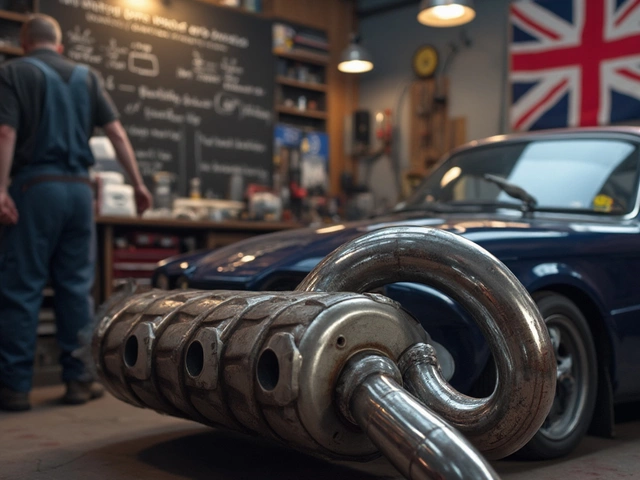
If you've ever wondered why some modified cars roar like angry beasts while others just sound louder without gaining speed, you're asking the right questions. A 2-into-1 setup merges two header pipes into one collector before hitting the muffler. This design aims to improve scavenging, the process where exiting exhaust gases pull fresh air-fuel mixture into the cylinders. Better scavenging means better breathing, which theoretically means more power. But does it deliver?
The Physics of Scavenging vs. Back Pressure
To understand if a 2-into-1 helps, you need to grasp the tug-of-war happening inside your exhaust manifold. Every internal combustion engine relies on precise timing. When an exhaust valve opens, high-pressure gas rushes out. This creates a vacuum wave that travels down the pipe. If timed correctly, this vacuum pulls the next batch of gases out and even helps suck in the new intake charge. This is exhaust scavenging.
A standard factory exhaust is designed for silence and emissions compliance, not performance. It has high back pressure. Think of back pressure as resistance. While a little bit is needed at low RPMs to keep torque up, too much chokes the engine at high RPMs. A 2-into-1 system reduces this restriction by combining flows earlier than a stock system might, but it also introduces turbulence at the merge point.
Here’s the catch: merging two streams of gas creates interference. If the pulses from cylinder bank A and cylinder bank B collide poorly, you lose energy. That’s why the length of the headers matters so much. In a well-designed 2-into-1, the pipes are tuned so that the negative pressure waves arrive at the merge point exactly when they can help pull more gas through, rather than fighting each other.
Where You Actually Gain Power
So, do you get those advertised 15 horses? Usually, no. On a naturally aspirated street car, realistic gains from a quality 2-into-1 exhaust are typically between 3 and 8 horsepower. However, these numbers shift dramatically based on engine type.
| Engine Type | Expected HP Gain | Torque Impact | Best For |
|---|---|---|---|
| Naturally Aspirated (NA) | 3-8 HP | Potential low-end loss | High-RPM track use |
| Turbocharged | 5-15 HP | Faster spool-up possible | Reduced turbo lag |
| Supercharged | 2-5 HP | Marginal change | Sound and aesthetics |
| Diesel | 5-10 HP | Improved EGT temps | Towing efficiency |
Turbocharged engines benefit the most. Turbos hate back pressure. By reducing restrictions, a 2-into-1 allows the turbine to spin more freely. This doesn't just add top-end power; it can reduce turbo lag, making the car feel more responsive off the line. For naturally aspirated engines, the gains are strictly in the upper rev range. If you drive mostly in city traffic below 4,000 RPM, you might actually lose torque because the exhaust flow becomes too fast for the low-speed vacuum pulses to work effectively.

The Torque Trade-Off
Horsepower sells cars, but torque drives them. This is the dirty secret of aftermarket exhausts. Many 2-into-1 systems sacrifice low-end torque for high-end horsepower. Why? Because larger diameter pipes allow more volume to pass at high speeds but slow down the gas velocity at low speeds. Slower gas velocity means weaker scavenging effects during gentle acceleration.
Imagine driving a V6 sedan. With the stock exhaust, you have strong pull from 2,000 to 4,000 RPM. After installing a free-flowing 2-into-1, that pull might weaken slightly until 3,500 RPM, then surge ahead strongly up to the redline. If your daily commute involves stop-and-go traffic, the car might feel sluggish. If you enjoy winding roads where you spend time near the tachometer's end, the trade-off is worth it.
Some manufacturers try to mitigate this with variable valve timing integration or specific collector designs, like the Tri-Y or Long-Tube Headers feeding into the 2-into-1. These complex geometries attempt to preserve low-end pulse energy while opening up the top end. They are harder to manufacture and cost more, but they offer a more balanced power curve.
Sound and Comfort: The Hidden Variable
Let's be honest. Half the reason people buy these systems is for the sound. A 2-into-1 produces a deeper, throatier note compared to the raspy buzz of a straight-pipe or the muted drone of a stock system. But there is a downside: cabin drone.
When you remove restrictive baffles, certain frequencies resonate inside the car. At highway speeds, this can turn into a headache-inducing hum. High-quality systems include resonators or specialized mufflers to cancel these frequencies. Cheap ones don't. If you plan to take long road trips, prioritize a system with adjustable valves or high-grade stainless steel construction that dampens vibration.
Also, consider legality. In many places, including parts of Europe and Australia, noise regulations are strict. A loud exhaust can lead to fines or failed inspections. Always check local laws before modifying. Some modern cars have active exhaust valves that open under hard acceleration. Replacing the entire system often bypasses these electronics, requiring dummy plugs or reprogramming to avoid dashboard error lights.

Installation Pitfalls to Avoid
Buying the part is easy. Installing it correctly is where most DIYers fail. Here are common mistakes that kill potential horsepower gains:
- Ignoring O2 Sensor Placement: Moving oxygen sensors incorrectly messes up the air-fuel ratio calculation. The ECU may run lean or rich, hurting performance and fuel economy.
- Leaking Gaskets: Even a small leak at the header flange disrupts the pressure waves. Use high-temperature copper gaskets or proper sealant. A leak here can cost you more power than the upgrade adds.
- Wrong Pipe Diameter: Going too big is a classic mistake. A 3-inch pipe on a small 2.0L engine moves too slowly at low RPMs. Stick to manufacturer recommendations unless you have significantly increased displacement or forced induction.
- Catalytic Converter Removal: Removing cats improves flow but triggers check-engine lights and fails emissions tests. High-flow catted downpipes are a better compromise for street cars.
Professional installation usually costs between £150 and £300 depending on complexity. It’s worth every penny if it ensures zero leaks and correct sensor positioning. A poorly installed exhaust is worse than a stock one.
Is It Worth Your Money?
Deciding to install a 2-into-1 comes down to your goals. If you want bragging rights about horsepower numbers, look elsewhere. Intake mods, ECU tuning, or forced induction yield bigger returns per dollar. An exhaust alone rarely transforms a slow car into a fast one.
However, if you want a more engaging driving experience, better throttle response, and a soundtrack that matches your passion, it’s a solid choice. Pair it with a cold air intake and a mild tune, and you’ll unlock synergistic gains. The exhaust clears the path, the intake feeds the fire, and the tune optimizes the burn.
For turbo owners, it’s almost mandatory if you’re pushing boost levels above stock. The reduction in back pressure protects the turbo and allows for higher peak power. For NA drivers, it’s a lifestyle upgrade more than a pure performance metric. You’ll likely notice the car feels freer at high RPMs, even if the dyno graph shows only modest improvements.
Does a 2-into-1 exhaust increase fuel efficiency?
Not necessarily. While reduced back pressure can help the engine breathe easier, aggressive driving habits encouraged by the improved sound and response often negate any minor efficiency gains. In fact, fuel consumption might rise slightly due to richer fuel mixtures required to prevent knocking during higher load scenarios.
Will a 2-into-1 exhaust void my warranty?
It can. Under the Magnuson-Moss Warranty Act in the US (and similar consumer rights laws elsewhere), modifications don't automatically void warranties. However, if the dealer proves the modification caused the failure, they can deny the claim. Always keep receipts and ensure the installation was done professionally to minimize risk.
What is the difference between 2-into-1 and 4-into-1?
A 4-into-1 merges four individual header pipes into one collector, typically used on inline-4 engines. A 2-into-1 merges two pipes, common on V-engines where each bank has its own header leading to a central collector. Both aim for scavenging, but 4-into-1 offers more flexibility in pulse tuning for single-bank engines.
Do I need a tune after installing a 2-into-1 exhaust?
For a naturally aspirated engine, a tune is optional but recommended to optimize air-fuel ratios for the new flow characteristics. For turbocharged engines, a tune is highly advisable to take full advantage of the reduced back pressure and potentially adjust boost targets safely.
Why does my car lose low-end torque with a new exhaust?
This happens because larger pipes reduce exhaust gas velocity at lower RPMs. Lower velocity weakens the scavenging effect, which relies on fast-moving gas to create vacuum. To fix this, look for systems with smaller primary tube diameters or longer header lengths to maintain pulse energy.