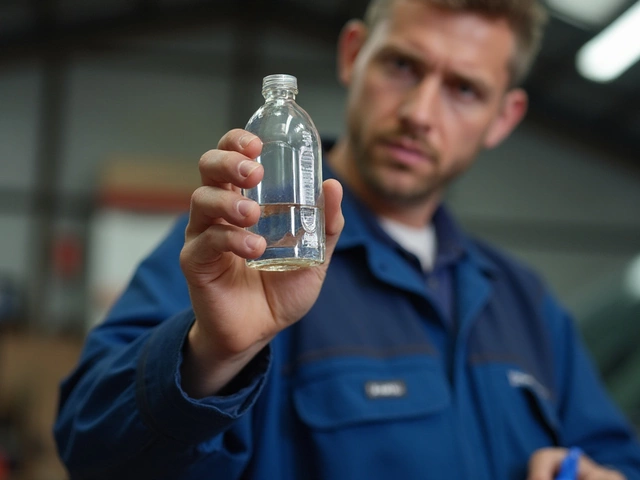
Brake Rotor Replacement Decision Tool
Picture this: you just paid for new brake pads, but your mechanic tells you the job isn’t done. They want to replace the rotors too. Suddenly, that $150 bill is looking like $400. It feels like a rip-off, doesn't it? You might wonder if this is just a way for shops to pad their invoices or if there’s a genuine safety reason behind it.
The short answer is: usually, yes. But not always. It depends entirely on the condition of your current rotors. Putting brand-new, soft friction material against old, grooved, or warped metal is a recipe for disaster. It ruins the new pads quickly and compromises your stopping power. To figure out if you actually need those rotors replaced, we need to look at how brakes work together and what signs tell you they’ve reached their limit.
How Brakes Work Together
To understand why rotors matter, you have to see them as part of a system, not just isolated parts. When you press the pedal, hydraulic pressure pushes the calipers. The calipers squeeze the brake pads friction blocks made of composite materials designed to clamp down on rotating discs against the rotors cast iron or steel discs attached to the wheel hubs that spin with the tires. This friction converts kinetic energy into heat, slowing the car down.
Think of it like writing with a pencil. The paper is the rotor, and the graphite tip is the pad. If the paper has deep scratches or wrinkles, the pencil tip breaks unevenly and writes poorly. Similarly, if the rotor surface is damaged, the new brake pads will wear unevenly, vibrate, and fail to stop the car effectively. Over time, normal driving wears down both components. Pads wear faster because they are softer, but rotors take a beating from heat and physical contact.
Signs Your Rotors Are Done For
You don't need to guess whether your rotors need changing. There are clear, physical indicators that tell you the metal has passed its prime. Mechanics use specific tools to measure these issues, but you can spot many warning signs yourself before booking an appointment.
- Visible Scoring: Look at the face of the rotor through your wheel spokes. If you see deep circular grooves or ridges that catch your fingernail, the rotor is scored. New pads won't make full contact with a scored surface, leading to reduced braking efficiency.
- Warping: If you feel a pulsation or vibration in the brake pedal when you slow down, the rotor is likely warped. This happens when rotors overheat and cool unevenly, causing them to bend slightly. No amount of new pads will fix a wobbly rotor.
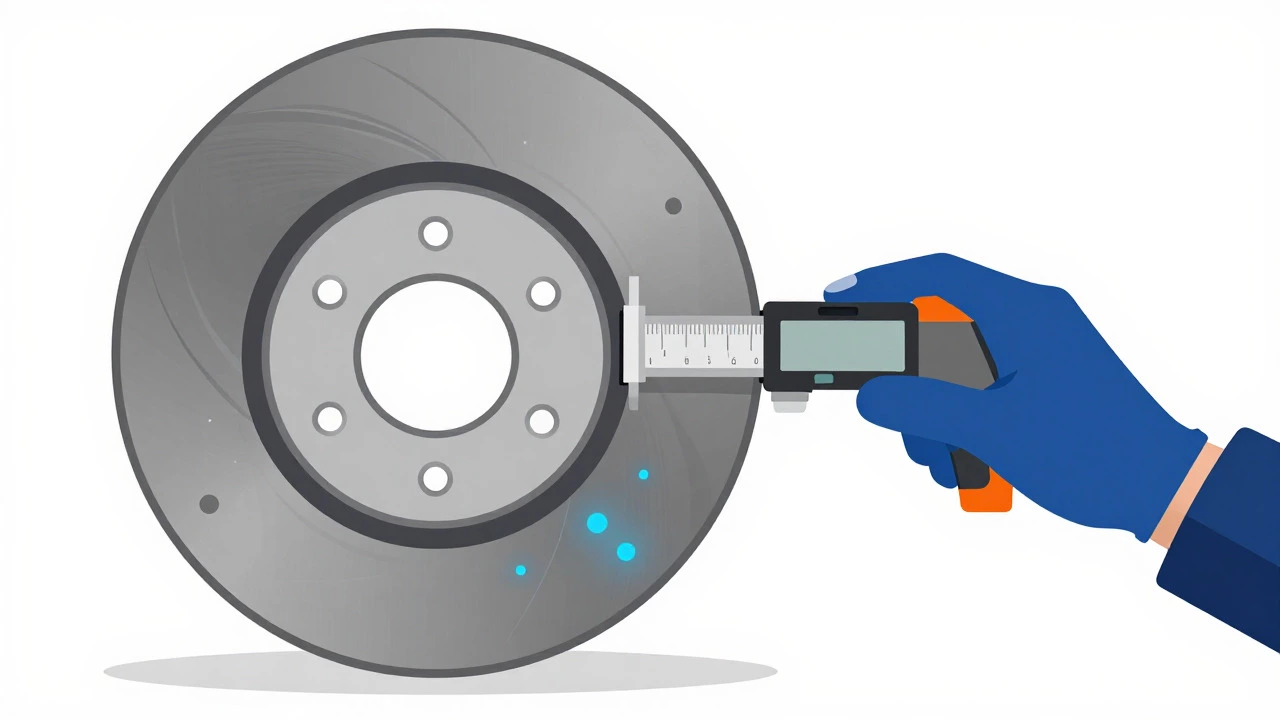
- Blue Spots: Healthy rotors should be a consistent gray color. If you see dark blue or rainbow-colored spots, the rotor has overheated significantly. This changes the metallurgy of the iron, making it harder and less effective at generating friction.
- Lip Formation: Run your finger around the edge of the rotor. If you feel a sharp ridge or "lip" on the outer edge, the center has worn down more than the edges. This indicates significant thickness loss.
Resurfacing vs. Replacing: Is Saving Money Worth It?
A few years ago, mechanics often suggested "resurfacing" or "skimming" rotors. This process uses a lathe to shave off a thin layer of metal, creating a fresh, smooth surface. It was cheaper than buying new rotors. Today, most modern vehicles come with thinner rotors designed to save weight for better fuel economy. These thin rotors often don't have enough extra material left to be safely resurfaced without going below the manufacturer's minimum thickness specification.
If your rotor is already near its minimum thickness limit, resurfacing it makes it too weak. It could crack under heavy braking or warp immediately after installation. Because of this, replacing rotors has become the standard practice for most cars built after 2010. While resurfacing might save you $50-$100 per axle now, it risks ruining your new pads within months, costing you more in the long run.
| Option | Cost Estimate | Longevity | Risk Level |
|---|---|---|---|
| New Pads Only | $100 - $150 | Poor (if rotors are bad) | High (vibration, noise) |
| Resurfaced Rotors + New Pads | $150 - $250 | Moderate | Medium (if too thin) |
| New Rotors + New Pads | $300 - $600+ | Excellent | Low |
When Can You Get Away With Just New Pads?
There are scenarios where replacing only the brake pads is perfectly acceptable. Don't let anyone upsell you unnecessarily. You can skip the rotor replacement if:
- The Rotors Are Thick Enough: A mechanic measures the rotor thickness with micrometers. If the measurement is well above the manufacturer's discard limit, the rotor has plenty of life left.
- The Surface Is Smooth: There are no deep grooves, rust pits, or cracks. Light surface rust from sitting in the rain is normal and will clean off during the first few stops.
- No Vibration Exists: The pedal feels firm and steady when braking at highway speeds. If there's no shimmy, the rotor is likely true (not warped).
- You Drive Gently: If you mostly drive in city traffic and rarely tow heavy loads or drive down steep mountains, your rotors experience less thermal stress.
In these cases, installing new pads on existing rotors is safe and cost-effective. However, always ask the mechanic to show you the measurements. Transparency builds trust.
The Hidden Cost of Cheap Choices
Why do mechanics insist on replacing rotors so often? It’s partly about liability and performance guarantees. If you install premium ceramic pads on a rusty, scored rotor, the pads will glaze over quickly. You’ll hear squealing noises within a week, and your stopping distance will increase. The shop wants to ensure the job lasts. By replacing both, they guarantee a quiet, smooth brake job that matches the lifespan of the new pads.
Consider the labor cost. Changing brakes involves removing wheels, cleaning calipers, and bleeding lines. Doing this twice-once for pads and again for rotors six months later-is inefficient. Combining the jobs saves you time and labor fees in the long run. Plus, modern rotors are engineered specifically to work with modern pad compounds. Mixing old tech with new tech often leads to subpar results.
Pro Tips for Extending Brake Life
Whether you replace rotors or not, how you drive affects how long your brakes last. Here are some practical habits to protect your investment:
- Avoid Riding the Brake: Keeping your foot lightly on the pedal while cruising generates unnecessary heat. Heat is the enemy of rotors. Use engine braking by lifting off the gas early.
- Cool Down After Heavy Use: If you’ve been towing or driving downhill, pull over and let the brakes cool naturally. Don’t splash water on hot rotors; the rapid temperature change causes warping.
- Choose Quality Parts: Cheap aftermarket rotors may lack proper ventilation or hardness ratings. Stick to reputable brands like Bosch, Wagner, or OEM (Original Equipment Manufacturer) parts.
- Break In New Brakes Properly: Avoid hard stops for the first 200 miles. Alternate between moderate braking and coasting to bed the pads evenly onto the rotor surface.
Frequently Asked Questions
Can I put new brake pads on old rotors?
Yes, but only if the rotors are still within thickness specifications and have a smooth, undamaged surface. If the rotors are scored, warped, or near their minimum thickness, putting new pads on them will lead to poor braking performance, noise, and premature pad wear.
How much does it cost to replace rotors and pads?
The total cost varies by vehicle type. For a standard sedan, expect to pay between $300 and $600 per axle (front or rear) for parts and labor. Luxury vehicles or trucks with larger rotors can cost $800 or more. Labor typically accounts for 30-50% of the total price.
What causes brake rotors to warp?
Warping is primarily caused by excessive heat. Hard braking, towing heavy loads, or riding the brakes generates intense temperatures. If the rotor cools unevenly-for example, hitting a puddle while hot-the metal contracts irregularly, causing distortion. Low-quality rotors are also more prone to warping.
Should I replace front and rear brakes at the same time?
Not necessarily. Front brakes handle about 70% of the stopping force and wear out faster than rear brakes. Most people replace front brakes every 30,000-40,000 miles and rear brakes every 60,000-80,000 miles. Check the wear on both sets, but only replace what needs it.
How long do brake rotors last?
Rotors typically last between 50,000 and 70,000 miles, though this varies widely based on driving habits and environment. Aggressive drivers or those who frequently tow may need replacements every 30,000 miles. City drivers with light usage might go longer. Regular inspections are key to determining exact lifespan.