HVAC Filter Performance Estimator
Select your current or planned filter specifications to see how they impact your system's breathing and air quality.
The Relationship Between Pleats and Airflow
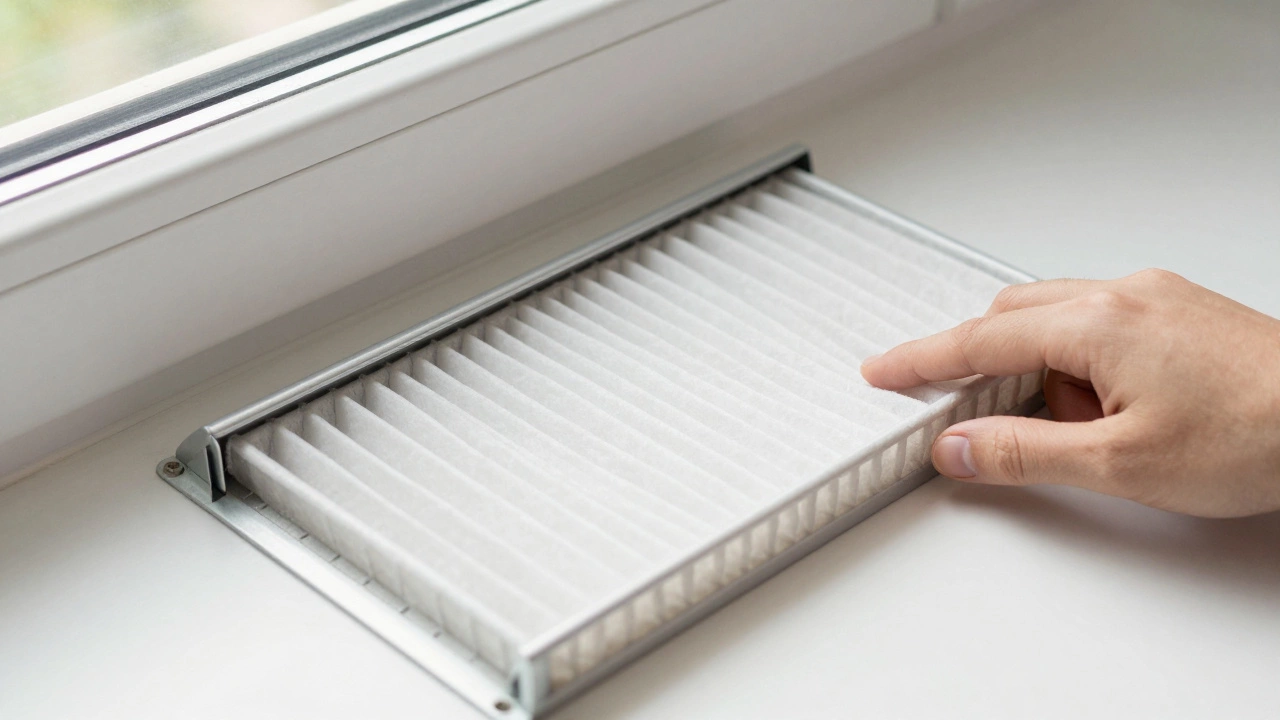
To understand if pleated air filters restrict airflow, we have to look at surface area. Think of it like a doorway. If you have one narrow door, only a few people can get through at once. If you widen that door, the crowd flows faster. Pleats do exactly that for your air. By folding the media, a filter might have three to five times the surface area of a flat filter. Because there is more "open space" for the air to push through, a pleated filter often has less initial resistance than a cheap, flat fiberglass filter.
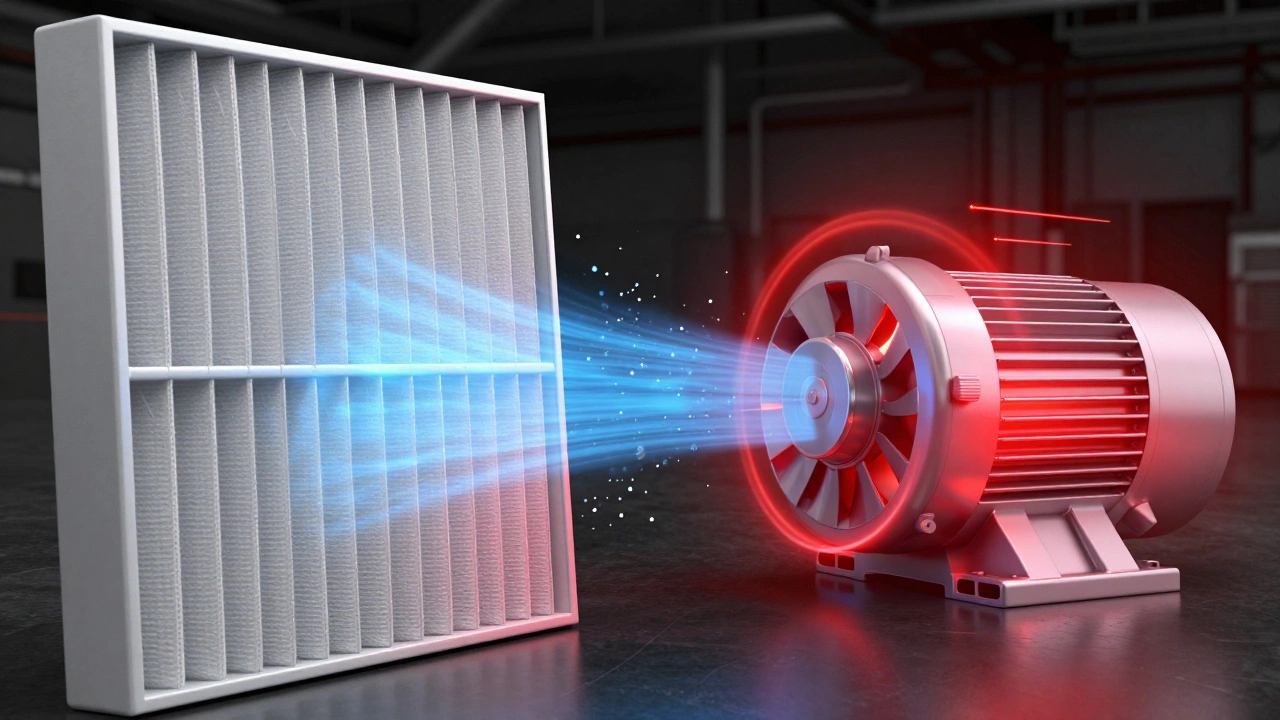
However, this is where things get tricky. While the pleats themselves help airflow, the material used in those pleats determines the actual restriction. This brings us to the concept of pressure drop. Pressure drop is the difference in air pressure between the intake side and the exhaust side of the filter. If the material is too dense, the blower motor has to work twice as hard to push air through, which can lead to overheating or premature motor failure.
| Filter Type | Surface Area | Airflow Resistance | Filtration Level |
|---|---|---|---|
| Fiberglass (Flat) | Low | Low (Initially) | Very Poor |
| Basic Pleated | High | Moderate | Good |
| High-MERV Pleated | High | High | Excellent |
The MERV Rating Trap
You'll see a number on every pleated filter called the MERV rating. This stands for Minimum Efficiency Reporting Value. It's a scale from 1 to 16 (for residential use) that tells you how effectively a filter traps small particles. Here is the secret: as the MERV rating goes up, the fabric gets tighter. A MERV 13 filter catches bacteria and smoke, but it does so by using a much denser web of fibers.
If you put a MERV 13 filter into an older HVAC system designed for a MERV 8, you are essentially putting a mask over your furnace's mouth. You'll notice your vents feeling weaker and your energy bills climbing because the system is fighting against the filter. In a real-world scenario, using a filter that is too restrictive can cause a heat exchanger to crack because it can't dissipate heat fast enough, leading to a dangerous carbon monoxide leak.
When Pleats Become a Problem
New pleated filters are great, but they change over time. Because they have so much surface area, they can hold a massive amount of dust. This sounds like a benefit, but it creates a "loading" effect. As the gaps between the pleats fill up with pet hair and skin cells, the airflow drops precipitously. A flat filter fails quickly, but a pleated filter can hide its failure by continuing to look relatively clean while the air is actually being choked off.
If you have a high-pile carpet or several shedding pets, those pleats fill up fast. Once the "depth" of the pleat is saturated, the filter acts like a wall. Your HVAC blower motor will then attempt to compensate by ramping up speed, which wears out the bearings and consumes more electricity without actually moving more air into your rooms.
How to Balance Filtration and Airflow
You don't have to choose between breathing dust and killing your furnace. The goal is to find the "sweet spot." For most modern homes, a MERV 8 to MERV 11 filter provides the best balance. It catches the important stuff-pollen, dust mites, and mold spores-without creating a massive pressure drop that stresses your equipment.
Another pro tip is to check the thickness of the filter. A 1-inch pleated filter has much less surface area than a 4-inch or 5-inch media filter. If your system has a slot for a thicker filter, upgrading to a deep-pleated media filter is the single best way to increase airflow while improving air quality. These thicker filters have so much surface area that they can maintain high filtration (MERV 13+) with very little restriction on the motor.
Signs Your Filter is Restricting Airflow Too Much
How do you know if your pleated filter is the culprit? Look for these red flags:
- Uneven Temperatures: Some rooms feel colder or warmer than others because the air can't reach the furthest vents.
- Frequent Cycling: Your AC turns on and off every few minutes (short-cycling) because the system is overheating.
- Whistling Sounds: A high-pitched hiss near the return vent usually means the air is being forced through a narrow gap at high velocity.
- Dusty Vents: If you see dust accumulating on the outside of your supply vents, it's a sign that the system is pulling air from gaps in the ductwork because the filter is too restrictive.
Do higher MERV ratings always mean better air?
In terms of purity, yes. In terms of system health, no. If your HVAC system isn't designed for a high MERV filter, the restriction can cause your blower motor to burn out or your AC coils to freeze over due to lack of airflow.
How often should I change pleated filters?
While some brands claim they last 90 days, most homeowners should change them every 30 to 60 days, especially if they have pets or allergies. Waiting too long allows the pleats to saturate, which is when the most restriction occurs.
Are pleated filters better than fiberglass filters?
Generally, yes. Fiberglass filters are designed to protect the equipment, not the people; they let almost all small particles through. Pleated filters protect both your lungs and your machinery, provided you don't choose one with a MERV rating too high for your specific system.
Can I use a thicker filter if my slot is only 1 inch?
No. Forcing a thicker filter into a thin slot will compress the pleats. When you crush the pleats, you destroy the surface area, which drastically increases airflow restriction and can potentially damage the filter frame.
Does airflow restriction increase my electric bill?
Yes. When airflow is restricted, the system has to run longer to reach the desired temperature. The blower motor also works harder to overcome the resistance, which draws more amperage and increases your monthly energy cost.
Next Steps for Your Home
If you're unsure which filter to use, start by checking your HVAC manual for the maximum recommended pressure drop or MERV rating. If you have a small, older system, stick to a MERV 8 pleated filter. If you've recently upgraded to a high-efficiency variable-speed motor, you can likely handle a MERV 11 or 13. The best way to monitor performance is to simply feel the air coming out of your vents right after you install a new filter, then check again after 30 days. If the breeze has noticeably weakened, it's time for a change regardless of what the packaging says.