Exhaust Modification Impact Calculator
Vehicle Parameters
Analysis Results
Picture this: you’re stuck in traffic on the M4, watching your fuel gauge drop faster than it should. You’ve heard the old garage myth that removing your muffler is a quick fix for better gas mileage. It sounds logical on the surface-if you remove weight and resistance, the engine works less, right? Wrong. In fact, deleting your muffler or installing a straight pipe will likely tank your fuel economy and leave you with a car that sounds like a jet engine taking off from Bristol Airport.
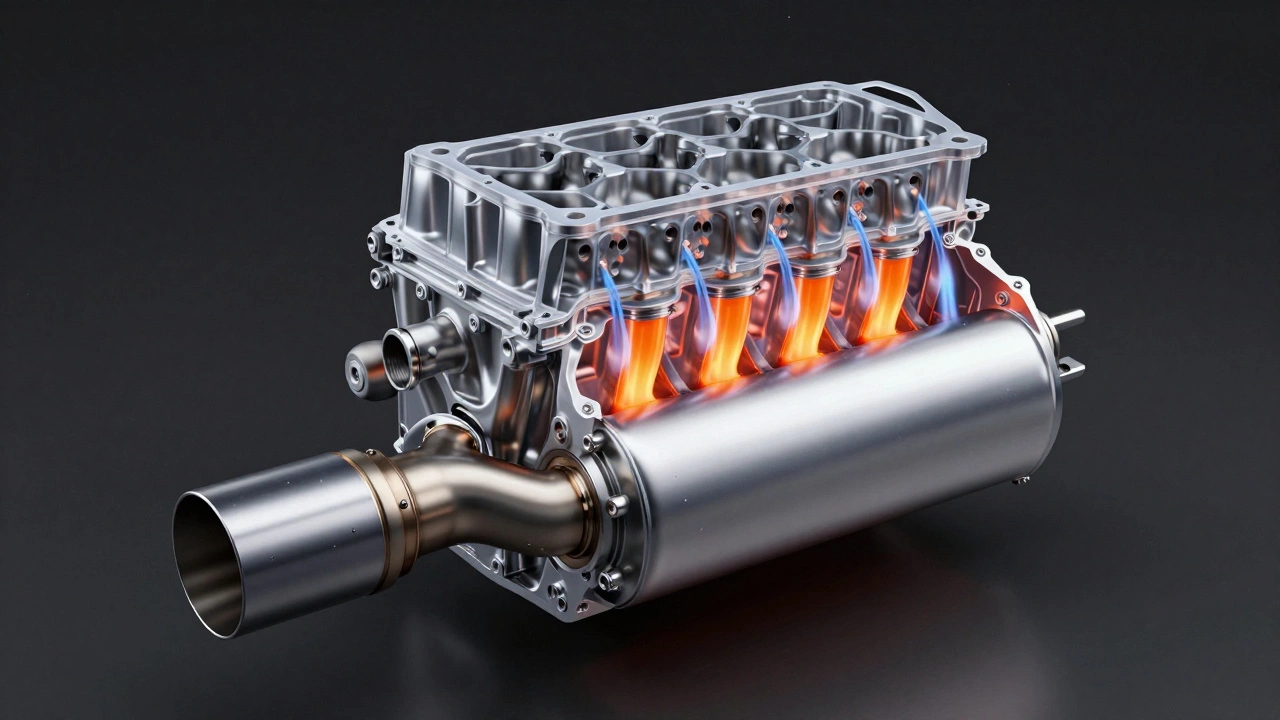
The relationship between your exhaust system and fuel efficiency is nuanced. It’s not about silence; it’s about pressure. To understand why your muffler matters for your wallet, we need to look at how engines breathe. An internal combustion engine is essentially an air pump. It sucks in air and fuel, compresses them, ignites the mix, and then has to push those hot gases out. If that exit path is blocked, the engine chokes. If it’s too open, the engine loses efficiency. Your muffler plays a specific role in balancing this flow.
The Myth of "Free" Horsepower and MPG
Many car enthusiasts believe that reducing exhaust restriction automatically increases horsepower and miles per gallon (MPG). This is a half-truth that depends entirely on your vehicle’s design. Modern cars are engineered with precise exhaust flow rates in mind by manufacturers like Ford, BMW, and Toyota. They calculate the exact amount of backpressure is the resistance created by exhaust components as gases exit the engine needed for optimal performance across the entire RPM range.
When you remove the muffler, you reduce backpressure. For high-performance racing engines tuned for high RPMs, this can help clear exhaust gases quickly. But for your daily driver? It often hurts low-end torque. Without sufficient backpressure, the exhaust gases escape too rapidly, preventing the engine from scavenging efficiently. This means fresh air-fuel mixture doesn’t get pulled into the cylinder as effectively. The result? A rough idle, poor acceleration from a stop, and the engine computer compensating by injecting more fuel to maintain stability. More fuel injected equals lower gas mileage.
How Backpressure Affects Fuel Efficiency
To grasp why a muffler helps maintain consistent fuel economy, think of it like blowing through a straw. If you pinch the end slightly, you have to work harder to blow air out. That’s backpressure. Now, imagine blowing through a wide-open hose. It’s easy, but you lose control over the airflow. Engines operate similarly. A certain level of backpressure ensures that exhaust pulses move in a predictable rhythm, aiding the intake stroke of adjacent cylinders.
- Low RPM Cruising: At steady speeds, moderate backpressure helps maintain efficient combustion. Removing the muffler disrupts this balance, causing the engine to run richer (more fuel) to compensate for uneven exhaust flow.
- High RPM Performance: At high speeds, excessive backpressure can choke the engine. However, modern mufflers are designed to minimize this effect using perforated tubes and chambers rather than solid blocks.
- Engine Tuning: The Engine Control Unit (ECU) monitors oxygen levels via sensors. If exhaust flow changes drastically due to a missing muffler, the ECU may adjust the air-fuel ratio, often leading to decreased efficiency unless the system is reprogrammed.
The Role of Catalytic Converters vs. Mufflers
It’s crucial not to confuse the muffler with the catalytic converter is a device that reduces toxic emissions by converting harmful gases into less harmful pollutants. While both are part of the exhaust system, their functions differ significantly. The catalytic converter creates significant backpressure because it contains a honeycomb structure coated with precious metals like platinum and palladium. This component is legally required in most countries, including the UK and US, to meet emission standards.
Removing a catalytic converter does increase flow and might slightly improve gas mileage in older, poorly maintained vehicles. However, it also triggers the Check Engine Light, causes failed MOT/emissions tests, and releases dangerous toxins into the atmosphere. The muffler, on the other hand, primarily manages noise. Its impact on flow is minimal compared to the catalytic converter. Deleting just the muffler rarely yields noticeable gains in horsepower or MPG, but it guarantees legal trouble and neighbor complaints.
Real-World Impact on Your Wallet
Let’s talk numbers. Studies from automotive engineering firms show that modifying the exhaust system without retuning the ECU results in negligible changes to fuel economy-usually within a margin of error of ±1%. In some cases, drivers report a 3-5% decrease in MPG after going straight-piped. Why? Because the engine runs hotter and less efficiently, and the driver tends to accelerate more aggressively when the car sounds louder. Human behavior plays a huge role here.
| Configuration | Backpressure | Fuel Efficiency | Noise Level | Legality |
|---|---|---|---|---|
| Stock System | Optimized | Baseline | Low | Legal |
| Muffler Delete | Reduced | Slightly Lower | Very High | Illegal (UK/US) |
| Performance Muffler | Optimized | Neutral/Slight Gain | Moderate | Varies |
| Straight Pipe | Minimal | Lower | Extreme | Illegal |
When Does Exhaust Modification Help?
There are scenarios where upgrading your exhaust system can improve gas mileage, but it involves more than just swapping parts. If your current exhaust is rusted, clogged, or damaged, replacing it with a new OEM unit restores proper flow. A blocked catalytic converter or a crushed muffler can severely restrict exhaust flow, forcing the engine to work harder. In these cases, repair leads to improved efficiency.
Additionally, aftermarket performance mufflers designed for specific engine types can offer slight improvements. These systems use larger diameter pipes and optimized internal baffles to reduce turbulence while maintaining necessary backpressure. Brands like Borla and MagnaFlow engineer systems that balance noise reduction with flow efficiency. However, the gains are marginal-often less than 0.5 MPG-and come at a cost of hundreds of pounds.

Tips for Improving Gas Mileage Legally
If your goal is to save money at the pump, focus on proven methods rather than risky exhaust modifications. Here are practical steps that deliver real results:
- Maintain Tire Pressure: Under-inflated tires increase rolling resistance. Keeping them at the manufacturer-recommended PSI can improve MPG by up to 3%.
- Reduce Idling: Modern engines consume no fuel while coasting with the ignition off (auto start-stop), but idling wastes pure fuel. Turn off the engine if stopped for more than 10 seconds.
- Use the Right Oil: Synthetic oils reduce friction within the engine. Switching to a lighter viscosity oil (if recommended by your manual) can improve efficiency by 1-2%.
- Aerodynamics Matter: Remove roof racks when not in use. Drag increases exponentially with speed, so even small wind-resistant additions hurt highway MPG.
- Smooth Acceleration: Aggressive driving lowers gas mileage by up to 30% at highway speeds and 15% in city driving. Anticipate traffic flows to maintain momentum.
Conclusion: Stick to Stock for Efficiency
So, do mufflers increase gas mileage? Not directly. They maintain the delicate balance of exhaust backpressure that your engine’s computer expects. Removing them disrupts this balance, leading to inefficient combustion and potentially higher fuel consumption. While the temptation to modify your exhaust for sound or perceived power is strong, the financial return on investment is virtually non-existent for average drivers. Keep your exhaust system intact, maintain your vehicle regularly, and drive smoothly. Your wallet-and your neighbors-will thank you.
Does removing the muffler really make my car faster?
In most stock vehicles, removing the muffler provides negligible horsepower gains. Any perceived speed increase is usually psychological due to the louder noise. Without ECU tuning, the engine may actually lose low-end torque, making acceleration feel sluggish.
Is it illegal to remove the muffler in the UK?
Yes, it is illegal under the Road Vehicles (Construction and Use) Regulations 1986. Vehicles must be equipped with an effective silencer to prevent abnormal noise. You can fail your MOT test and face fines from local authorities for excessive noise pollution.
Can a clogged muffler reduce gas mileage?
Absolutely. A clogged or damaged muffler creates excessive backpressure, forcing the engine to work harder to expel exhaust gases. This leads to poor combustion efficiency, reduced power, and increased fuel consumption. Replacing a faulty muffler can restore original MPG ratings.
What is the best way to improve exhaust flow without breaking the law?
Install a high-quality aftermarket performance muffler designed for your specific vehicle model. Look for brands that offer "flow-through" designs which reduce turbulence while maintaining legal noise levels. Always ensure the modification complies with local noise ordinances.
Does backpressure help or hurt fuel economy?
Moderate backpressure helps fuel economy by ensuring efficient scavenging of exhaust gases and proper air-fuel mixture intake. Too much backpressure chokes the engine, while too little can cause inefficient combustion at low RPMs. Manufacturers tune this balance precisely for each engine.