Exhaust Muffler Selection Assistant
Confused by the jargon? Use this estimator to find the perfect balance between sound, legality, and durability for your vehicle.
Recommended Material:
Analysis Result
Best Muffler Type
Good street sounds without drone.
Installation Tip
- Check for catalytic converter clearance.
- Measure OD pipe size (2.25"-3.5").
There is nothing quite like the right engine note. You might hear another car pass by and immediately recognize whether it has stock components or something aftermarket installed. Choosing the right exhaust muffleris the device at the end of your car's exhaust system designed to reduce noise and direct gases away from the vehicle. isn't just about sounding loud; it's about balancing acoustics, performance, and legal compliance. If you buy the wrong part, you could face failed inspections, poor fuel economy, or even damage to the engine due to excessive back pressure.
Understanding How Mufflers Actually Work
Before picking a brand, you need to understand what happens inside that metal casing. An exhaust system does more than move fumes out of the car. It creates a specific amount of resistance, known as back pressure. Some back pressure is actually good; it helps push exhaust gases out efficiently and scavenges fresh air intake at high RPMs. Remove too much, and you lose torque.
Inside a muffler, you will find baffles or packing material. These create reflections and resonances to cancel out sound waves. A straight tube lets everything through quickly but sounds like a vacuum cleaner. A baffle-style unit slows the gas down through expansion chambers, which lowers pitch and volume. Understanding this distinction is vital because many people assume "free flow" means better performance, when in reality, too much flow can ruin the low-end power band for daily driving.
The Four Main Types of Mufflers
You generally have four choices when browsing catalogs or speaking with mechanics. Each serves a different purpose, from keeping neighbors happy to winning at the drag strip.
| Design | Noise Level | Performance Gain | Best For |
|---|---|---|---|
| Chambered (Glasspack) | Loud / Aggressive | High Flow | Sports cars, Drag racing |
| Turbo Style | Moderate / Deep | Balanced Flow | Street use, Muscle cars |
| Reactive (Standard) | Quiet | Stock Replacement | Commuters, Older vehicles |
| Active Muffler | Adjustable | Variable Flow | Luxury performance, Touring |
Glasspack mufflers are simple. They have one large central tube perforated with holes, surrounded by fiberglass insulation. This offers very little restriction, making them popular for high-speed builds. However, they often lack the deep tone enthusiasts want and can sound tinny under acceleration.
Turbo style mufflers mimic a turbocharger housing. They have multiple tubes running through a large chamber. This provides more surface area for reflection than a glasspack, resulting in a deeper, bass-heavy note without getting obnoxiously loud. They are widely considered the sweet spot for street-driven modified cars.
Material Matters: Steel Grades Explained
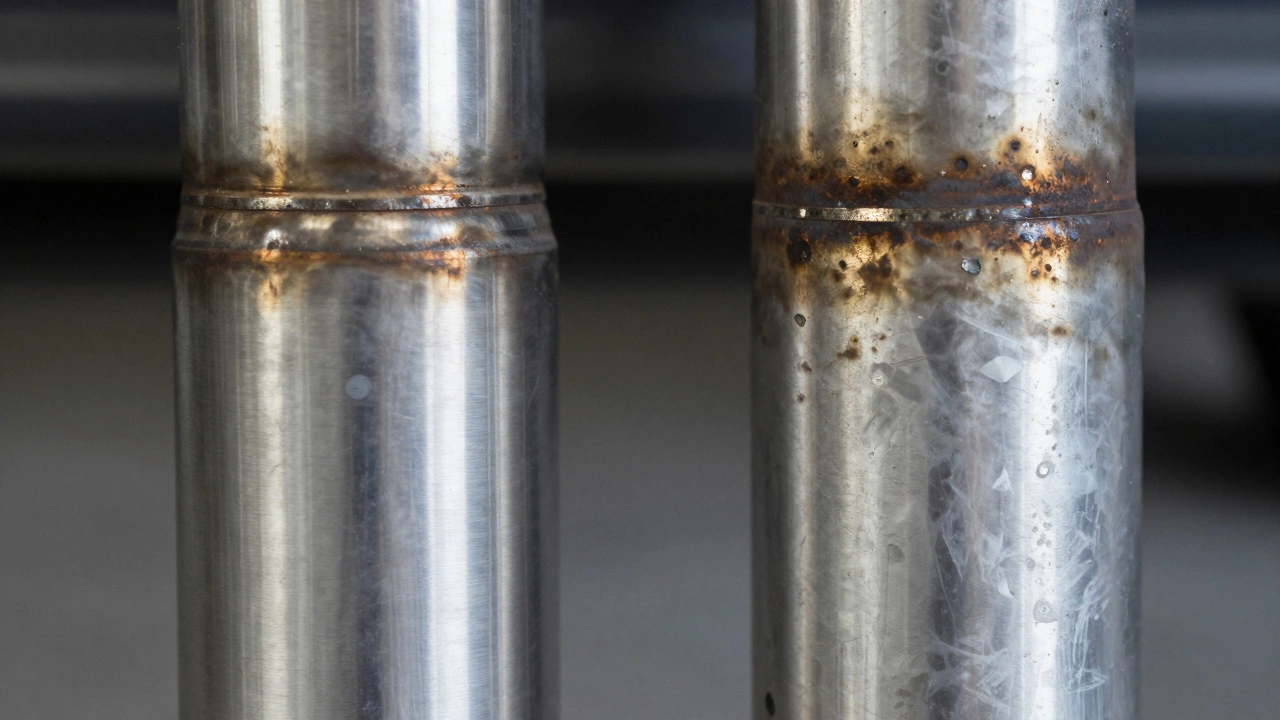
If you plan to keep the exhaust for more than a few years, the material is more critical than the shape. Road salt here in Bristol eats through cheap metal fast. Most aftermarket options come in either aluminized steel or stainless steel.
Aluminized Steel: This gets its name from a coating applied to carbon steel. It resists rust reasonably well, typically lasting 3 to 5 years before showing surface rust or pinhole leaks. It is cheaper to manufacture, which keeps the price down. If you drive in a dry climate or don't care about resale value, this might suffice.
Stainless Steel: This contains chromium and nickel to fight corrosion. There are two common grades you must know.
- Type 409: Often used in OEM systems. It lasts longer than aluminized but will eventually rust over 7-10 years. It is magnetic and slightly cheaper than premium grades.
- Type 304: The gold standard for aftermarket. High chromium content (around 18%) makes it virtually rust-proof unless exposed to constant road salt water. It costs nearly double Type 409 but looks new indefinitely.
When shopping, ask the vendor directly. Many shops try to sell 409 as "premium stainless" just because it shines when new. If you want a true lifetime install, insist on 304 tubing.
Measuring Fitment and Inlet/Outlet Sizes
Returning to basics, nobody wants a muffler that sits six inches off the ground or needs three hours of welding to fit. Modern systems rely on slip-fit connections where the pipe slides into the next component, then gets welded.
You need to measure the outside diameter (OD) of your existing tailpipe. Common sizes in the US market range from 2.25 inches to 3.5 inches. In Europe, metric sizing is standard, often using 40mm, 50mm, or 60mm pipes. Mixing these measurements guarantees a leaky seal. If you are replacing a whole cat-back system, ensure the hanger positions align. Misaligned hangers stress the metal constantly, leading to fatigue cracks at the welds.
Another hidden variable is the catalytic converter. On modern cars built after 2020, the converter is often integrated into the exhaust pipe design. Swapping a muffler shouldn't affect this sensor loop, but removing the front pipe might trigger a Check Engine Light. Always check if the new muffler setup includes a pre-catalyst or allows for a proper bypass if you aren't legally allowed to run emissions equipment.
The Reality of Sound Laws and Regulations
This is where most projects die. Just because a muffler fits doesn't mean it's legal. Noise ordinances vary wildly. In many jurisdictions, any modification exceeding 95 decibels (dBA) at idle is illegal. More importantly, traffic police have become stricter with portable measurement devices.
If you are in the UK, you need to worry about the MOT test. Examiners listen for missing silencers, excessive smoke, or modifications that increase noise beyond the manufacturer's specifications. Even if a muffler passes the sound limit, if it lacks an emissions control label stamped onto the casing, some examiners will mark it as non-compliant.
For those in Europe, Euro 6 and upcoming Euro 7 standards govern particulate matter. A free-flow muffler alone won't cause a fail, but modifying the upstream piping often disrupts the lambda sensors (O2 sensors). These sensors feed data to the Engine Control Unit (ECU) is the computer brain controlling the engine's timing and fuel mixture.. If the ECU sees erratic data, it switches to limp mode, reducing power drastically until fixed.
Performance Gains: Are They Real?
You might spend money on a muffler upgrade expecting massive horsepower gains. Here is the reality: for stock engines, swapping only the muffler usually yields negligible power increases, sometimes less than 2 horsepower. The real gain comes in response time. By smoothing out airflow turbulence, the engine spools up faster. This feels like more power during hard acceleration, even if the peak numbers barely change.
To get measurable gains (5-10%), you typically need a full exhaust system upgrade including headers and cat-back piping, plus tuning. A standalone muffler primarily changes the sound character and visual look. Don't let sales pitches convince you otherwise. Unless you have significantly upgraded the engine internally, the flow improvement from a muffler is minimal.
Installation Best Practices
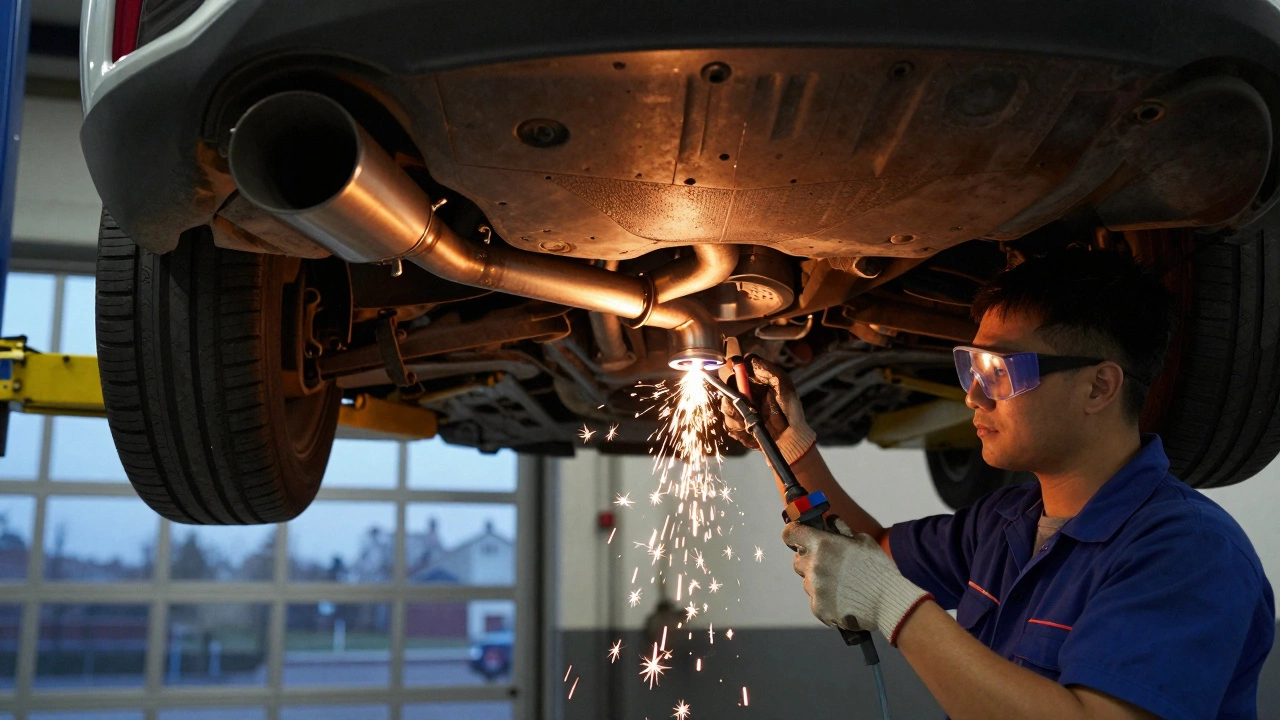
If you are installing this yourself, safety comes first. Hot exhaust pipes reach temperatures over 600 degrees Fahrenheit. Let the car cool completely overnight. When welding, wear a mask; the fumes from burning chrome plating or zinc coatings are toxic.
Use TIG (Tungsten Inert Gas) welding rather than MIG for permanent repairs on stainless steel. MIG leaves a messy bead that traps moisture, causing premature rust spots. Align the pipe so gravity helps drain condensation downward, not upward, which collects water inside the bends. Proper alignment prevents rattles against the chassis bushings.
Frequently Asked Questions
Will a new muffler improve my fuel mileage?
Generally, no. Reducing back pressure helps flow, but modern ECUs adjust fuel trims automatically. You might see marginal improvements only if you were suffering from severe restriction previously.
How long does a stainless steel muffler last?
Type 304 stainless steel can last 15-20 years or more in normal conditions. Type 409 typically lasts 7-10 years before significant surface pitting appears.
What is the loudest legal muffler option?
Legal limits vary, but generally, 90-95 dBA is safe for public roads. Turbo-style mufflers offer a deep sound without crossing into illegal drone territory at cruising speeds.
Can I install a muffler without cutting the pipe?
Not really. Most custom mufflers require removing old rubber hoses and cutting the pipe flush to slide the new unit in. Slip-on tips are the exception, but those just attach to the existing exhaust.
Why does my car smell like sulfur after installing a new muffler?
This usually indicates the catalytic converter hasn't reached operating temperature yet, or there is a small leak upstream letting raw gas escape near the cabin.