Engine Oil Overfill Risk Calculator
Enter Your Vehicle Details
Enter your details and click "Assess Risk Level" to see potential consequences.
It feels like the ultimate safety net: you check your dipstick, see it’s low, and pour in a little extra just to be sure. After all, oil is the lifeblood of your engine. More must mean better, right? Wrong. In fact, topping off your engine oil is the lubricant that reduces friction between moving parts in an internal combustion engine can cause catastrophic failure. It’s not just a minor inconvenience; it’s a recipe for expensive repairs.
Yes, you can absolutely put too much oil in your car. When the oil level exceeds the manufacturer’s maximum mark, the spinning crankshaft dips into the liquid pool at the bottom of the oil pan. This turns the air pockets inside your engine into a frothy mess, leading to poor lubrication, increased pressure, and potentially destroyed seals. If you’ve recently had an oil change or topped off your fluid yourself, read on to understand exactly what happens when you cross that line and how to fix it before your engine throws a tantrum.
The Physics of Overfilling: Why Air Bubbles Are Bad News
To understand why excess oil is dangerous, you have to look at how an engine actually works. Your engine relies on a balance of oil and air. The oil pump draws fluid from the sump (oil pan) and pushes it through galleries to coat pistons, camshafts, and bearings. This process requires the oil to remain a liquid. It needs to be dense enough to create a protective film but fluid enough to flow quickly under high pressure.
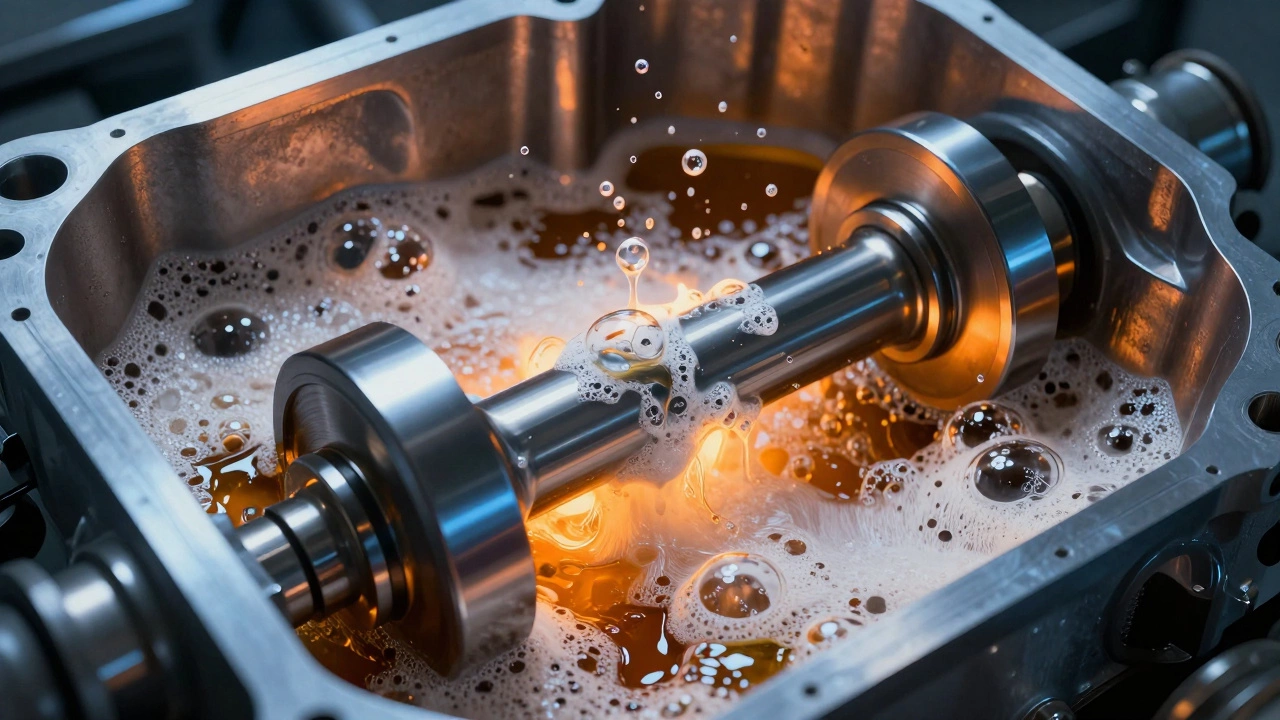
When you overfill the reservoir, the geometry of the engine changes. The crankshaft-the heavy shaft that converts the up-and-down motion of pistons into rotational force-spins at thousands of revolutions per minute. At normal oil levels, the top of the crankshaft stays clear of the oil surface. But when the level is too high, the counterweights on the crankshaft slice through the oil like a paddle in a blender.
This action aerates the oil. Think of whipping egg whites or making cappuccino foam. You’re trapping millions of tiny air bubbles inside the liquid. This phenomenon is called foaming. Aerated oil cannot do its job. Air compresses; oil does not. When the oil pump tries to push this foamy mixture through tight tolerances, it slips. The pressure drops instantly because the pump is moving gas instead of liquid. Without consistent hydraulic pressure, metal grinds against metal. Bearings spin without cushioning. Heat spikes. And within minutes, you can score cylinder walls or destroy a bearing.
Visible Symptoms: How to Spot an Overfilled Engine
You might think you’ll hear a loud bang when things go wrong, but often, the signs are subtler until it’s too late. Here is what to look for if you suspect you’ve poured in half a quart too many:
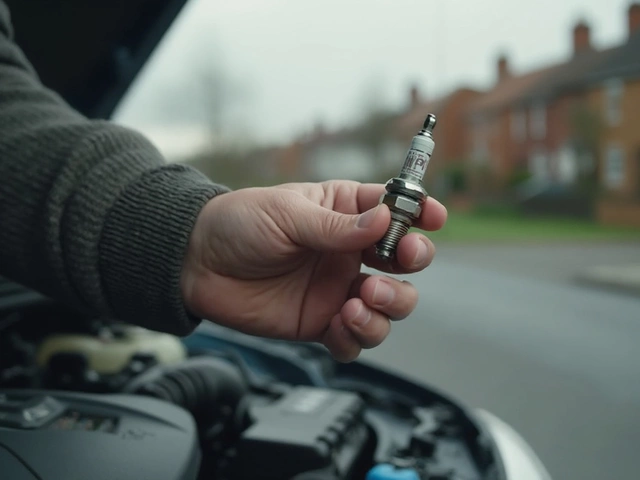
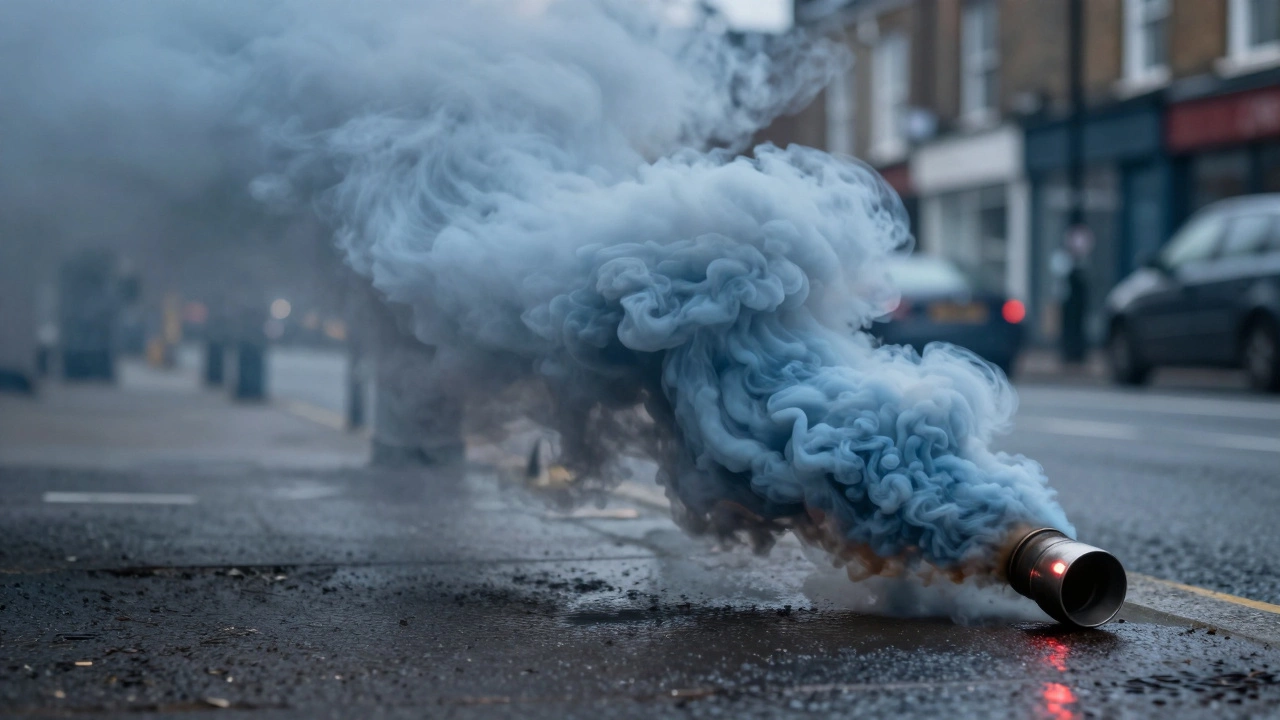
- Blue Smoke from the Exhaust: This is the most classic sign. If the oil is foaming, it gets pushed past piston rings and into the combustion chamber. The spark plug ignites this oil along with fuel. Burning oil produces thick, blue-gray smoke. It smells acrid and distinct from the white vapor of coolant leaks.
- Rough Idling or Misfires: Because the oil is interfering with the crankshaft’s movement, the engine may struggle to maintain smooth rotation. You might feel a vibration through the steering wheel or notice the RPM gauge fluctuating while stopped at a light.
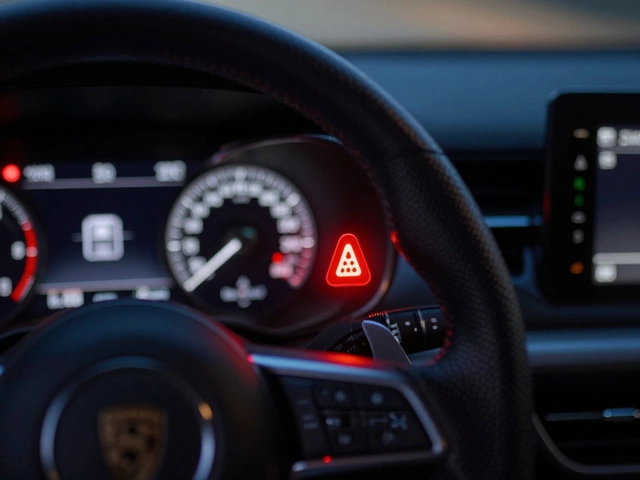
- Check Engine Light: Modern cars have oxygen sensors that monitor exhaust composition. If they detect unburned hydrocarbons (from burning oil), they trigger a fault code. Common codes include P0171 (system too lean) or misfire codes like P0300.
- Oil Leaks from Seals: Excess volume creates higher internal pressure. Gaskets and seals-like the valve cover gasket or rear main seal-are designed for specific pressure limits. When pressure exceeds these limits, the weakest point gives way, leading to fresh oil stains on your driveway.
- Catalytic Converter Damage: If blue smoke persists, the oil burns incompletely and coats the catalytic converter. This clogs the honeycomb structure, reducing efficiency and potentially causing the converter to melt down due to overheating. Replacing a cat costs significantly more than draining oil.
Who Is Most at Risk?
Not all engines react the same way to overfilling. Some are more forgiving than others. Understanding your vehicle’s design helps you assess the risk.
| Engine Type | Risk Level | Why It Matters |
|---|---|---|
| Modern Turbocharged Engines | High | Turbos rely on precise oil pressure and temperature. Foaming leads to turbo bearing failure, which is extremely costly. |
| V6 and V8 Engines | Medium-High | Larger displacement means larger crankshafts and deeper sumps, but also more volume to aerate. Many have tighter tolerances. |
| Older Carbureted Cars | Low-Medium | Older engines often had looser tolerances and less sensitive sensors. They might run rough but survive short-term overfilling. |
| Electric Vehicles (Hybrid Components) | N/A | EVs don’t use engine oil, but hybrids do. Treat hybrid ICE components with the same caution as standard cars. |
If you drive a high-performance car or a modern diesel, precision is key. These engines operate at higher pressures and temperatures. A small amount of foam can disrupt the delicate balance required for direct injection systems or variable valve timing mechanisms.
How Much Is "Too Much"?
There is no universal number, but general automotive guidelines suggest that exceeding the maximum mark by more than 10% to 15% is dangerous. For a typical passenger car requiring 5 quarts of oil, adding an extra half-quart (approx. 0.5 liters) puts you in the danger zone. Adding a full quart is almost guaranteed to cause issues.
However, context matters. If you are stuck on the side of the road and need to add oil to reach the nearest garage, adding slightly above the max line for a few miles is usually survivable. The real danger comes from driving long distances or highway speeds with consistently overfilled oil. High RPMs increase the agitation of the oil, accelerating foaming.
What To Do If You’ve Overfilled Your Oil
Panic is unnecessary, but action is required. Here is the step-by-step process to correct the mistake safely.
- Stop Driving Immediately: If you just added the oil and haven’t driven yet, great. If you’ve been driving and see blue smoke, pull over safely and turn off the engine.
- Check the Dipstick Again: Sometimes, oil splashes around during driving and gives a false reading. Wait 5-10 minutes for the oil to settle back into the pan. Wipe the dipstick clean, reinsert it fully, and pull it out again. Confirm the level is indeed above the "Max" or "Full" cross-hatch.
- Determine the Amount: Estimate how much over you are. If it’s just a millimeter over, you might be okay to drive slowly to a mechanic. If it’s halfway to the top of the tube, you need to remove oil now.
- Remove the Excess: You have two options:
- The Drain Plug Method: Jack up the front of the car securely. Place a drain pan underneath. Loosen the oil drain plug just enough to let a small stream out. Tighten it frequently and recheck the dipstick. This is messy but effective.
- The Suction Pump Method: Buy a hand-held oil extraction pump (available at any auto parts store). Insert the tube through the dipstick tube until it hits the bottom. Pump the handle to suck the oil out into a container. Check the level every 10 seconds. This is cleaner and preferred by most DIYers.
- Dispose of Oil Properly: Never pour used oil down the drain or into the trash. Take it to a recycling center or auto shop. In Bristol, many local garages accept waste oil for free.
Preventing the Mistake: Best Practices
Avoiding overfilling is easier than fixing it. Follow these habits to keep your engine healthy.
Read the Manual, Not Just the Bottle: Oil containers often say "add one quart." Your manual says "capacity: 4.5 quarts with filter." Always trust the manual’s specification for your specific model year. Manufacturers update capacities frequently.
Use the Dipstick Correctly: Many people wipe the dipstick on a dirty rag and reinsert it, getting a skewed reading. Use a clean paper towel. Ensure the car is on level ground. An inclined car shifts the oil pool, giving a false high or low reading.
Add Slowly: When topping off, add oil in increments of 0.25 quarts (one cup). Check the dipstick after each addition. It takes time for oil to flow down the sides of the engine block. Rushing leads to overshooting.
Ignore the "Top Off" Myth: You do not need to fill to the very brim. The space between the "Min" and "Max" marks is the safe operating range. Ideally, aim for the middle or slightly below the max mark. There is zero benefit to being at the absolute peak of the max line.
Common Misconceptions About Engine Oil
Let’s clear up some myths that lead people to overfill their engines.
"More oil means better cooling." False. Oil cools by flowing over hot surfaces and carrying heat away to the cooler. Foamed oil insulates rather than conducts heat, actually raising engine temperatures.
"If it’s synthetic, it handles overfilling better." Partially true. Synthetic oils have better viscosity stability and resist breakdown longer. However, physics still applies. Synthetic oil will still foam if agitated by a crankshaft. It won’t save you from seal blowouts caused by pressure.
"My car has an electronic sensor, so I don’t need to check." Dangerous thinking. Electronic sensors can fail or drift. They often only alert you when oil is critically low, not when it’s slightly high. Regular dipstick checks are still the gold standard.
Will my car break down if I accidentally add a little extra oil?
If you only exceed the maximum mark by a small amount (e.g., 10% or less), your car will likely run fine for a short period. However, you should correct it as soon as possible. Long-term driving with even slightly overfilled oil can lead to accelerated wear on seals and potential foaming under high-load conditions like highway driving or towing.
How do I know if my oil is foaming?
Foaming is hard to see directly without specialized equipment. However, you can infer it by checking the dipstick. If the oil looks bubbly or creamy (like a chocolate milkshake) immediately after pulling the dipstick, it is aerated. Other signs include blue exhaust smoke and a whining noise from the oil pump struggling to move compressed air.
Can overfilling oil void my warranty?
Yes. If your engine fails due to neglect or improper maintenance, such as overfilling oil to the point of bearing failure, the manufacturer may deny warranty claims. They will inspect the engine and find evidence of aeration or seal failure caused by excessive pressure, which is considered owner error.
Should I drain the oil completely if I overfill it?
No, you do not need to drain the entire system. Simply removing the excess amount to bring the level back to the mid-point between Min and Max is sufficient. Draining everything wastes good oil and requires buying a new full set. Use a suction pump or carefully loosen the drain plug to remove just the surplus.
Does the type of oil matter when overfilling?
The type of oil (synthetic vs. conventional) does not change the physical consequences of overfilling. Both will foam when agitated by the crankshaft. While synthetic oil may resist thermal breakdown better, it offers no protection against the mechanical stress of aeration or the pressure buildup that blows out gaskets.