Windshield Wiper Safety & Legal Checker
Scenario Parameters
Safety Analysis
SafeAdditional Distance to Stop
Legal Status
LegalPotential Fine
£0Imagine you’re stuck in a sudden downpour on the M4 near Bristol. The rain is hammering your windshield, and suddenly, your driver-side wiper arm snaps off. It’s not just annoying; it feels dangerous. Your instinct might be to keep going slowly, hoping to make it home or to a garage. But before you turn that key, you need to know one thing: driving without a working wiper is illegal in the UK if it compromises your view of the road.
This isn’t just about avoiding a fine. It’s about whether you can actually see the car braking in front of you when visibility drops below 10 meters. Let’s break down the legal reality, the hidden dangers, and what you should do if your wipers fail while you’re on the road.
The Legal Reality: Is It Actually Illegal?
In the United Kingdom, the law is clear but often misunderstood. Under the Road Vehicles (Construction and Use) Regulations 1986, every motor vehicle must have an efficient windscreen wiper and washer. The key word here is "efficient." If your wiper works but leaves streaks, you might be cutting it close. If it doesn’t work at all, you are breaking the law.
However, enforcement depends on context. If you’re driving on a sunny day with dry roads, police are unlikely to stop you for a broken wiper because your view isn’t compromised. But if it’s raining, snowing, or misty, and your wiper is dead, you become a moving hazard. In these conditions, you can be stopped, fined, and even banned from driving until the issue is fixed. A fixed penalty notice for defective wipers usually costs around £50 to £100, plus three penalty points on your license under Section 41 of the Road Traffic Act 1988.
More critically, this defect will cause you to fail your MOT test. The MOT is strict: both the front wiper and washer must operate correctly. Even a minor fault like a cracked blade that flaps around can result in a failure. So, while you might get away with it for a few miles in bad luck, you cannot legally drive the car further until it’s repaired.
Why Visibility Matters More Than You Think
You might think, "I’ll just drive slower." Slowing down helps, but it doesn’t solve the core problem: perception. When rain hits glass, it creates a distorted lens effect. Without a wiper clearing that water, light from oncoming headlights scatters across your field of view. This phenomenon, known as glare, can temporarily blind you. Studies by the Highway Code emphasize that drivers must ensure their windscreen is clean and unobstructed. A wet windscreen without wipers reduces contrast sensitivity, making it harder to spot pedestrians, cyclists, or potholes.
Consider this scenario: You’re approaching a junction. A child runs out from behind a parked car. With working wipers, you see them clearly and brake. Without them, the rain distortion delays your reaction time by up to half a second. At 30 mph, that extra half-second means you travel another 6.7 meters before you even start to brake. That distance could be the difference between a near-miss and a collision.
Additionally, modern cars rely on cameras for safety features like lane-keeping assist and automatic emergency braking. These cameras are often mounted behind the windscreen. If the glass is obscured by rain, these systems may malfunction or shut down entirely, leaving you without critical aids.
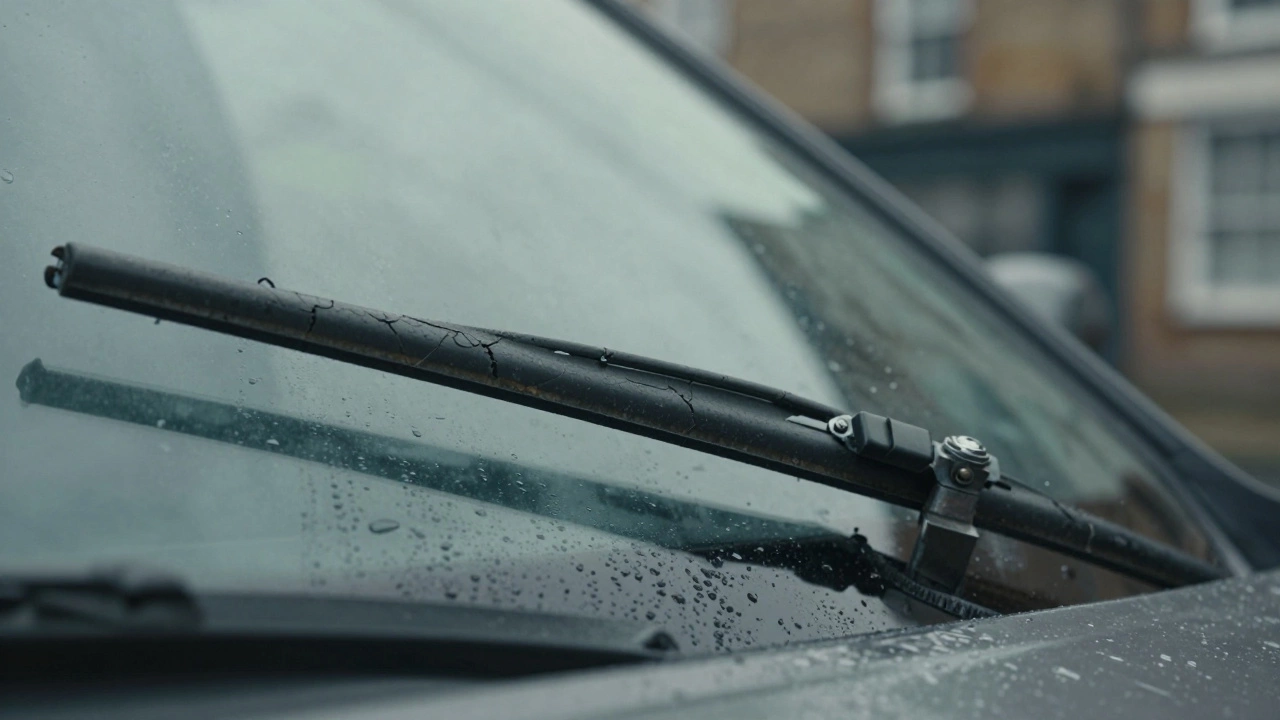
What To Do If Your Wiper Breaks While Driving
If your wiper fails unexpectedly, panic won’t help. Here is a step-by-step guide to staying safe and legal:
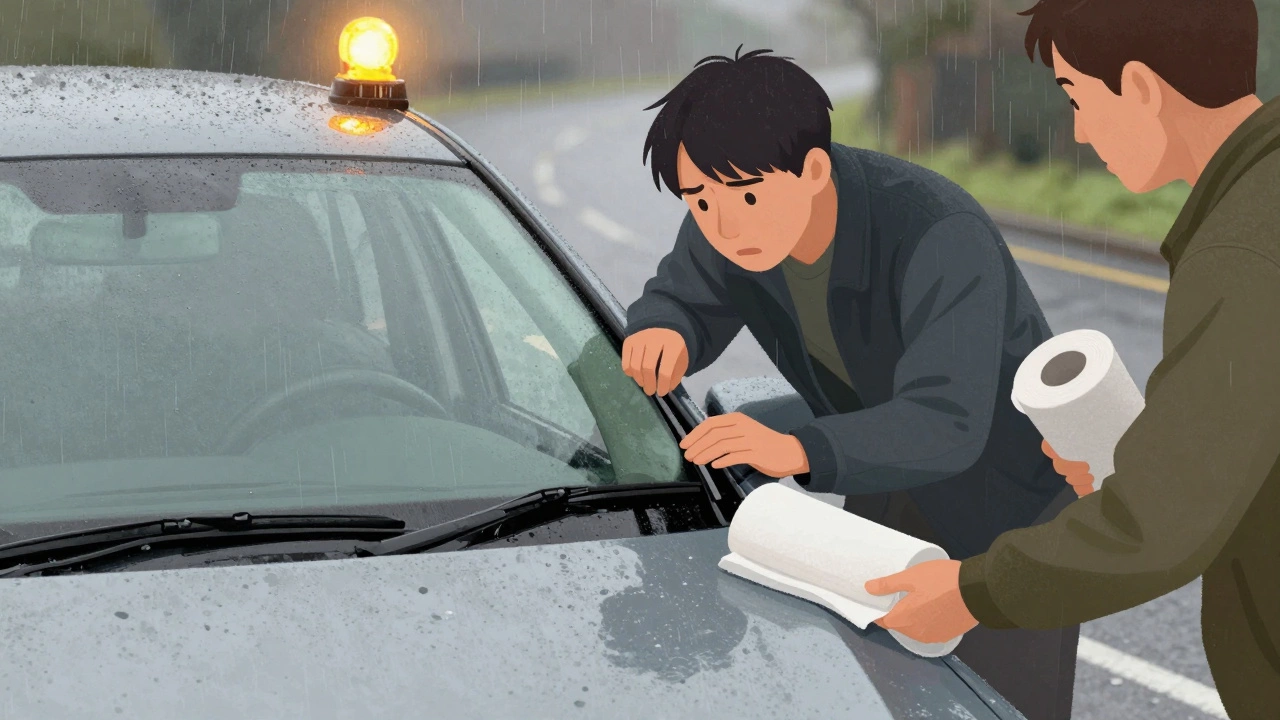
- Pull Over Immediately: Find a safe place to stop. Do not continue driving if visibility is poor. Use your hazard lights to alert other drivers.
- Assess the Damage: Is the blade torn? Is the arm loose? Or has the motor died? Sometimes, a simple re-seating of the blade onto the arm can restore function.
- Use Temporary Fixes: If you’re stranded, you can use paper towels or a soft cloth to manually wipe the windscreen. Keep a roll of toilet paper in your glove box for emergencies-it sounds silly, but it works better than nothing.
- Call for Help: Contact roadside assistance or a local mechanic. In Bristol, many garages offer mobile repair services that can come to you.
- Avoid DIY Hacks: Don’t try to tape the wiper back on with duct tape. It won’t hold under pressure and could damage the mechanism further.
If you absolutely must move the car a short distance (e.g., from a highway shoulder to a nearby service station), do so only if the weather is clear and dry. Drive at crawling speeds, keep windows slightly open to reduce condensation, and have a passenger help watch for hazards.
Common Causes of Wiper Failure
Understanding why wipers fail can help you prevent future issues. Most problems stem from neglect or wear:
- Dried-Out Rubber: Wiper blades degrade over time due to UV exposure and ozone. Cracks in the rubber lead to streaking and skipping.
- Stiff Joints: The pivot points where the arm connects to the blade can seize up if not lubricated. This causes uneven wiping patterns.
- Electrical Faults: A blown fuse or faulty relay can kill the wiper motor. Check your car’s fuse box first before assuming the motor is dead.
- Dirt Buildup: Grime, tree sap, and bird droppings on the windscreen act like sandpaper against the blade, accelerating wear.
Regular maintenance is cheap compared to the cost of an accident or a ticket. Replace your blades every six to twelve months, depending on usage. Clean the windscreen thoroughly before installing new blades to extend their life.
| Type | Lifespan | Performance in Rain | Cost Range |
|---|---|---|---|
| Conventional (Frame) | 6-12 months | Moderate | £5 - £15 per pair |
| Boneless (Beam) | 12-18 months | Excellent | £15 - £30 per pair |
| Hybrid | 9-15 months | Very Good | £10 - £20 per pair |
When Can You Legally Drive Without Wipers?
There are very few exceptions. You can technically drive without wipers if:
- The weather is completely dry: No rain, no mist, no snow. However, this is risky because weather changes quickly.
- You are towing a trailer: Some older vehicles allow temporary exemptions during breakdown recovery, but this requires specific authorization.
- The vehicle is being driven for repair purposes: If you’re driving directly to a garage to fix the wipers, you may argue necessity, but you still risk a fine if pulled over.
Never assume you’re exempt. The safest bet is always to get the car fixed before driving it again.
Preventative Maintenance Tips
To avoid finding yourself stranded with a broken wiper, follow these simple steps:
- Inspect Blades Monthly: Look for cracks, tears, or hardening rubber. Lift the arm and check the edge.
- Clean the Windscreen: Use a dedicated glass cleaner, not household window spray which can leave residues.
- Lubricate Arms: Apply a small amount of silicone grease to the pivot joints annually.
- Check Washers: Ensure your washer fluid reservoir is full and the nozzle isn’t clogged.
Investing in high-quality beam-style wipers can save you money in the long run. They conform better to the curve of the windscreen and resist freezing in winter, making them ideal for unpredictable British weather.
Can I drive to a garage with a broken wiper?
Yes, but only if the weather is dry and visibility is not impaired. If it starts raining, pull over immediately. Police may still stop you if they believe your view is compromised, even if you’re heading to a repair shop.
Will a single broken wiper fail my MOT?
Yes. The MOT requires both front wipers to function efficiently. If one is broken or ineffective, you will fail the test. You must replace or repair it before retaking the exam.
How much does it cost to fix a wiper?
Replacing blades costs between £10 and £30. If the motor or linkage is broken, repairs can range from £50 to £150 depending on the vehicle. Always get a quote before authorizing work.
Can I use newspaper to clean my windscreen?
Newspaper is good for removing smears after cleaning, but it’s not a substitute for wipers in rain. It lacks the pressure and speed needed to clear water effectively while driving.
Is it illegal to drive with streaky wipers?
Technically, yes. Streaks indicate inefficient wiping, which violates the requirement for an "efficient" wiper. While rarely enforced unless severe, it’s a valid reason for an MOT failure.