Spark Plug Replacement Strategy Checker
Not sure whether to change all your spark plugs or just the bad one? Use this tool to evaluate the risks and potential savings.
Replace All Plugs
For optimal performance and long-term savings, it is recommended to replace all spark plugs simultaneously.
You’re driving along, and the engine starts to shudder. It’s not a total breakdown, just a rough idle or a slight hesitation when you hit the gas. You check the maintenance log, see that your spark plugs are due for a swap, but maybe one looks worse than the others. Your wallet screams "save money," and your brain whispers, "Just change the bad ones." Is it actually OK to change only some spark plugs? The short answer is: technically yes, mechanically no. While you can physically install new plugs in specific cylinders, doing so creates an imbalance that often causes more headaches than it solves.
The Physics of Mismatched Ignition
Think of your engine like a rowing team. If eight rowers are perfectly synchronized, the boat glides. If seven are using brand-new, lightweight oars and one is dragging around a heavy, waterlogged wooden paddle from 1995, the boat doesn’t just go slower-it goes in circles. That’s what happens when you mix old and new spark plugs. New plugs have tighter gaps, cleaner electrodes, and consistent resistance. Old plugs have eroded electrodes, wider gaps, and carbon buildup. When you fire them together, the electrical current takes the path of least resistance. This can lead to misfires in the older cylinders while the newer ones work overtime, creating a ripple effect of inefficiency across the entire combustion cycle.
Modern engines, especially those with turbochargers or direct injection, rely on precise timing and consistent burn rates. A mismatch disrupts this precision. You might notice the car feels fine at low speeds, but under acceleration, the engine struggles to maintain power because the cylinders aren't firing in harmony. It’s not just about one cylinder being weak; it’s about the whole system losing its rhythm.
Why Mechanics Hate Partial Replacements
If you take your car to a shop in Bristol and ask to replace just two plugs, watch the mechanic wince. There’s a practical reason for their discomfort beyond just wanting to sell you four plugs. First, labor costs. Changing spark plugs isn’t always a quick five-minute job. On many modern cars, you have to remove intake manifolds, coils, or other components to reach the plugs. If you pay for three hours of labor to access the engine bay, why would you stop halfway through? Doing all of them at once spreads that labor cost over more parts, making each individual plug cheaper in the long run.
Secondly, there’s the risk of damage. Old plugs are notorious for seizing into the aluminum cylinder head. Removing one stubborn plug is risky; removing three out of four means you’ve already dealt with the worst offenders, but you still have to handle the remaining ones carefully. If you strip the threads on an old plug while trying to be gentle, you might end up paying for a helicoil repair later. By replacing them all, you ensure every thread is fresh, torqued correctly, and free of corrosion.
The Hidden Cost of Uneven Wear
Spark plugs don’t wear evenly by accident. Often, if one plug looks significantly worse than the others, it’s a symptom of a deeper issue. Maybe that cylinder has a leaking fuel injector dumping too much gasoline, fouling the plug. Or perhaps there’s a small oil leak from the valve cover gasket dripping onto that specific spark plug well. If you just swap the plug without addressing the root cause, the new plug will foul out within weeks. You’ll be back in the garage, spending more money on parts and labor, wondering why the problem came back.
| Factor | Replacing All Plugs | Replacing Only Bad Plugs |
|---|---|---|
| Engine Performance | Smooth, balanced power delivery | Potential vibration, hesitation, rough idle |
| Fuel Economy | Optimal efficiency maintained | Reduced MPG due to inefficient combustion |
| Labor Cost Efficiency | High (one job covers all) | Low (potential re-work needed soon) |
| Risk of Misfire | Very Low | Moderate to High |
| Catalytic Converter Health | Protected from unburnt fuel | At risk from frequent misfires |

When Partial Replacement Might Be Acceptable
Are there exceptions? Sure. If you’re in a pinch-say, you blow a fuse or crack a plug during a road trip and need to get home-you can absolutely replace just the broken one. It’s a temporary fix, not a maintenance strategy. Also, on very old carbureted engines with simple ignition systems, the tolerance for mismatched plugs is higher. These engines are less sensitive to precise timing variations. But even then, it’s a band-aid. Once you’re back home, schedule the full replacement.
Another scenario is diagnostic troubleshooting. Sometimes, mechanics will swap plugs between cylinders to see if a misfire follows the plug or stays with the cylinder. If the misfire moves, it’s the plug. If it stays, it’s likely an injector or compression issue. In this case, swapping one or two plugs is part of the testing process, not the final repair.
How to Spot Failing Plugs Before They Break
You don’t want to wait until your engine shakes violently to act. Here are the signs that your plugs are nearing the end of their life:
- Hard Starting: The engine cranks longer than usual before catching.
- Poor Acceleration: You press the gas, and the car feels sluggish or stumbles.
- Rough Idle: The RPM needle bounces slightly when you’re stopped at a light.
- Check Engine Light: Codes P0300 through P0308 indicate random or specific cylinder misfires.
- Increased Fuel Consumption: You’re visiting the pump more often without changing your driving habits.
If you see these symptoms, inspect all plugs. Don’t just look at the one causing the noise. Look at the color of the electrode. A healthy plug should be a light tan or gray. Black soot indicates a rich fuel mixture, while white or blistered porcelain suggests overheating or lean conditions. These clues help you diagnose the engine’s health, not just the plug’s status.
Choosing the Right Plugs Matters
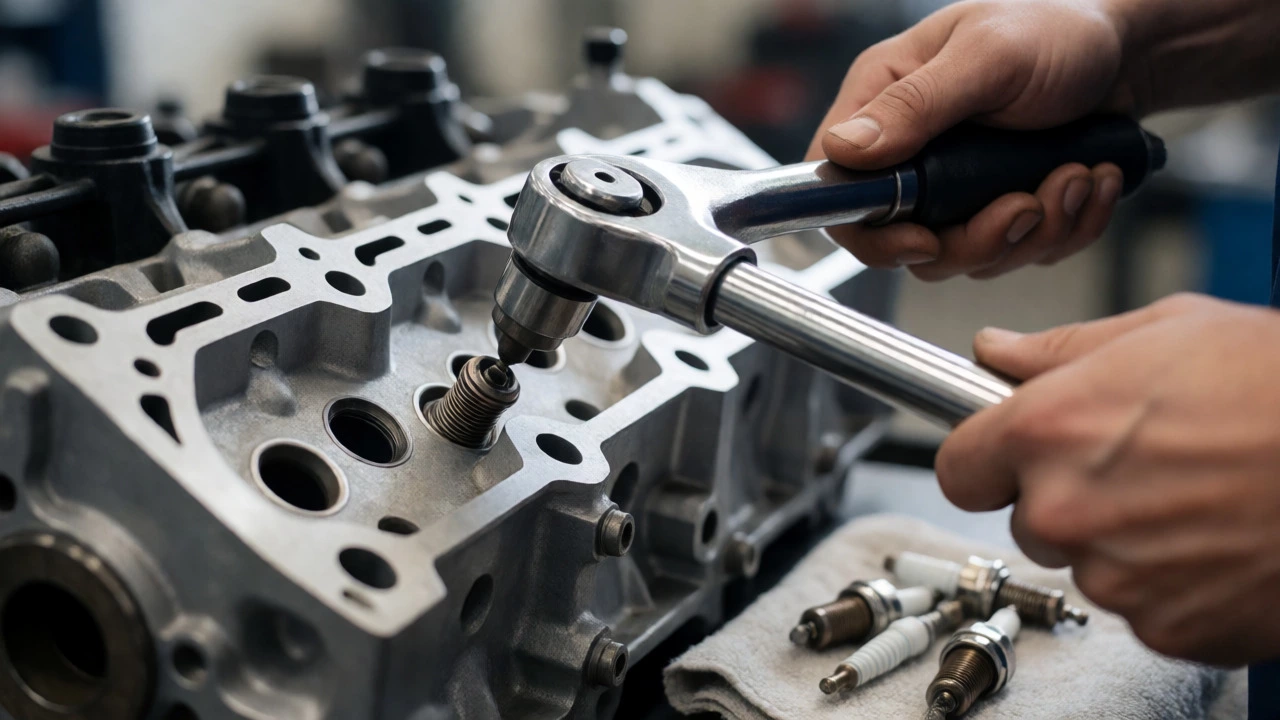
If you decide to replace all your plugs (which you should), make sure they match. Not all spark plugs are created equal. Using the wrong heat range can cause pre-ignition or fouling. Stick to the manufacturer’s specifications. For most modern cars, iridium or platinum-tipped plugs are standard. They last longer-often up to 60,000 miles compared to 30,000 for copper-but they require proper torque. Over-tightening can crack the ceramic insulator; under-tightening can cause the plug to vibrate loose and damage the threads.
Also, consider the gap. Pre-gapped plugs are convenient, but it’s wise to double-check them with a feeler gauge before installation. Manufacturing tolerances vary, and shipping can sometimes knock the gap out of spec. Taking thirty seconds to verify the gap ensures optimal performance right out of the box.
The Verdict on Mixed Plugs
So, is it OK to change only some spark plugs? Technically, yes. Practically, no. The savings on parts rarely outweigh the risks of poor performance, potential catalytic converter damage, and future labor costs. Your engine is a balanced system. Keep it balanced. Replace them as a set. It’s the cheapest insurance policy for your engine’s smooth operation.
Can I drive with one bad spark plug?
Yes, you can usually drive with one bad spark plug, but it’s not recommended for long distances. You may experience reduced power, rough idling, and increased fuel consumption. More importantly, unburnt fuel from the misfiring cylinder can enter the exhaust system and overheat the catalytic converter, leading to expensive repairs down the line.
Do spark plugs wear out at different rates?
In a healthy engine, spark plugs should wear at roughly the same rate. However, issues like leaking fuel injectors, oil leaks into the spark plug wells, or inconsistent air-fuel mixtures can cause one plug to wear faster or foul earlier than the others. If you find significant differences in wear, investigate the underlying cause rather than just replacing the single plug.
Is it cheaper to replace spark plugs myself?
Generally, yes. Spark plugs are inexpensive parts, typically costing between £5 and £20 each depending on the type (copper, platinum, or iridium). Labor at a shop can add £50 to £150 per hour. If you have basic tools and mechanical confidence, DIY replacement can save you significant money. Just be careful not to cross-thread them or overtighten them.
How often should I change my spark plugs?
This depends on the plug material and your vehicle manufacturer's recommendation. Copper plugs usually need replacement every 30,000 miles. Platinum and iridium plugs can last 60,000 to 100,000 miles. Always check your owner’s manual for the specific interval for your car model.
What happens if I put the wrong spark plugs in?
Using the wrong spark plugs can lead to serious engine problems. If the heat range is too cold, the plug may foul with carbon deposits. If it’s too hot, it can cause pre-ignition or detonation, which can damage pistons and valves. Incorrect size or thread pitch can also prevent proper sealing or damage the cylinder head threads.