Engine Neglect Cost Calculator
Input Your Scenario
Results Analysis
Enter your details and click calculate to see potential costs.
Damage Progression Timeline
Stage 1
Loss of Lubrication
Friction increases, wear rates spike on camshafts and lifters.
Stage 2
Sludge Formation
Tar-like substance blocks oil pump pickup and galleries.
Stage 3
Overheating
Components retain heat, cylinder heads warp, compression drops.
Stage 4
Component Failure
Bearings crack, pistons scuff walls, metal shards circulate.
Stage 5
Catastrophic Seizure
Engine locks up completely. Full rebuild or replacement needed.
You turn the key, the engine roars to life, and you head out. It feels fine. But inside that block, a slow-motion disaster might be brewing if you’ve ignored your engine oil schedule for too long. We all know we should change our oil, but it’s easy to push it back. “Just one more month,” you tell yourself. “The light hasn’t come on yet.”
That delay is expensive. Skipping an oil change doesn’t just void a warranty; it actively cooks your engine from the inside out. When oil breaks down, it stops protecting metal parts and starts destroying them. By the time you hear a knock or see smoke, the damage is often permanent. Let’s look at exactly what happens under the hood when you ignore this basic task.
The Science of Breakdown: Why Old Oil Fails
Fresh engine oil is a complex mixture of base oils and additives designed to lubricate, cool, and clean internal engine components. Think of it as the blood of your car. It flows through tight spaces between moving metal parts, creating a microscopic cushion that prevents direct contact. Without this film, metal grinds against metal.
But oil isn’t static. It degrades. Heat is the enemy. Modern engines run hot, often exceeding 250°F (121°C) in normal operation. This heat causes oxidation. Over time, the chemical bonds in the oil break down. The oil becomes thinner, losing its viscosity-the thickness that allows it to stick to cylinder walls and protect bearings.
Simultaneously, contaminants accumulate. Every time fuel burns, tiny particles of soot, carbon, and acid are produced. Some of these blow past piston rings into the crankcase. Fresh oil contains detergents and dispersants that trap these particles, keeping them suspended so they can be filtered out during a change. Old oil runs out of cleaning agents. The dirt settles. The acids eat away at seals and gaskets. The result is a thick, black sludge that clogs oil passages.
The Progression of Damage: From Sludge to Seizure
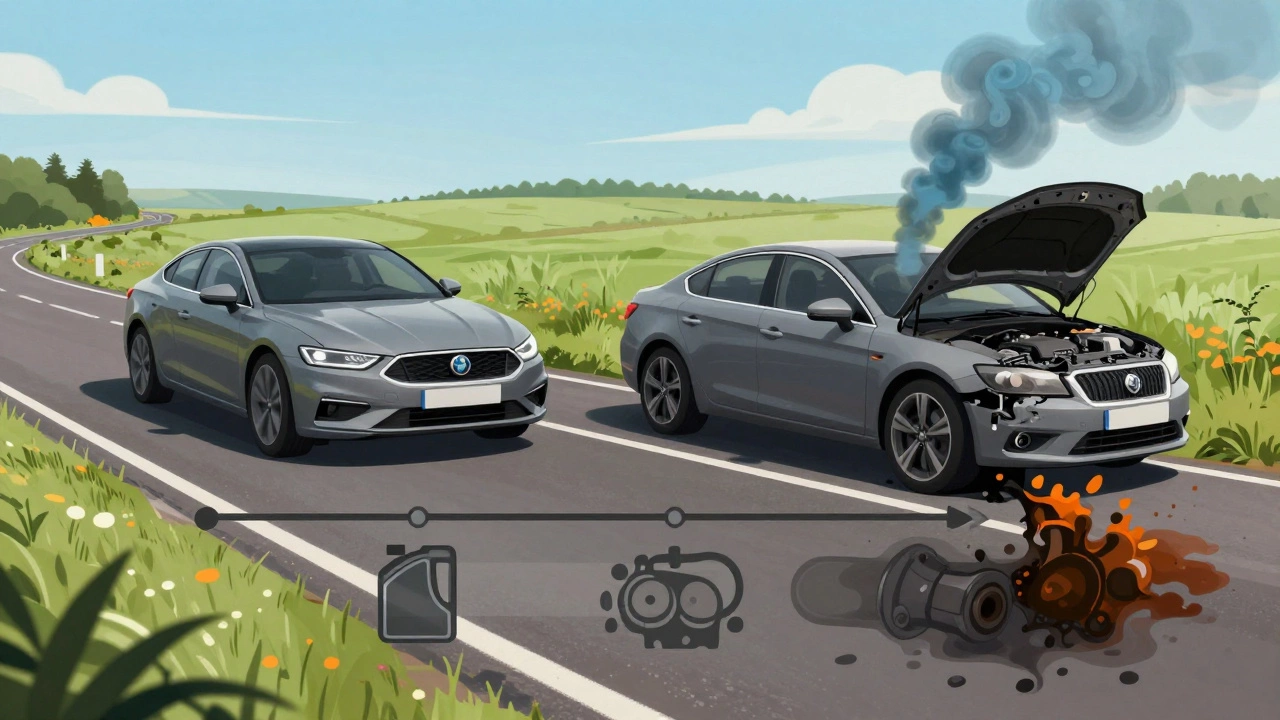
Damage doesn’t happen overnight. It follows a predictable path. Understanding this timeline helps you realize why early intervention matters.
- Loss of Lubrication: As oil thins and oxidizes, the protective film weakens. Friction increases. You might not feel it yet, but wear rates on camshafts and lifters begin to spike.
- Sludge Formation: Contaminants mix with degraded oil to form a tar-like substance. This sludge coats internal surfaces. It blocks the small holes in the oil pump pickup screen and the narrow galleries that feed oil to critical components like the valve train.
- Overheating: Oil carries heat away from pistons and bearings. Sludge-insulated components retain heat. Cylinder heads warp. Piston rings expand and lose tension. Compression drops.
- Component Failure: Bearings spin without adequate oil flow. They overheat and crack. Cam lobes flatten. Pistons scuff cylinder walls. Metal shards circulate in the remaining oil, acting like sandpaper on every surface they touch.
- Catastrophic Seizure: In extreme cases, a bearing fails completely, locking the crankshaft. Or a piston expands enough to weld itself to the cylinder wall. The engine stops instantly. Restarting it is impossible without a full rebuild or replacement.
Warning Signs Your Engine Is Starving
Your car will try to tell you something is wrong before it dies completely. Pay attention to these symptoms. They are not subtle hints; they are distress signals.
- Dark, Smelly Oil: Pull the dipstick. Fresh oil is amber and translucent. Used oil is dark brown. If it looks like crude oil or smells like burnt toast, it’s overdue for a change. If it feels gritty between your fingers, metal shavings are present.
- Exhaust Smoke: Blue-gray smoke means oil is burning in the combustion chamber. This happens when seals harden due to old oil acidity, allowing oil to leak past piston rings or valve guides. White smoke could indicate coolant mixing with oil, another sign of seal failure.
- Noises Under the Hood: Listen closely. A ticking sound often points to low oil pressure affecting hydraulic lifters. A rumbling or growling noise from the front of the engine suggests main or rod bearings are failing. Knocking is the final stage-metal hitting metal.
- Poor Fuel Economy: Increased friction means the engine works harder. You’ll notice your gas tank draining faster even if your driving habits haven’t changed.
- Check Engine Light: While generic, modern sensors detect irregularities in combustion and pressure. Ignoring this light when combined with other symptoms accelerates failure.

The Financial Reality: Repair vs. Replacement
Let’s talk numbers. An oil change costs between $40 and $70 at most shops. Doing it yourself drops that to $20-$30. Now compare that to the cost of neglect.
| Service | Average Cost (USD) | Labor Time |
|---|---|---|
| Standard Oil Change | $40 - $70 | 30 minutes |
| Oil Pump Replacement | $800 - $1,200 | 4-6 hours |
| Timing Belt/Chain Service | $600 - $1,500 | 3-8 hours |
| Engine Rebuild | $2,500 - $4,000 | 2-5 days |
| New Engine Replacement | $4,000 - $8,000+ | 3-7 days |
These aren’t guesses. They reflect current market rates for common vehicles. When sludge blocks the oil pump, the entire engine must often be removed to access it. Mechanics charge by the hour, and pulling an engine is labor-intensive. If the crankshaft is scored or the block is cracked, repair isn’t an option. You buy a new or remanufactured unit. That bill can exceed the value of an older car.
Myths That Keep People Delaying Changes
Why do people skip oil changes despite the risks? Misinformation plays a big role.
“Synthetic oil lasts forever.” False. Synthetic oil resists breakdown better than conventional oil, but it still degrades. Additives deplete. Contaminants accumulate. Most manufacturers recommend changing synthetic oil every 7,500 to 10,000 miles, or annually. Even if you drive rarely, time matters. Moisture condenses in the crankcase when the engine sits. Acid forms. Change it at least once a year.
“My car has no warning light, so it’s fine.” Many cars only show an oil pressure warning, which triggers when pressure drops critically low. By then, damage is occurring. Don’t wait for the light. Follow the mileage interval in your owner’s manual.
“I drive gently, so I don’t need frequent changes.” Gentle driving helps, but short trips are worse for oil than highway cruising. Short trips prevent the engine from reaching optimal temperature. Water and fuel dilute the oil. It never gets hot enough to burn off these contaminants. If you mostly commute five miles or less, treat it as severe service and change oil more often.
How to Protect Your Engine: Best Practices
Preventing engine failure is simple if you stay consistent. Here’s how to keep your engine healthy.
- Follow the Manual: Your owner’s manual specifies the correct oil viscosity (e.g., 5W-30) and change interval. Stick to it. Ignore advice from non-experts who claim you can stretch intervals indefinitely.
- Use Quality Filters: The oil filter traps particles that the oil can’t hold in suspension. A cheap filter may collapse or bypass debris. Replace the filter every time you change the oil.
- Check Levels Monthly: Dipsticks exist for a reason. Engines consume small amounts of oil over time. Topping off ensures you maintain proper pressure and lubrication.
- Consider Synthetic Blend or Full Synthetic: If your budget allows, upgrade. Synthetics handle heat better and last longer. They’re especially beneficial for turbocharged engines or high-performance vehicles.
- Keep Records: Track mileage and dates. Set phone reminders. Consistency prevents forgetfulness.
Can You Fix a Neglected Engine?
If you’ve already skipped several changes, hope isn’t lost-but options are limited. A flush might help if sludge is mild. Professional flushing uses solvents to dissolve deposits before draining. However, if sludge is thick, flushing can dislodge large chunks that clog the oil pump pickup, causing immediate failure. In such cases, a mechanic may recommend tearing down the engine to clean it manually-a costly process.
If metal shavings are present, the engine is likely beyond saving. Continuing to drive risks total seizure. The safest move is to stop driving and consult a trusted mechanic for an inspection. Sometimes, replacing the oil and filter immediately, then monitoring for noises, buys you time until a planned rebuild. But don’t gamble. Prevention is always cheaper than cure.
How long can you go without changing engine oil?
Most manufacturers recommend changing oil every 5,000 to 7,500 miles for conventional oil and up to 10,000 miles for synthetic. However, time also matters. If you drive less than 6,000 miles a year, change the oil at least once annually. Going beyond these limits significantly increases the risk of sludge formation and engine wear.
Does skipping an oil change void my warranty?
Yes, potentially. If your engine fails due to lack of maintenance and you cannot prove regular oil changes, the manufacturer may deny warranty claims. Keep receipts from every service visit. This documentation protects you if disputes arise.
What does engine sludge look like?
Engine sludge resembles thick, black tar or crude oil. It coats internal components and may be visible on the dipstick or around the oil filler cap. Unlike normal used oil, which is dark but fluid, sludge is viscous and sticky. It often has a burnt smell.
Can I add fresh oil to old oil instead of changing it?
No. Adding fresh oil dilutes the contaminant load slightly but does not remove sludge, acids, or metal particles. The old oil’s additives are depleted, and the mixture remains compromised. Only a full drain and refill restores proper protection.
Is synthetic oil worth the extra cost?
For most drivers, yes. Synthetic oil provides better high-temperature stability, reduces sludge formation, and extends engine life. While it costs more per quart, extended drain intervals mean fewer changes over time. The net savings and improved protection make it a smart investment, especially for newer or high-performance vehicles.