
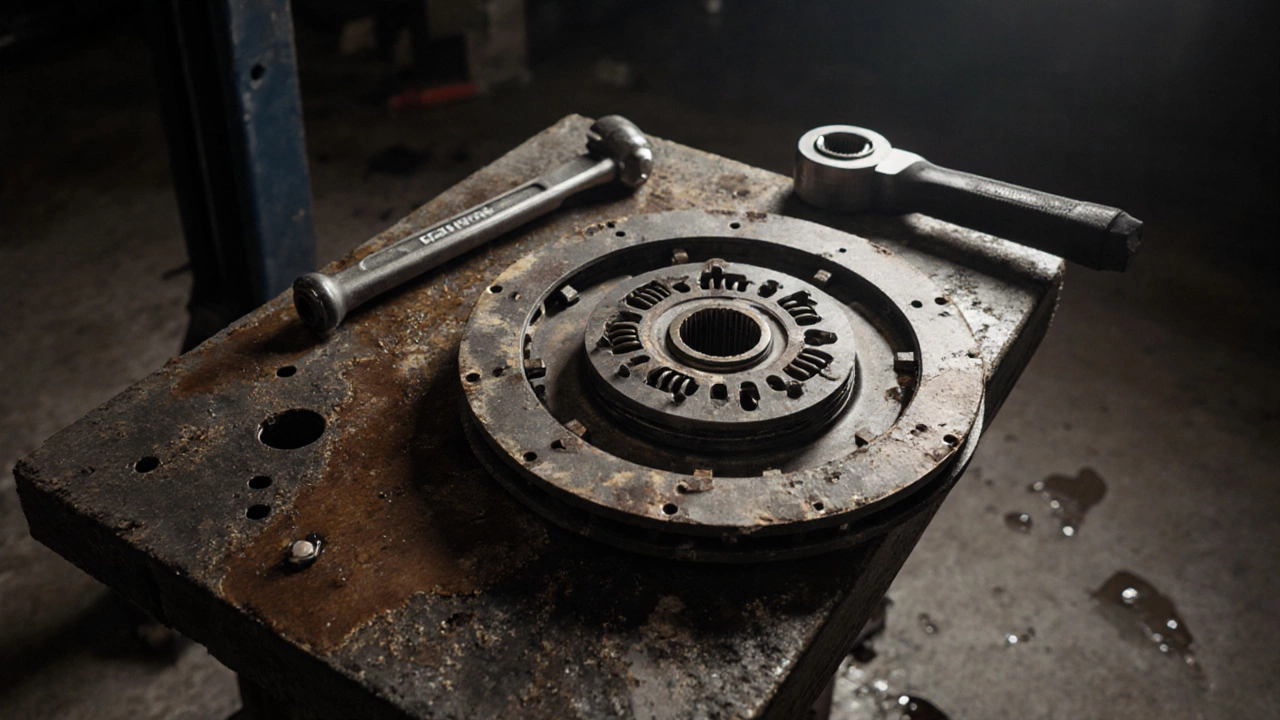
When you press the clutch pedal in a manual car, you’re engaging the transmission clutch, a mechanical component that connects and disconnects the engine from the gearbox to allow smooth gear changes. Also known as a clutch assembly, it’s the bridge between your foot and the gears—and when it goes, your car stops driving. Unlike automatic transmissions, manual cars rely entirely on this single part to transfer power. It’s not flashy, but without it, you’re stuck pushing.
A clutch kit, the full set of parts including the pressure plate, disc, and release bearing, wears down over time from normal use. If you ride the clutch, start in high gear, or frequently stall in traffic, it wears faster. Signs it’s dying? A spongy pedal, slipping when accelerating, grinding when shifting, or the car refusing to move even with the gas pressed. Most clutches last 60,000 to 100,000 miles, but aggressive driving can cut that in half. Replacing it isn’t just about fixing a part—it’s about protecting your manual transmission, the gearbox that transfers engine power to the wheels through selected gears. A worn clutch can cause damage to the flywheel, synchronizers, or even the input shaft if ignored. That’s why mechanics often recommend replacing the entire clutch kit at once, not just the disc. It’s cheaper in the long run and avoids a second labor-heavy job in six months.
Some drivers upgrade to a performance clutch kit, a heavier-duty version designed for higher torque, racing, or towing—but unless you’re modifying your engine or using the car for track days, a stock replacement is all you need. A stronger clutch won’t make your car faster; it just lasts longer under stress. And if your car is over 10 years old, check the condition of the flywheel too. Resurfacing or replacing it during clutch work saves you from another repair soon after.
What you’ll find below are real-world stories and fixes from drivers who ignored the signs, those who replaced their clutch early, and the ones who learned the hard way what happens when a clutch fails on the highway. From symptoms you can’t ignore to price estimates and what mechanics actually do during a clutch job, these posts cut through the noise. No fluff. Just what works.
 23 November 2025
Most clutches last 50,000 to 100,000 miles, but driving habits matter more than mileage. Learn the signs of wear, what's in a clutch kit, and how to avoid costly transmission damage.



©2026 northwichtyrescentre.co.uk. All rights reserved
0