
When your car’s engine oil, the lubricant that keeps engine parts moving smoothly and prevents overheating. Also known as motor oil, it’s one of the most critical fluids in your vehicle. drops too low, your engine doesn’t just run poorly—it starts dying, slowly and silently. You might not notice until it’s too late, because the damage builds up over time. A few hundred miles with low oil can wear out bearings, score cylinder walls, or even seize the whole engine. This isn’t a "maybe" problem. It’s a guarantee if you ignore the signs.
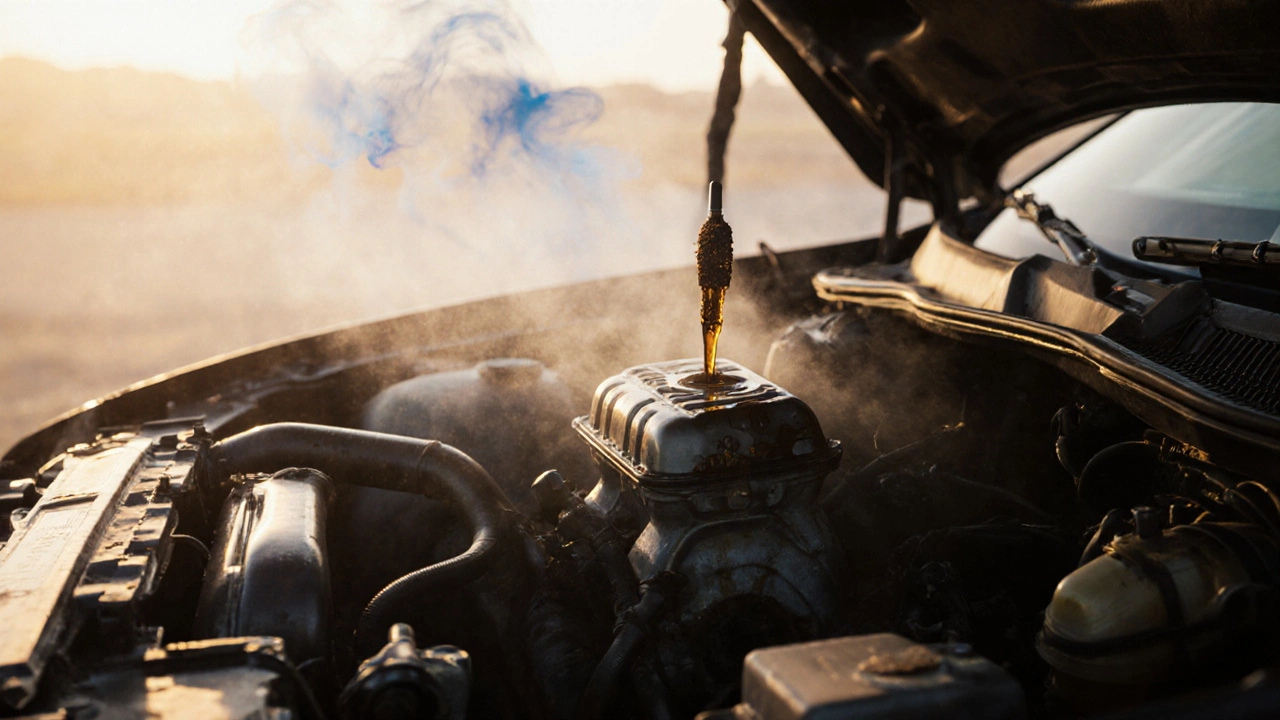
Low engine oil doesn’t always mean you’re leaking. It could be burning oil, a worn seal, or just forgetting to check it. The real danger? Most drivers wait for the dashboard light to come on. By then, the engine’s already been stressed. Look for quieter signs: a knocking or ticking noise from the engine, especially at idle. That’s metal grinding against metal because oil isn’t coating the parts properly. You might also feel the car losing power under acceleration, or notice blue smoke coming from the exhaust—oil burning in the combustion chamber. And don’t ignore the smell. If you catch a burnt oil odor inside or outside the car, that’s not your exhaust. That’s your engine crying for help.
The oil pressure warning light, a red or amber icon that looks like an oil can is the last line of defense. But it’s not a suggestion—it’s an emergency signal. If it comes on, stop safely and turn off the engine immediately. Driving even a mile with low oil pressure can destroy your engine. Even if the light doesn’t come on, checking your oil regularly is non-negotiable. Do it once a week. Pull the dipstick, wipe it clean, stick it back in, then pull it out again. If the level is below the minimum mark, top it up. Not with any random oil—use the type your manual says. Mixing oils or using the wrong viscosity can cause more harm than good.
And here’s the thing: low oil isn’t always about quantity. It’s also about quality. Old, dirty oil loses its ability to lubricate, even if the level looks fine. That’s why oil change symptoms, like rough idling, reduced fuel efficiency, or dark sludge on the dipstick matter just as much as low levels. If your oil looks like tar, it’s time for a change—no matter how many miles you’ve driven. Waiting for the "recommended" interval is fine if you drive gently. But if you haul heavy loads, drive in stop-and-go traffic, or live in extreme heat or cold, your oil breaks down faster.
What you’ll find below are real, practical posts from drivers who’ve been there. They didn’t ignore the signs—they figured them out before it cost them thousands. You’ll see how a simple dipstick check caught a failing seal before it ruined an engine. How a ticking noise turned out to be low oil, not a bad lifter. How one driver saved their car by noticing blue smoke and acting fast. These aren’t theory pieces. They’re real stories with real fixes. You don’t need to be a mechanic to spot these signs. You just need to know what to look for—and when to act.
 8 November 2025
Learn the real signs your car needs oil-noisy engine, burning smell, warning lights, and more. Don't wait for breakdowns. Check your oil regularly to avoid costly engine damage.
©2026 northwichtyrescentre.co.uk. All rights reserved

0