
When working with automotive air filter, a component that traps dust and debris before it reaches the engine. Also known as car air filter, it plays a crucial role in engine health and fuel economy. The air filter performance, how well the filter blocks particles while letting air flow directly influences engine protection, preventing wear and premature failure and can improve fuel efficiency, by ensuring the engine gets clean air for optimal combustion. Regular car maintenance, especially checking and replacing the filter, keeps these benefits alive.
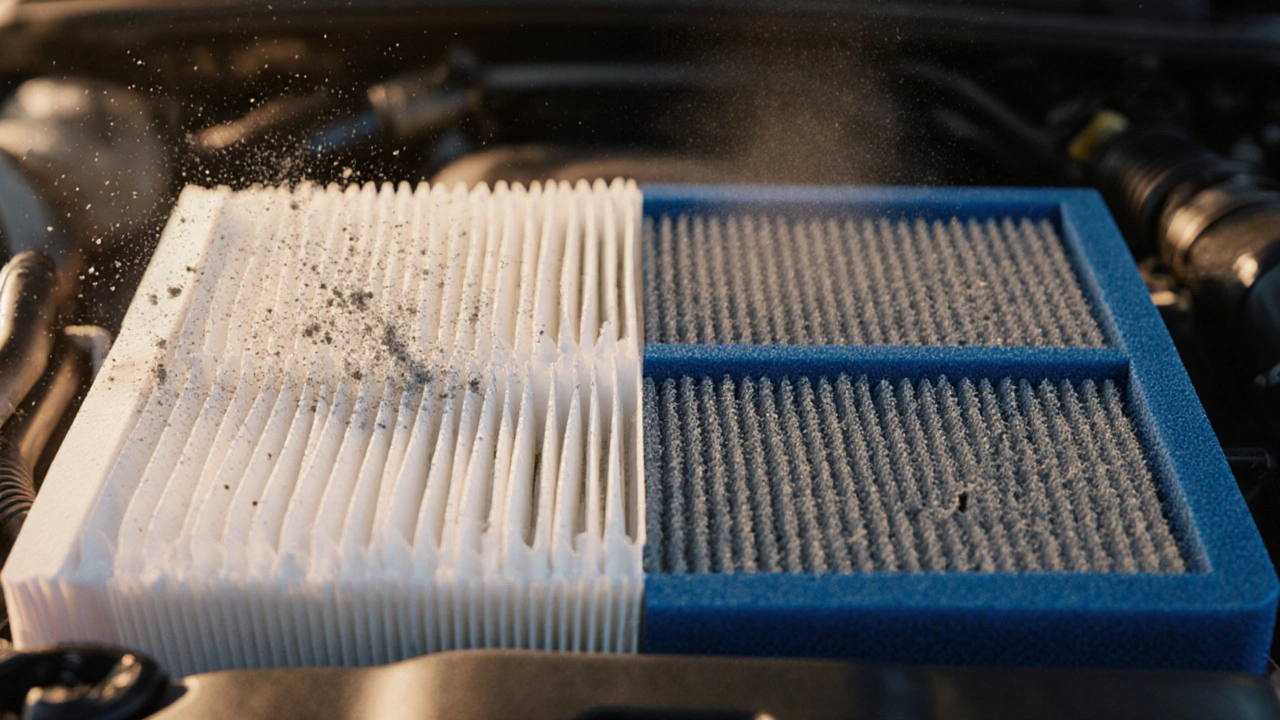
Automotive air filters come in four main families: disposable paper, reusable cotton‑gauze, foam‑based and high‑flow synthetic media. Paper filters are cheap and designed for a set mileage, usually 12‑15 000 km, before they become too clogged to let air through. Cotton‑gauze filters, often marketed as “performance” parts, let more air in but need regular cleaning with a special oil to keep dust from bypassing the media. Foam filters sit in the middle – they’re washable, cheap, and work well for off‑road vehicles that encounter a lot of fine dust. Synthetic high‑flow filters are the most expensive; they promise the best breathing and are a favorite for tuned engines, but they still need periodic inspection. Each type balances three attributes: filtration efficiency, airflow, and cost. If you prioritize a tidy engine and low upkeep, paper is fine. If you chase a few extra horsepower and don’t mind a quick cleaning, cotton or foam is worth a look. The key is matching the filter’s airflow rating to your engine’s demand – an undersized filter chokes power, while an oversized one can let big particles slip through, hurting engine protection.
Keeping the filter in good shape is part of everyday car maintenance. A quick visual check under the hood can reveal a dark, saturated filter that needs swapping out. You’ll also notice reduced acceleration, a rough idle, or a dip in miles‑per‑gallon – classic signs of restricted airflow. To test airflow yourself, you can gently shake the filter; a healthy paper filter will feel firm, while a clogged one feels soft and gives off a dust puff. If you run a reusable filter, follow the manufacturer’s cleaning cycle: soak in detergent, rinse, dry, then re‑apply the recommended oil coating. Never skip the oil – it’s what captures the tiniest particles. When in doubt, replace the filter before it harms the engine; a fresh filter restores the original airflow, improves combustion, and can shave a few percent off fuel consumption. For most drivers, swapping a paper filter at the service interval is the simplest route, but enthusiasts who rebuild engines or race should inspect their filters every 3 000 km. Below you’ll find articles that dive deeper into each filter type, cleaning methods, cost breakdowns, and real‑world performance data, giving you the confidence to pick the right option for your ride.
 14 October 2025
Explore the pros and cons of paper versus washable air filters. Learn which delivers better filtration, cost savings, and fit for your driving conditions.





©2026 northwichtyrescentre.co.uk. All rights reserved
0