Windshield Wiper Position Checker
Is Your Wiper Position Safe for Snow?
Check your wiper setup using the options below. The article explains why proper positioning prevents costly damage.
When snow hits, your windshield wipers are the first thing you think about - and the first thing to get ruined if you don’t act right. You’ve probably seen cars in parking lots with wipers stuck upright, like little arms raised in surrender. Some people swear by it. Others say it’s a bad idea. So what’s the truth? Should windshield wipers be up or down in snow?
Why This Even Matters
It’s not just about convenience. If your wiper blades freeze to the windshield, you’re risking cracked rubber, bent arms, or even a broken motor. A single icy night can turn a $20 replacement into a $150 repair job if the linkage snaps. And if you try to force the wipers loose in the morning, you might crack the glass. That’s not a myth - it happens more often than you think.
Every year, auto shops in Bristol and across the UK see a spike in wiper-related damage after heavy snowfall. The problem isn’t the snow itself - it’s how the wipers sit when it comes down. If they’re flat against the glass, the rubber freezes solid. When you turn them on, the motor strains. If they’re stuck too hard, you can shear the plastic gear inside the wiper transmission. That’s expensive.
The Upright Trick: What It Does and Doesn’t Do
Putting your wipers up in snow is a common trick. The idea is simple: lift them away from the windshield so snow and ice can’t cling to the rubber. It sounds smart - and for a while, it was the go-to advice from DIY forums and even some car magazines.
Here’s the catch: windshield wipers are designed to rest flat. Their arms are spring-loaded, and the tension is calibrated to press the blade evenly across the glass. When you lift them up, you’re putting all that pressure on one point - the pivot. Over time, that can warp the arm, especially on older cars with worn hinges.
Also, wind. If a gust hits while the wiper is up, it can slam back down hard enough to crack the windshield. I’ve seen it happen. One gust, one loud crack, and now you’re paying for a new front glass. That’s not worth the risk.
The Better Way: Lift, Don’t Lock
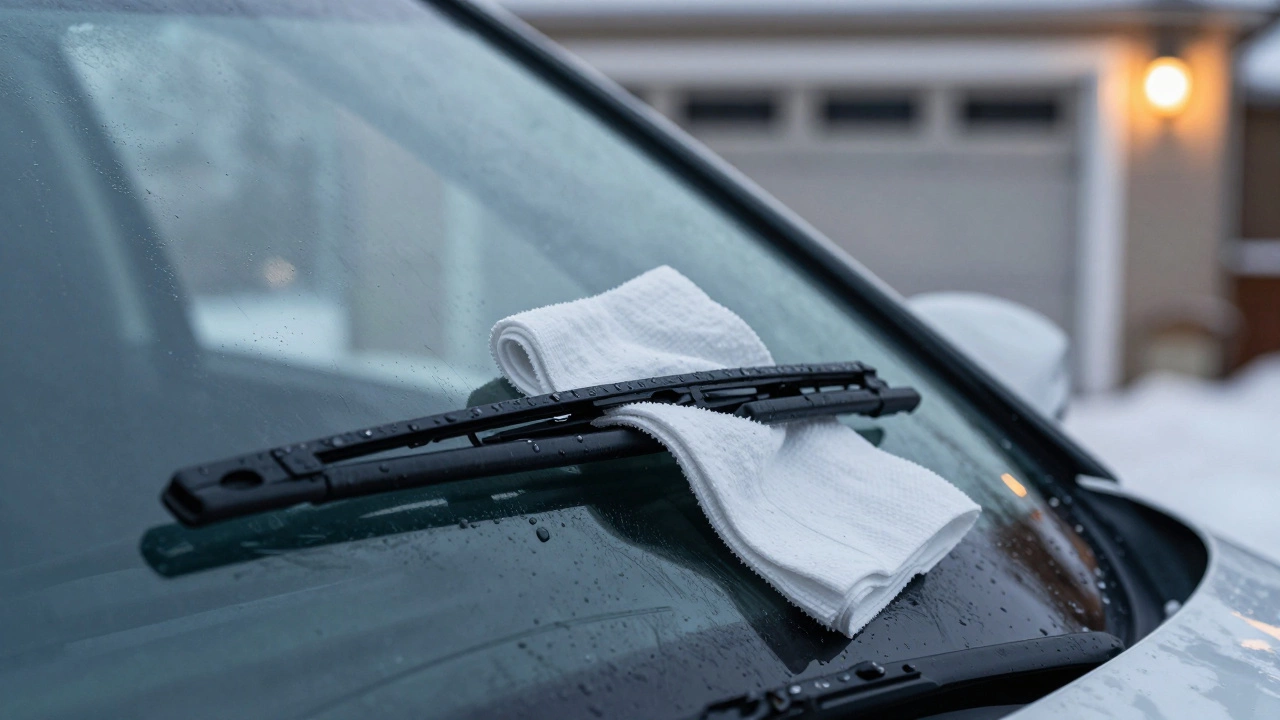
So what should you do instead? The real answer is somewhere in between. Don’t leave them flat. Don’t leave them fully upright. Lift them just enough to break contact with the glass - about an inch or two.
Here’s how:
- Turn off the car and remove the key.
- Turn the ignition to the "accessory" position (if your car allows it) and turn the wipers on. Let them stop in the middle of the windshield.
- Manually lift each wiper arm until the blade is just barely off the glass. You should feel slight resistance - not a full snap.
- Place a small piece of foam or a folded towel under the blade to keep it from flopping back down.
- Do this before the snow starts falling, not after.
This method prevents freezing without overloading the spring tension. It’s what mechanics in Bristol recommend - and it’s backed by data from the UK’s AA and RAC winter safety reports. No cracked windshields. No bent arms. No fried motors.
What About the Wiper Blades Themselves?
Even if you lift the arms, the rubber blade can still stick. That’s why you need to clean them before the storm hits. Dirt, road salt, and grime act like glue. If you leave them dirty, the ice will bond to the rubber like superglue.
Before snow arrives:
- Wipe down the blades with a damp microfiber cloth.
- Use rubbing alcohol (isopropyl) on a paper towel to remove grease and residue.
- Don’t use windshield washer fluid - it’s mostly water and freezes.
Also, check the condition of your blades. If they’re more than 6 months old or show cracks, replace them now. Winter doesn’t wait. A worn blade will smear, chatter, and leave blind spots - and that’s dangerous even without snow.
What If You Forgot and They’re Already Frozen?
If you didn’t prep and now your wipers are stuck, don’t panic. Don’t turn them on. Don’t pour hot water on them. Don’t pry them loose with a plastic card.
Here’s what actually works:
- Turn on the car and let the heater run on full blast for 10 minutes. Direct the vents toward the windshield.
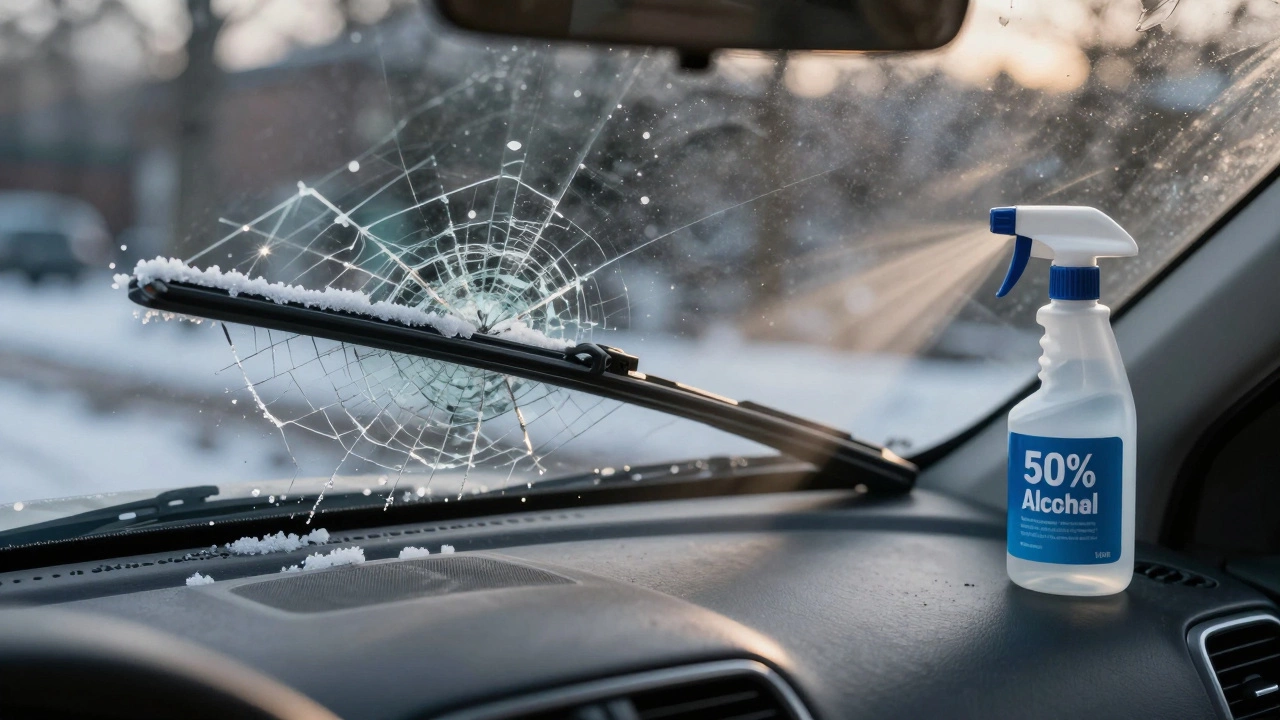
- Use a spray bottle with 50% isopropyl alcohol and 50% water. Spray lightly along the edge of the blade where it meets the glass.
- Wait 2-3 minutes. The alcohol melts the ice without damaging rubber or glass.
- Once it’s loose, gently lift the blade by hand. If it resists, spray again.
Never use a metal scraper. Never use boiling water. The temperature shock can crack the glass faster than you think. I’ve seen a 10-litre kettle of boiling water crack a windshield in under 5 seconds. It’s not worth the risk.
What About Wiper Covers?
Wiper covers - those rubber or foam sleeves you slip over the blades - are popular online. They promise to keep snow off. But here’s the truth: most of them are flimsy. They don’t seal well. Ice still gets in. And if they’re too tight, they can warp the blade over time.
They’re not useless. If you live in a place like the Lake District or the Scottish Highlands, where snow lingers for days, they can help. But for most UK drivers, the lift-and-foam method is simpler, cheaper, and more reliable.
Final Rule: Prevention Beats Repair
Winter car care isn’t about fancy gadgets. It’s about small habits. If you do three things before a snowstorm, you’ll save money and avoid stress:
- Lift your wipers slightly off the glass - just enough to break contact.
- Keep the blades clean and replace them every 6 months.
- Use a windshield washer fluid rated for -10°C or lower.
That’s it. No need for expensive covers. No need to risk your windshield. Just a little forethought - and your wipers will work fine when you need them most.
Should I leave my windshield wipers up in snow?
No, don’t leave them fully upright. It can damage the wiper arm’s spring tension and risk the blade slamming back down in wind. Instead, lift them just enough to break contact with the glass - about an inch or two - and place a towel or foam underneath to hold them there.
Can I use hot water to melt frozen wipers?
Never use hot or boiling water. The sudden temperature change can crack your windshield. Use a spray bottle with 50% isopropyl alcohol and 50% water instead. Spray along the edge of the blade and wait a few minutes. It melts ice safely without damage.
How often should I replace windshield wiper blades?
Replace them every 6 to 12 months, but in snowy climates like the UK, replace them every 6 months. Cold weather and road salt wear out rubber faster. If they streak, chatter, or skip, replace them immediately - even if they look fine.
Do wiper covers work in snow?
Some do, but most cheap ones don’t seal well. Ice still gets in, and tight covers can warp the blade over time. For most drivers, lifting the arms slightly and keeping blades clean is more effective and cheaper than buying covers.
What type of washer fluid should I use in winter?
Use a fluid rated for at least -10°C. Regular washer fluid is mostly water and freezes in cold weather, leaving you with no spray at all. Winter-grade fluid has antifreeze additives and cleaning agents designed for road grime and salt.