Fuel Pump Replacement Feasibility Checker
Find out if you can safely replace your fuel pump yourself. Based on your car model, skill level, and tank access.
When your car sputters on the highway, stalls at traffic lights, or won’t start at all - and you’ve checked the battery and the spark plugs - the fuel pump might be to blame. But before you panic or hand over your keys to a mechanic, ask yourself: is replacing a fuel pump a big job? The answer isn’t simple. It depends on your car, your tools, and your comfort level under the hood.
What a Fuel Pump Actually Does
A fuel pump is the heart of your car’s fuel system. It doesn’t just move gas from the tank to the engine - it pushes it under pressure so the injectors can spray it into the cylinders at the exact right moment. Modern cars use electric fuel pumps, usually mounted inside the gas tank. That’s important. It means the pump is hidden away, buried under seats, carpet, and sometimes even the rear axle.
Most fuel pumps last 100,000 to 150,000 miles. But if you frequently drive with a near-empty tank, you’re asking for trouble. Gas acts as coolant for the pump. Run low too often, and the pump overheats, wears out faster, and dies prematurely. A failing pump doesn’t always scream for help. Sometimes it just fades - slow starts, hesitation when accelerating, or sudden loss of power at highway speeds.
Why Replacing It Can Be a Pain
The biggest headache? Access. In 80% of cars made after 2000, you can’t just pop the hood and swap the pump. You have to get to the tank. That usually means removing the rear seat, lifting a carpet panel, and sometimes unbolting the fuel tank itself. Some models have an access panel under the trunk or rear floor. Others? You’re lowering the entire tank.
Here’s what you’re up against:
- Removing the fuel tank - which is heavy, full of fumes, and often rusted in place
- Disconnecting fuel lines and electrical connectors without spilling gas or creating sparks
- Dealing with old, brittle hoses that crack when you touch them
- Realigning the tank perfectly when you put it back - one misaligned bolt and you’ve got a leak
One mechanic in Bristol told me he once spent six hours on a 2015 Honda Civic because the tank had been cross-threaded during a previous repair. That’s not rare. If you’ve ever tried to work on a car with rusted bolts or stubborn clips, you know how fast a "simple" job can turn into a full-day project.
When You Can Skip the Tank
Not all fuel pumps are buried. Some older models - like the 1998 Ford F-150 or early 2000s Chevy trucks - have an external pump mounted on the frame rail. Those are much easier. You just unplug the wires, disconnect the lines, and slide it out. Same goes for some European models like the VW Golf Mk4. They have an access panel under the rear seat.
Check your repair manual or search online for your exact make and model. Type in "fuel pump access [your car]" and look for videos. If someone’s done it in under 90 minutes, you might be able to too. But if the first video you find says "remove entire rear suspension," you’re in for a long day.

DIY vs. Professional: The Real Cost Breakdown
Let’s say you’re looking at a 2018 Toyota Camry. The fuel pump itself costs about £120 to £180. Labor? Between £250 and £400. Why so high? Because mechanics charge for 3 to 5 hours of work. That’s not just the pump swap - it’s draining the tank, supporting it safely, checking for leaks, testing pressure, and resetting fuel trim codes.
If you do it yourself:
- Parts: £120-£180
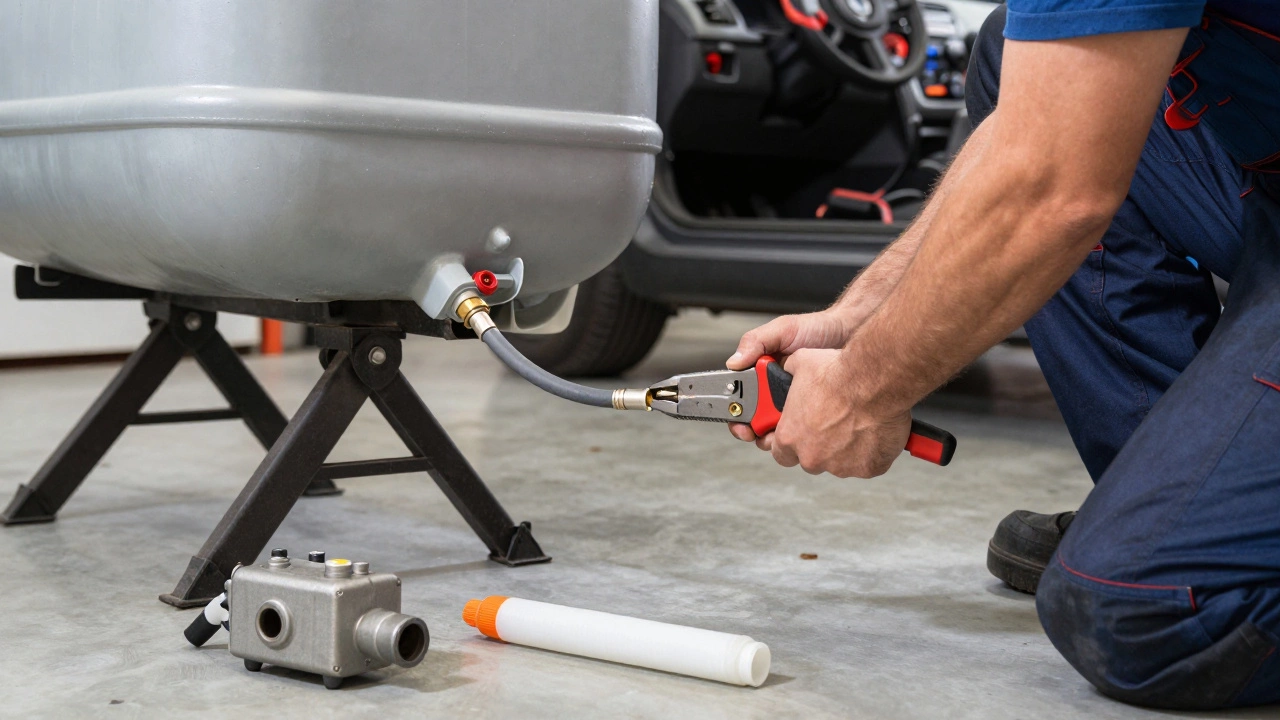
- Tools: You’ll need a fuel line disconnect tool, a torque wrench, jack stands, and possibly a tank dropping kit - around £50 if you don’t own them
- Time: 4 to 8 hours
- Risk: One mistake and you’re out £600 in fuel system damage or a fire hazard
Most people who attempt this without experience end up calling a tow truck. I’ve seen it too many times. You remove the tank, crack a fuel line, and suddenly your garage smells like a gas station. No one wants that.
What Happens If You Don’t Replace It?
A failing fuel pump doesn’t just make your car sluggish. It can kill your engine while you’re driving - especially on the motorway. No warning. No sputtering. Just silence.
And if the pump dies completely, you won’t just be stranded. You might damage other parts:
- Injectors: Starved of fuel, they overheat and clog
- Engine control unit: It keeps trying to compensate, throwing false error codes
- Carbon buildup: Poor fuel delivery leads to incomplete combustion, which gunk up the intake valves
It’s not just inconvenient - it’s expensive. A full engine cleaning after a long fuel starvation period can cost £800 or more. Replacing the pump now saves you that later.
Pro Tips If You’re Doing It Yourself
If you’ve decided to tackle it:
- Work on a cool, dry day. Gas vapors are heavier than air - they pool in low spots. Ventilate the area.
- Drain the tank to under a quarter full. Less weight, less risk.
- Use a fuel line disconnect tool. Never use pliers. You’ll crush the line and create a leak.
- Replace the fuel filter at the same time. It’s usually right next to the pump and costs £20.
- Use OEM or high-quality aftermarket parts. Cheap pumps fail faster - sometimes in under 10,000 miles.
- Apply silicone grease to O-rings and connectors. It prevents leaks and makes future removal easier.
And don’t forget to reset the fuel trim codes after installation. Most modern cars need a scan tool to clear them. Otherwise, you’ll get poor fuel economy and rough idle for weeks.
When to Call a Pro
You should call a mechanic if:
- Your car has a sealed fuel tank with no access panel
- You’re not comfortable working with fuel systems
- You don’t have a jack, jack stands, or torque wrench
- You’ve tried and failed to remove the tank
There’s no shame in it. Fuel systems are dangerous. One spark, one wrong move, and you’re in trouble. Professionals have the tools, experience, and insurance to handle it safely. And if something goes wrong, they fix it - not you.
Final Verdict
Is replacing a fuel pump a big job? Yes - for most people, it is. It’s not impossible, but it’s not a weekend project like changing oil or brake pads. It’s a full-day task with real risks. If you’re handy, have the right tools, and your car has an access panel, go for it. If not, save yourself the stress, the fumes, and the potential fire hazard. Pay for the labor. It’s worth it.
And if you’re wondering whether it’s worth replacing before it fails - yes. A fuel pump is one of those "if it’s not broken, replace it anyway" parts. Once it goes, you’re not just fixing a part - you’re fixing a whole chain of damage.
Can you drive with a bad fuel pump?
You might be able to drive short distances, but it’s risky. A failing fuel pump causes inconsistent fuel delivery, leading to stalling, rough idling, or sudden engine shutdown - especially at high speeds or under load. Driving with a bad pump can also damage fuel injectors and the engine control unit. It’s not worth the risk.
How long does a fuel pump replacement take?
For a professional mechanic, it usually takes 3 to 5 hours. For a DIYer with experience and good access, it can take 4 to 6 hours. If the tank has to be lowered, expect 6 to 8 hours. Cars without access panels take significantly longer and often require special tools.
Do you need to replace the fuel filter too?
Yes, if it’s not already been replaced recently. The fuel filter is usually located near the pump, and since you’re already removing the tank or accessing the pump, it’s a good time to swap it. A clogged filter can cause the same symptoms as a failing pump and will strain the new pump if left in place.
What causes a fuel pump to fail?
The most common cause is running the tank too low, which overheats the pump. Other causes include contaminated fuel (dirt, water, or ethanol buildup), old age, and poor-quality aftermarket pumps. Electrical issues, like a bad relay or wiring, can also mimic pump failure.
Are aftermarket fuel pumps reliable?
Some are, but many aren’t. Cheap aftermarket pumps often use lower-grade motors and seals. They may work for a few months but fail prematurely. Stick to OEM parts or brands like Bosch, Denso, or Delphi. They cost more upfront but last longer and reduce the chance of repeat repairs.