Fuel Pump Health Diagnostic Tool
Instructions: Select all symptoms you are currently experiencing with your vehicle. The tool will calculate a risk score and recommend immediate actions.
Select Symptoms
Select symptoms and click Analyze to see if your fuel pump is failing.
Diagnostic Result
Recommended Actions
Includes parts and labor for professional installation.
Your car starts fine in the morning, but by lunchtime it feels like it’s running on fumes. You check the gas gauge-it’s half full. The tank isn’t empty, yet your engine is struggling to breathe. This isn’t just bad luck; it’s likely a failing fuel pump a critical component that moves gasoline from the tank to the engine under high pressure. Ignoring these early warning signs can leave you stranded on the side of the highway or cause expensive damage to your engine.
The fuel pump is one of those parts you never think about until it stops working. It sits inside your fuel tank (in most modern cars) and pushes fuel through lines to the injectors. When it wears out, it doesn’t always die instantly. Instead, it gives you clues. Knowing what to look for can save you hundreds of dollars in towing fees and help you plan a repair before it becomes an emergency.
The "No-Start" Silence: When the Pump Won't Prime
Here is the first test you should run if your car won’t start. Turn the key to the "on" position-do not crank the engine yet. Listen closely for two to three seconds. Do you hear a faint humming sound coming from the rear of the vehicle? That hum is the fuel pump priming the system, building up pressure so the engine is ready to fire.
If you hear nothing, that is a major red flag. A silent fuel pump often means the motor has burned out or the electrical connection has failed. Before assuming the worst, check your fuse box. A blown fuel pump fuse is cheap and easy to fix. But if the fuse is good and there is still no hum, the pump itself is likely dead. This is different from a starter issue; a bad starter usually clicks or grinds when you turn the key. A dead fuel pump is quiet.
Sputtering at High Speeds: The Pressure Drop
Imagine you are merging onto the highway. You press the accelerator, expecting power, but the engine sputters and loses momentum. As soon as you ease off the gas, the car runs smoothly again. This happens because your engine needs more fuel under load. A weakening fuel pump cannot maintain the required pressure when demand spikes.
This symptom is distinct from ignition problems. If your spark plugs were bad, the car would likely misfire even at idle. Fuel pump issues typically show up when you need power. If this happens consistently above 40 mph or during acceleration, note it down. It suggests the pump’s internal gears are worn or the filter is clogged, restricting flow.
Engine Stalling Under Load
Related to sputtering is outright stalling. If your car dies while you are climbing a hill, carrying a heavy load, or accelerating hard, the fuel supply has been interrupted. The engine literally starves for fuel. Once you stop moving, the demand drops, and the pump might manage to keep the engine running at idle speed.
This is dangerous. Losing power steering and brake assist while driving makes controlling the vehicle difficult. If your car stalls unpredictably, do not ignore it. While a dirty mass airflow sensor can cause similar issues, the pattern of stalling only under stress points strongly toward fuel delivery.

Unexpected Surges in Speed
It sounds counterintuitive, but a bad fuel pump can also make your car go too fast. Have you ever kept your foot steady on the pedal, only to feel the RPMs jump suddenly? This is called "surging." It happens when the fuel pump sends irregular amounts of fuel to the engine. One moment it’s starving, the next it’s flooding.
Surging creates a jerky, uncomfortable ride. It can also trigger your check engine light. The computer detects the sudden change in air-fuel ratio and tries to compensate, but it can’t fix a mechanical pump problem. If you feel random bursts of acceleration without touching the gas, suspect the pump regulator or the pump itself.
Whining Noise from the Tank
A healthy fuel pump makes a soft whine, which is normal. However, if that whine becomes loud, high-pitched, or sounds like grinding, something is wrong. This noise often indicates that the pump is working harder than it should, possibly due to a clogged fuel filter or low fuel levels causing cavitation.
Cavitation occurs when air bubbles form in the fuel line because the pump is sucking too hard against resistance. These bubbles collapse violently, damaging the pump impeller over time. If you hear a loud roar from the rear seat area, especially when the tank is low, fill up immediately and have the pump inspected. Running on empty accelerates wear because the fuel cools and lubricates the pump.
Difficulty Starting in Hot Weather
Does your car start easily in winter but struggle after sitting in the summer heat? Heat soak is a common enemy of aging fuel pumps. When the engine bay gets hot, residual heat transfers to the fuel lines and tank. This can cause fuel vaporization, leading to vapor lock.
A weak pump struggles to push liquid fuel against this vapor pressure. You might crank the engine for ten seconds before it catches. If this happens repeatedly on hot days, your pump may be losing its ability to build sufficient pressure. Modern direct-injection engines are less prone to vapor lock, but older port-injected systems suffer frequently.
Decreased Fuel Economy
You notice you’re filling up more often. You drive the same routes, but your miles per gallon have dropped significantly. A failing fuel pump can leak internally or fail to regulate pressure correctly, causing the engine to run rich (too much fuel). This wastes gas and fouls your spark plugs.
While many things affect MPG-tire pressure, oil viscosity, driving habits-a sudden drop without any other changes warrants investigation. Check your OBDII scanner for codes related to fuel trim. Positive long-term fuel trim values indicate the computer is adding fuel because the mixture is too lean, which can happen if the pump is delivering inconsistent pressure.
| Symptom | Likely Cause | Action Required |
|---|---|---|
| No hum when turning key | Fuel pump motor or fuse | Check fuse, then replace pump |
| Sputtering at high speed | Weak pump or clogged filter | Test fuel pressure, clean/replace filter |
| Stalling under load | Inconsistent fuel delivery | Inspect pump and regulator |
| Loud whining/grinding | Pump wear or cavitation | Replace pump assembly |
| Hard start when hot | Vapor lock or heat-soak | Check fuel lines and pump seal |
How to Confirm the Diagnosis
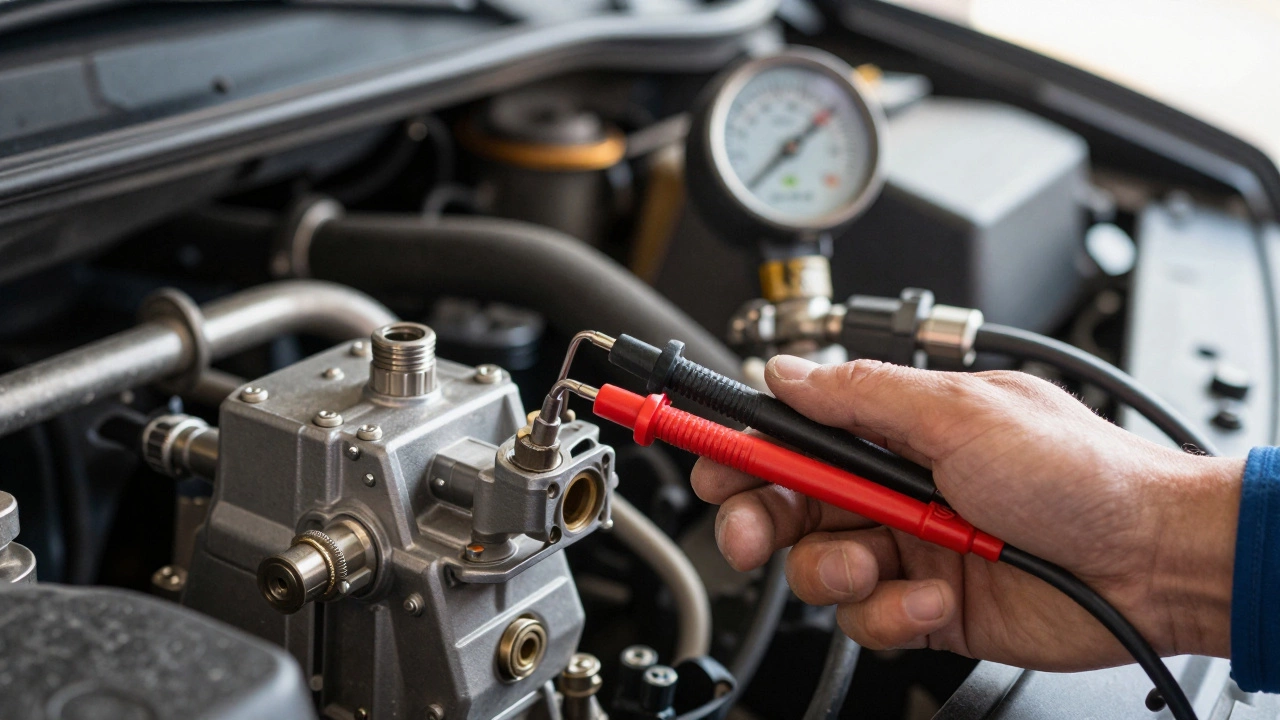
Before spending money on a new pump, verify the issue. Mechanics use a fuel pressure gauge to measure the output. Connect it to the Schrader valve on the fuel rail. Start the engine and watch the needle. Compare the reading to your car’s service manual specifications. If the pressure is below spec, or drops rapidly after shutting off the engine, the pump or the pressure regulator is faulty.
You can also perform a voltage test. Use a multimeter to check the power reaching the pump connector. If voltage is present but the pump doesn’t run, the pump is dead. If there is no voltage, the issue is electrical-check the relay, fuse, and wiring harness.
Prevention Tips to Extend Pump Life
Most fuel pumps last between 100,000 and 150,000 miles. To help yours reach that milestone, follow these simple rules:
- Keep the tank above quarter-full. The fuel cools the pump. Running on empty exposes the pump to air and heat, accelerating wear.
- Replace the fuel filter regularly. A clogged filter forces the pump to work harder, straining the motor.
- Use quality fuel. Contaminants in cheap gas can clog the pump screen and damage internal components.
- Address electrical issues quickly. Corroded connectors or loose grounds can send erratic power to the pump, causing premature failure.
Replacing a fuel pump is not a DIY job for most people because it requires dropping the fuel tank or removing the rear seat and accessing the pump module. It involves handling flammable materials and dealing with pressurized lines. Professional installation ensures proper sealing and testing, preventing leaks and ensuring safety.
How much does it cost to replace a fuel pump?
The total cost typically ranges from $500 to $1,200, depending on your vehicle. Labor accounts for a significant portion because accessing the pump is time-consuming. Luxury brands and models with complex tank designs will be on the higher end.
Can I drive my car if the fuel pump is failing?
You should avoid driving if possible. A failing pump can stall unexpectedly, leaving you stranded. Continued use can also damage the fuel injectors or catalytic converter due to incorrect fuel mixtures.
Does a bad fuel pump trigger the check engine light?
Yes, often indirectly. Codes like P0087 (Fuel Rail/System Pressure Too Low) or P0201-P0206 (Injector Circuit Malfunction) can appear. The light comes on because the engine control unit detects performance issues caused by insufficient fuel.
How long does a fuel pump last?
On average, a fuel pump lasts between 100,000 and 150,000 miles. Proper maintenance, such as keeping the tank filled and changing filters, can extend this lifespan significantly.
Is it safe to replace the fuel pump myself?
It is risky for beginners. Working near open flames or sparks with gasoline vapors is dangerous. Additionally, improper installation can lead to fuel leaks, which are a fire hazard. Professional mechanics have the tools to safely depressurize the system and install seals correctly.