Suspension Health Checker
Select the issues you are currently experiencing with your vehicle. The more issues selected, the higher the risk level.
🚗Handling & Feel
🔊Noise & Visuals
\nWaiting...
Diagnosis & Recommendations:
Have you ever driven over a small pothole and felt like your car was trying to leave the road? Or maybe your steering wheel feels loose, wandering slightly even when you’re trying to keep it straight. It’s easy to ignore these quirks at first, treating them as just part of owning an older vehicle. But ignoring your suspension system is one of the most dangerous mistakes a driver can make.
The suspension isn’t just about comfort; it’s the critical link between your tires and the road. When it fails, you lose grip, braking distance increases, and control becomes unpredictable. In Bristol, where our roads are often uneven and damp, a failing suspension can turn a routine drive into a hazardous experience. This guide cuts through the jargon to help you spot the warning signs before they become expensive repairs or safety risks.
The Bounce Test: The Quickest Way to Check Your Dampers
You don’t need a mechanic’s lift to get a good idea of your suspension’s health. Start with the bounce test. It’s simple, free, and surprisingly effective for checking your shock absorbers and struts.
- Park your car on a flat, level surface.
- Stand at one corner of the vehicle (front left, for example).
- Push down firmly on the bumper or bodywork with both hands, compressing the suspension.
- Let go quickly.
If the car bounces up and down more than once or twice before settling, your dampers are likely worn out. A healthy suspension should absorb that energy immediately, returning to its resting position in one smooth motion. If it oscillates like a jelly, the hydraulic fluid inside the shocks has degraded or leaked, meaning they can no longer control the spring’s movement. Repeat this for all four corners. Often, people replace shocks in pairs (both fronts or both rears) because uneven damping causes the car to pull to one side during braking or cornering.
Listening for Clunks, Rattles, and Squeaks
Your ears are powerful diagnostic tools. Pay attention to what happens when you drive over speed bumps, broken pavement, or even just rough city streets. A well-maintained suspension operates quietly. When components wear out, metal starts grinding against metal, or rubber bushings crack and allow parts to shift.
- Clunking noises: If you hear a heavy clunk from the front or rear when hitting a bump, it could be a worn ball joint, a loose control arm bushing, or a failing sway bar link. These parts hold your wheels in place; if they’re loose, your wheel alignment shifts dynamically while driving.
- Squeaking or creaking: High-pitched squeaks often come from worn strut mounts or dry rubber bushings. This is common in older vehicles where lubricants have dried out.
- Rattling: A metallic rattle usually points to a broken stabilizer bar link or a loose anti-roll bar end link. While not always an immediate safety crisis, it indicates the suspension geometry is compromised.
If the noise changes when you turn the steering wheel, the issue might be related to the tie rods or inner ball joints, which connect the steering rack to the suspension arms. Ignoring these sounds can lead to sudden component failure, potentially causing a wheel to detach or collapse under load.
Feeling the Road: Handling and Steering Changes
Sometimes there’s no noise, but the way the car behaves tells the whole story. Have you noticed your car diving forward sharply when you brake? That’s called brake dive, and it happens when front struts can’t support the weight transfer. Similarly, if the rear end squats excessively when you accelerate, your rear shocks are likely shot.
Cornering is another major tell. If your car feels like it’s rolling too much to the side during turns, or if you feel a vague, disconnected sensation through the steering wheel, your suspension isn’t keeping the tires planted. This is particularly dangerous in wet conditions. In the UK, where rain is frequent, tire contact patch stability is vital for preventing aquaplaning. Worn suspension allows the tires to hop and skip over imperfections, reducing traction precisely when you need it most.
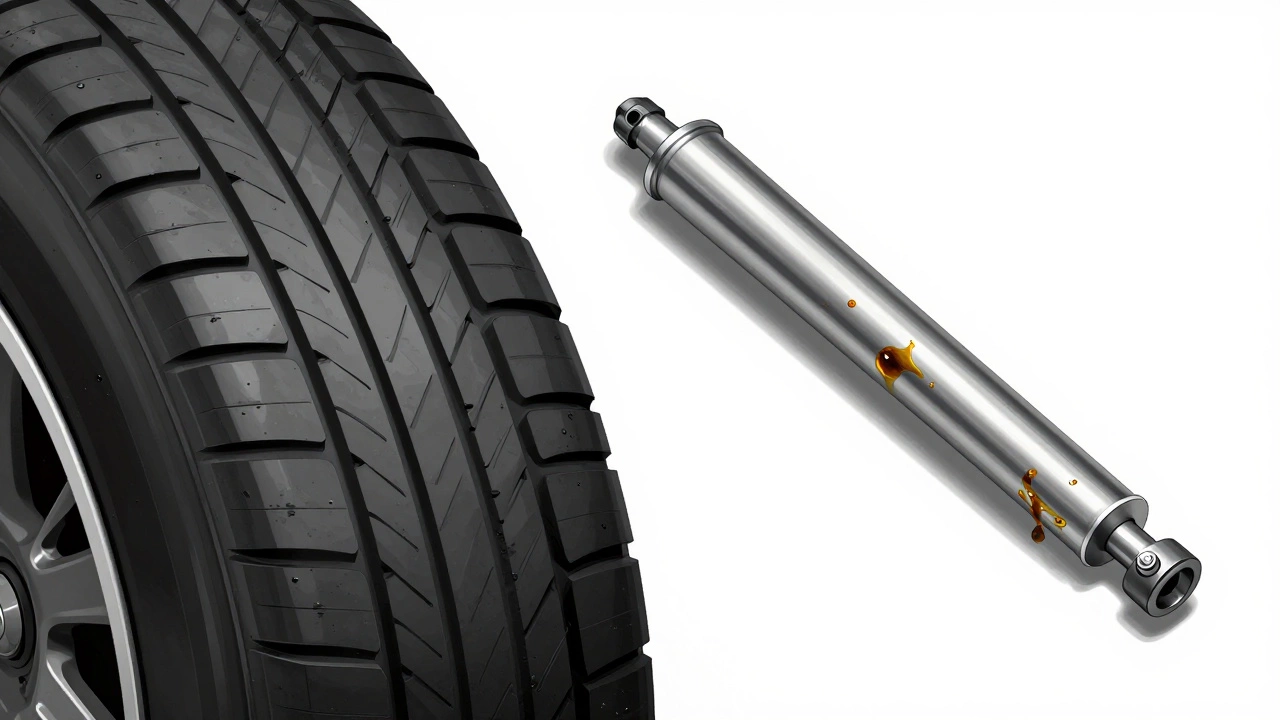
Also, watch for uneven tire wear. Pull over and inspect your tires. Do you see cupping or scalloping-patches of tread worn down deeper than others? This is a classic sign of failed shock absorbers. The tire isn’t maintaining consistent contact with the road, so it bounces, wearing specific spots repeatedly. This leads to premature tire replacement, costing you hundreds of pounds unnecessarily.
Visual Inspection: Leaks, Cracks, and Sagging
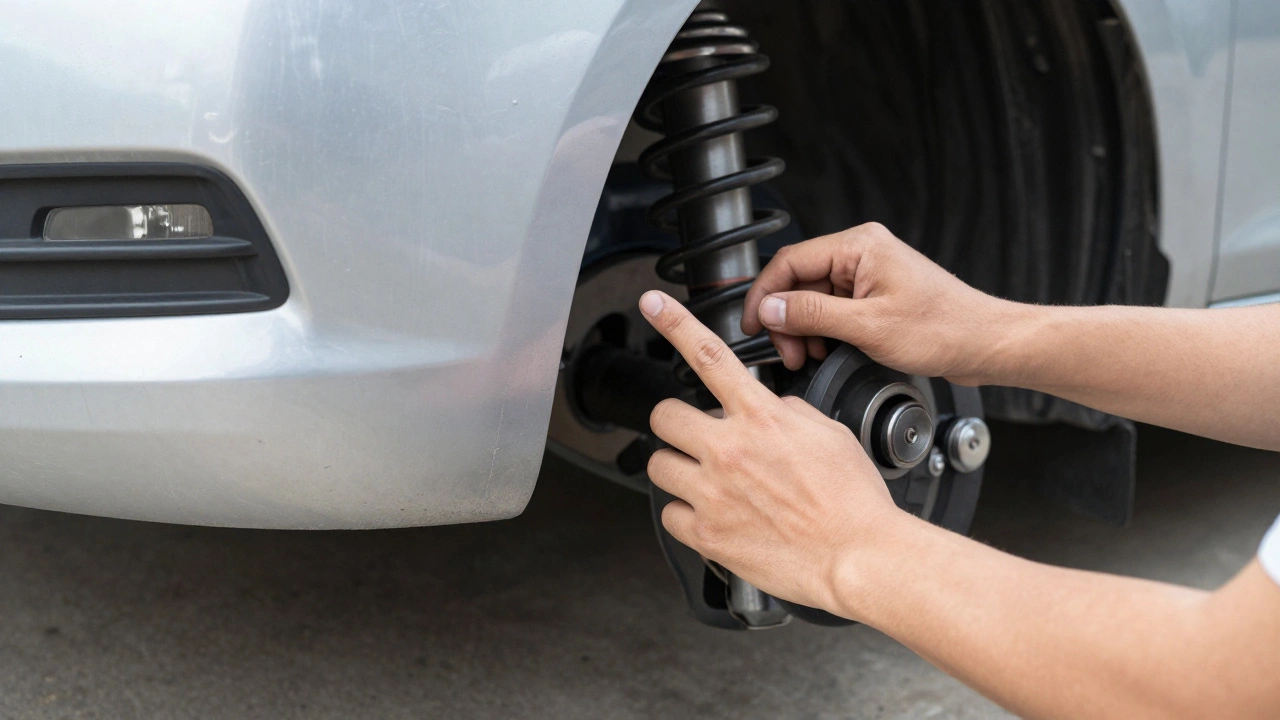
Get under the car (safely, using jack stands, never just a jack) or look closely at the wheels while parked. Visual cues are hard to miss once you know what to look for.
| Sign | Component Affected | Risk Level |
|---|---|---|
| Oil residue on shock body | Shock Absorber / Strut | High - Immediate loss of damping |
| Cracked or split rubber boots | Ball Joints / Tie Rod Ends | Medium - Contaminant ingress leads to seizure |
| Car sits lower on one side | Coil Spring / Air Spring | High - Alignment damage, tire wear |
| Bent or corroded control arms | Control Arm / Subframe | Critical - Structural integrity risk |
Look for oil leaks on the outside of your shock absorbers. Struts are sealed units; if you see grease or oil coating the chrome shaft, the internal seals have failed. Once the seal breaks, air enters the hydraulic fluid, creating bubbles that ruin the damping effect. Even if the leak seems small, the performance drop is significant.
Check the rubber bushings on your control arms. Over time, rubber dries out, cracks, and tears. You might see daylight through the bushing, or notice that the metal sleeve is exposed. These bushings isolate vibration and allow controlled movement. When they fail, you’ll feel every road imperfection in the cabin, and the suspension geometry will wander, ruining your wheel alignment.
When to Replace: DIY vs. Professional Help
Replacing suspension parts is rarely a quick job. It involves lifting the car, removing wheels, unbolting heavy components, and often dealing with rusted bolts. If you’re replacing coil-over struts, you’ll need a spring compressor tool-a device that, if used incorrectly, can launch a spring across the garage with lethal force. For this reason, many owners opt for professional installation.
However, some tasks are manageable for skilled DIYers. Replacing sway bar links or outer tie rod ends is relatively straightforward and requires basic hand tools. Always consult your vehicle’s service manual for torque specifications. Overtightening bolts can snap them later; undertightening can lead to loosening on the road.
Consider the age of your vehicle. If your car is over seven years old and has high mileage, it’s wise to replace suspension components in pairs. Mixing new shocks with old ones creates an imbalance that stresses the new parts and compromises handling. Also, always get a wheel alignment after any suspension work. New parts reset the geometry, but without an alignment, your tires will wear unevenly within thousands of miles.
Cost Considerations and Long-Term Savings
Ignoring suspension issues costs more in the long run. Worn shocks destroy tires faster. Poor handling increases the risk of accidents. And neglecting small problems like a leaking strut mount can lead to catastrophic failure of the entire strut assembly, requiring more labor-intensive repairs.
In the UK, average costs for replacing a pair of front struts range from £300 to £600 including labor, depending on the vehicle. Rear shocks are typically cheaper, around £200 to £400 per pair. Ball joints and control arms vary widely, from £150 for simple replacements to over £800 for complex multi-link setups on luxury cars.
Investing in quality parts pays off. Cheap aftermarket shocks may save money upfront but often lack the durability and precision of OEM (Original Equipment Manufacturer) or premium brands like Bilstein, Koni, or Monroe. Look for parts that meet or exceed OE standards. Reading reviews from other owners of your specific car model can also reveal common failure points and recommended solutions.
How often should suspension parts be replaced?
There’s no fixed mileage interval, as it depends on driving conditions and style. However, most shock absorbers last between 50,000 and 100,000 miles. If you frequently drive on rough roads, carry heavy loads, or tow trailers, expect shorter lifespans. Regular visual inspections every 10,000 miles can catch early signs of wear.
Can I drive with a bad suspension?
Technically yes, but it’s unsafe. Worn suspension reduces tire contact with the road, increasing stopping distances and the risk of losing control, especially in wet weather. It also accelerates wear on tires, brakes, and other suspension components. Address issues promptly to avoid higher repair bills and safety hazards.
What does a blown strut sound like?
A blown strut often produces a clunking or knocking noise when going over bumps. You might also hear a squeaking sound from the strut mount if the bearing is worn. In severe cases, you may hear a metallic scraping if the strut has bottomed out and damaged surrounding components.
Does bad suspension affect fuel economy?
Indirectly, yes. Uneven tire wear caused by poor suspension alignment increases rolling resistance, forcing the engine to work harder. Additionally, excessive bouncing wastes energy that should propel the car forward. Properly maintained suspension ensures optimal tire contact and efficient power delivery.
Should I replace all four shocks at once?
It’s recommended to replace shocks in pairs (both fronts or both rears). Replacing all four is ideal if they’re all near the end of their life. Mixing old and new shocks creates inconsistent handling characteristics, making the car unstable. Consistent damping ensures balanced braking and cornering performance.