Brake Pad Lifespan Estimator
Vehicle Maintenance ToolYour Estimation Results
Fill in the details to the left to see your brake wear estimate.
The General Mileage Expectations
If you're looking for a quick rule of thumb, most brake pads lifespan typically falls between 25,000 and 65,000 miles. However, this range is wide because your front pads do significantly more work than your rear ones. In most cars, the front brakes handle about 70% of the stopping power, meaning they usually wear out twice as fast.For a typical commuter in a suburban area, 30,000 to 50,000 miles is the sweet spot. If you live in a city like New York or London, where you're hitting the brakes every ten seconds in stop-and-go traffic, you might see them thin out by 20,000 miles. Conversely, someone who spends most of their time on open highways might push them past 70,000 miles because they rarely need to scrub off a lot of speed quickly.
Material Matters: Ceramic vs. Semi-Metallic vs. Organic
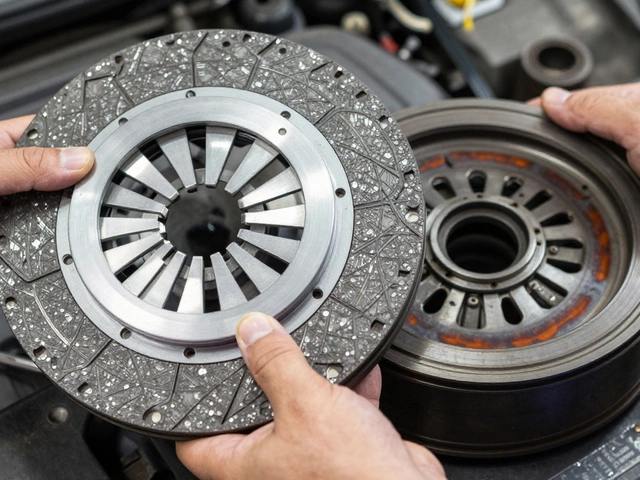
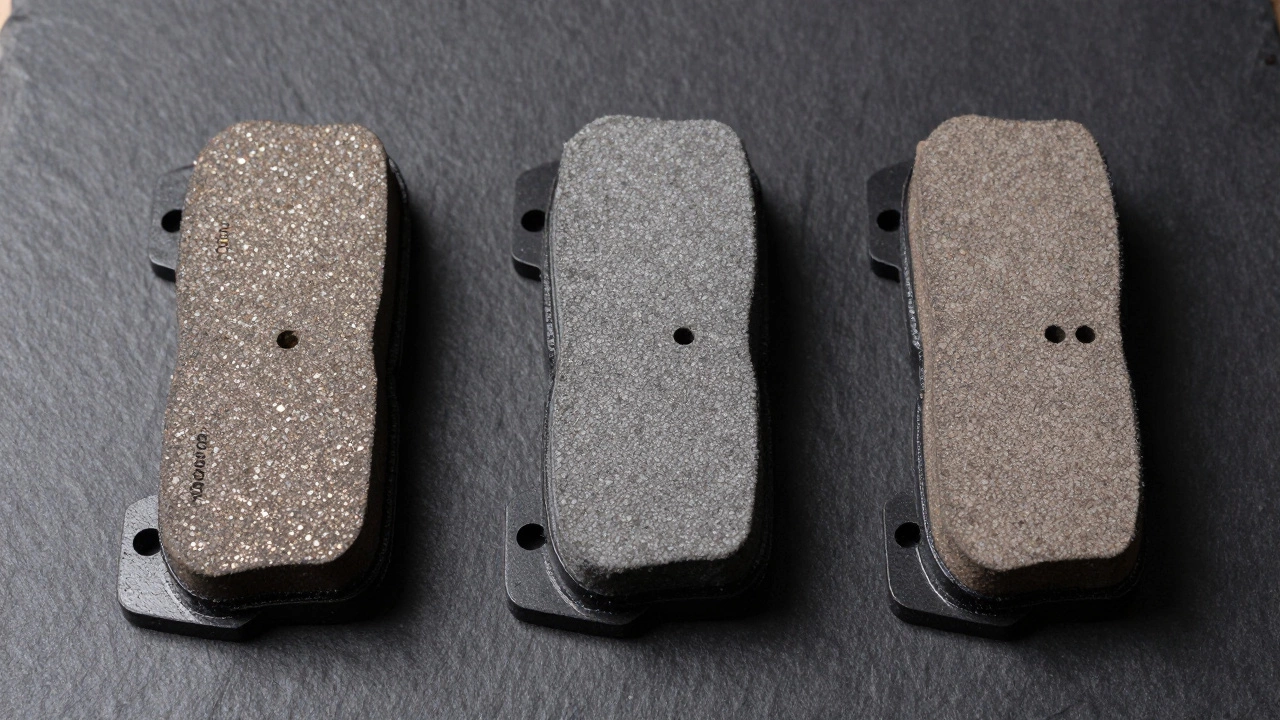
Not all pads are made of the same stuff. The composition of the pad changes how long it lasts and how it feels when you press the pedal.Semi-metallic brake pads are made from a mix of metal powders, graphite, and resins. They are tough and handle heat incredibly well, making them a favorite for heavy trucks or performance driving. However, they are abrasive and wear down your rotors faster.
Ceramic brake pads use a dense ceramic material mixed with copper fibers. They are generally quieter, produce less dust, and last longer than organic options. They are the go-to for most modern passenger cars because they provide a smooth, consistent stop without the loud squeal.
Organic brake pads, often called NAO (Non-Asbestos Organic) pads, use materials like rubber, glass, and resin. They are the quietest and cheapest but wear out the fastest. You'll rarely find these on heavy vehicles because they can't handle the heat generated by high-speed stops.
| Material Type | Average Lifespan | Noise Level | Brake Dust | Best For |
|---|---|---|---|---|
| Semi-Metallic | Medium to High | High | High | Towing / Spirited Driving |
| Ceramic | High | Low | Low | Daily Commuting / Luxury |
| Organic | Low | Very Low | Medium | Light City Driving |
What Actually Kills Your Brake Pads?
It isn't just about the miles on the odometer; it's about how those miles were spent. If you have a heavy foot, you're creating more friction, which generates more heat and grinds away the material faster.- Stop-and-Go Traffic: Constant braking in city traffic is the fastest way to eat through your pads. Every time you slow down for a red light, you're shaving off a tiny layer of material.
- Vehicle Weight: A loaded-down SUV requires significantly more force to stop than a lightweight hatchback. If you frequently carry passengers or haul equipment, your pads will wear out much sooner.
- Driving Style: Do you brake late and hard? Or do you coast toward a stop? High-pressure braking increases the heat, which can lead to "glazing"-where the pad surface becomes hard and slippery, reducing effectiveness.
- Road Conditions: Driving in sandy or salty environments (like coastal roads or winter highways) can introduce grit between the pad and the rotor, acting like sandpaper.
Signs You Need to Replace Your Pads Now
Waiting for the mileage mark is a mistake because every car is different. You need to listen to your car. Most manufacturers include a Brake Wear Indicator, which is a small metal tab that scrapes against the rotor when the pad gets thin. This creates a high-pitched squeal specifically designed to tell you it's time for a change.Aside from the noise, look for these red flags:
- The Pulsing Pedal: If you feel a vibration or a "shudder" in the brake pedal when slowing down, your Brake Rotors (the metal discs) might be warped or unevenly worn. This often happens when pads are left too long and the heat damages the disc.
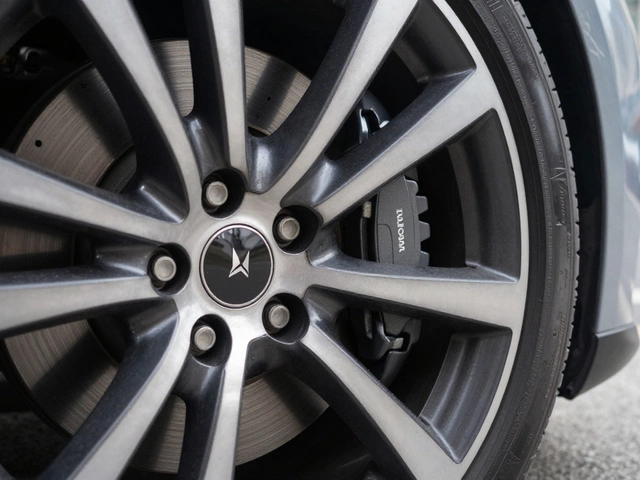
- Visual Thinning: If you look through the spokes of your wheel, you can see the pad pressed against the rotor. If the friction material looks like it's thinner than a quarter (about 3mm), you're in the danger zone.
- Sinking Pedal: If you have to push the pedal closer and closer to the floor to get the car to stop, you might have an issue with your Brake Fluid or a leak in the system, but it can also be a sign of extreme pad wear.
- Darker Fluid: While not a direct sign of pad wear, dirty or dark brake fluid suggests the system hasn't been maintained, which often correlates with neglected pads.
How to Make Your Brakes Last Longer
You can't stop physics-pads will always wear down-but you can slow the process. The biggest secret is "engine braking." When you're coming down a long hill or approaching a stop, shift into a lower gear (if you're driving a manual or have a tiptronic automatic) to let the engine's compression slow the car down. This reduces the workload on your pads.Another tip is to avoid "riding the brakes." This means keeping your foot lightly on the pedal for long periods. Instead, apply a firm, steady pressure to stop, then release completely. This allows the pads to cool down between applications. Also, keep your tires properly inflated. Under-inflated tires increase rolling resistance, which can subtly change how you interact with the brakes during a stop.
The Danger of Waiting Too Long
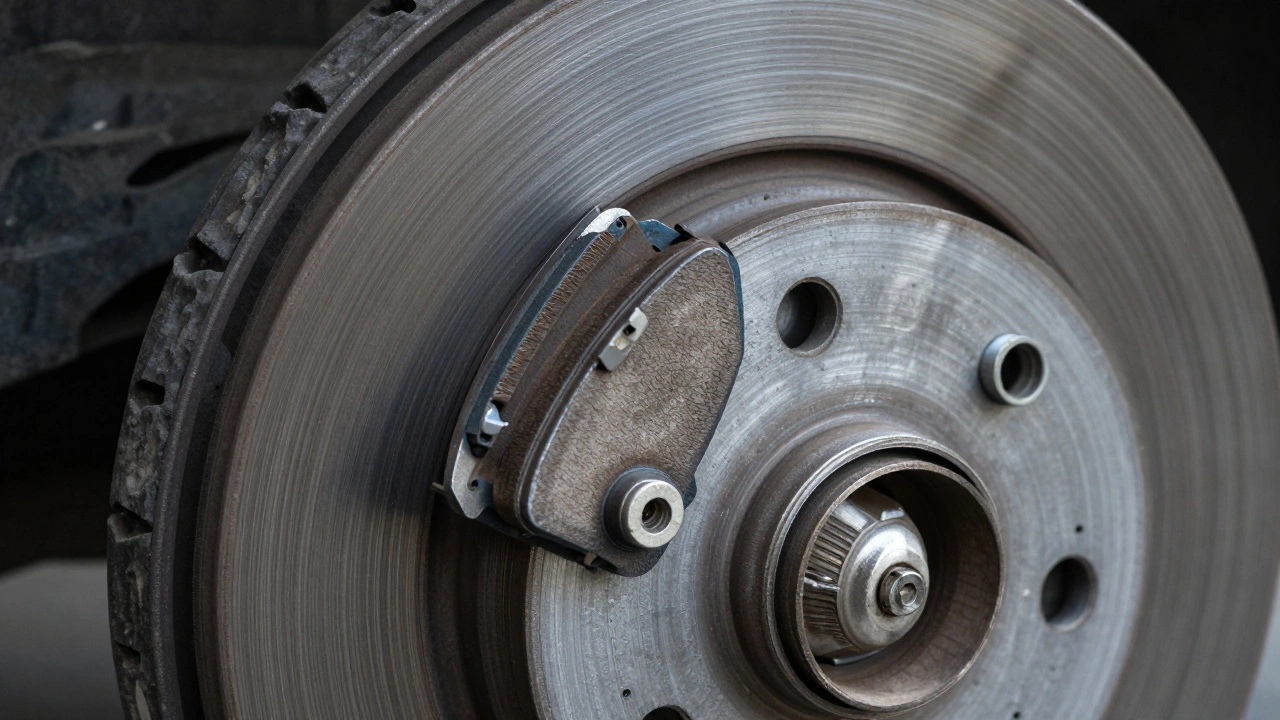
If you ignore the squealing and keep driving, you'll eventually hit "metal-on-metal." This is when the friction material is completely gone, and the metal backing plate of the pad grinds directly into the iron rotor.Once this happens, a simple pad swap becomes a much more expensive job. You'll likely need to replace the rotors entirely because they'll be scored with deep grooves. In the worst-case scenario, the heat from metal-on-metal friction can cause the rotor to crack or the Brake Caliper-the hydraulic clamp that holds the pads-to seize up. Now you're looking at a repair bill that is three or four times higher than a standard pad replacement.
Do front and rear brake pads wear out at the same time?
Almost never. Front brakes do the heavy lifting because they handle the weight shift during deceleration. It's common for front pads to be replaced every 30,000 miles while the rear pads might last 60,000 miles or more. However, on some modern cars with aggressive electronic stability control or regenerative braking in EVs, the wear pattern can vary.
Can I just replace the pads without changing the rotors?
Yes, if the rotors are still smooth and within the manufacturer's thickness specifications. A mechanic can "resurface" or turn the rotors on a lathe to make them flat again. But if there are deep grooves or a heavy lip on the edge, you'll need new rotors to ensure the new pads grip properly and don't vibrate.
Why do my new brakes squeal even though they're fresh?
This is often due to a lack of lubrication on the back of the pads or a missing anti-squeal shim. Sometimes, it's just "bedding in"-the process where the pads transfer a thin layer of material to the rotor. If the noise persists after 100 miles, a technician should check the installation.
Do electric cars (EVs) need brake pads?
Yes, they still have traditional brakes for emergency stops and high-speed braking. However, because EVs use regenerative braking (using the motor to slow down and recharge the battery), their brake pads often last significantly longer than those on gas cars-sometimes over 100,000 miles.
How often should I have my brakes inspected?
A good rule of thumb is to have them checked every time you get your tires rotated, which is usually every 5,000 to 8,000 miles. This allows you to catch thinning pads early and plan for the expense rather than dealing with a sudden failure.