Exhaust System Performance Calculator
How Exhaust Upgrades Affect Performance
Based on real dyno testing, different exhaust components produce different horsepower gains. Exhaust tips alone provide minimal benefit, while full system upgrades deliver measurable results.
Important Note: Exhaust tips alone provide minimal performance gains (typically 0-0.1 hp). Real horsepower gains come from upgrading the entire exhaust system path, not just the tip.
People often think that swapping out their stock exhaust tip for a flashy, oversized one will magically boost their car’s horsepower. You see them on Instagram - blacked-out SUVs with giant chrome tips, rumbling down the street like they’ve got 500 horsepower under the hood. But here’s the truth: exhaust tips alone do not add horsepower.
What Exhaust Tips Actually Do
Exhaust tips are purely cosmetic. They’re the last piece of metal you see sticking out from under your car. They don’t change the flow of exhaust gases. They don’t reduce backpressure. They don’t alter the tuning of your engine. They’re like putting new tires on your bike - it looks better, but it won’t make you pedal faster.
Think of your exhaust system like a highway. The exhaust gases are the traffic. The headers, catalytic converters, mufflers, and pipes are the lanes, bridges, and toll booths. The exhaust tip? That’s just the exit sign. Changing the sign doesn’t make the highway wider or less congested.
Why People Think Exhaust Tips Boost Power
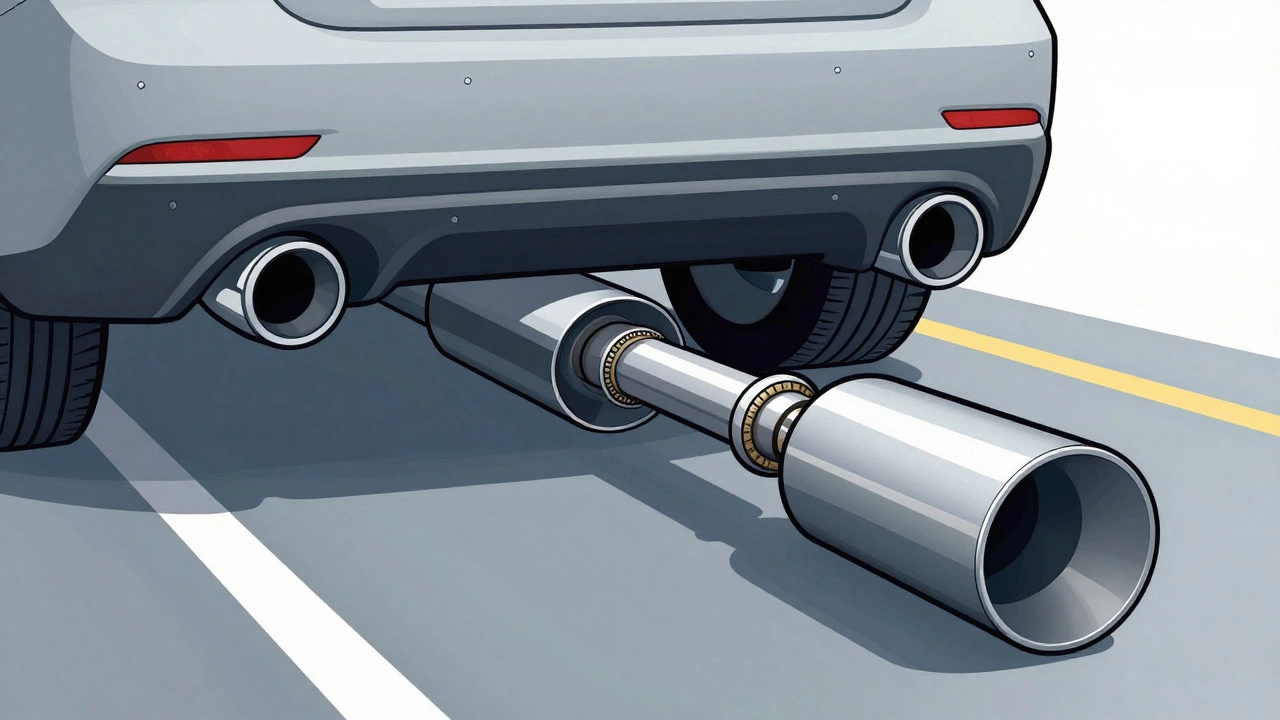
The myth started because some performance upgrades come with new exhaust tips. When you install a full cat-back exhaust system - the part from the catalytic converter all the way to the rear - you’re replacing pipes, mufflers, and sometimes resonators. That’s where real gains happen. The new tips are just a side effect. People see the new tips, hear the deeper sound, and assume the tips caused the change. But it’s the entire system doing the work.
There’s also the sound factor. A larger tip can make the exhaust note louder and deeper. That tricks your brain into thinking the car is more powerful. It’s the same reason people buy aftermarket exhausts that sound like a race car - even if they’re not actually faster.
When Exhaust Tips *Might* Have a Tiny Effect
There’s one edge case. If your stock exhaust tip is severely restricted - say, a tiny, crimped pipe that barely lets gas out - then replacing it with a larger, smoother tip *could* reduce a tiny bit of backpressure. But this almost never happens on factory cars. Modern exhaust systems are designed to flow efficiently. Even on economy cars, the stock tip is sized to match the rest of the system. Swapping it out won’t make a measurable difference in horsepower.
Real dyno tests from places like Dynojet and HP Tuners show zero horsepower gains from tip-only swaps. In one test on a 2023 Ford Mustang EcoBoost, swapping the stock 2.5-inch tip for a 4-inch dual-tip setup resulted in a 0.1 hp gain. That’s within the margin of error. No tuner would call that a performance upgrade.
What Actually Adds Horsepower to the Exhaust System
If you want real gains, you need to upgrade the parts that affect gas flow:
- Headers - Replace the factory exhaust manifolds with long-tube headers. This improves scavenging and lets exhaust exit faster.
- High-flow catalytic converters - Stock cats are designed for emissions, not flow. Aftermarket units reduce restriction.
- Performance mufflers - Less restrictive than stock units. They don’t just make noise - they let gas move more freely.
- Cat-back exhaust systems - These replace everything from the catalytic converter back. Larger diameter pipes (2.5-inch to 3.5-inch) reduce backpressure significantly.
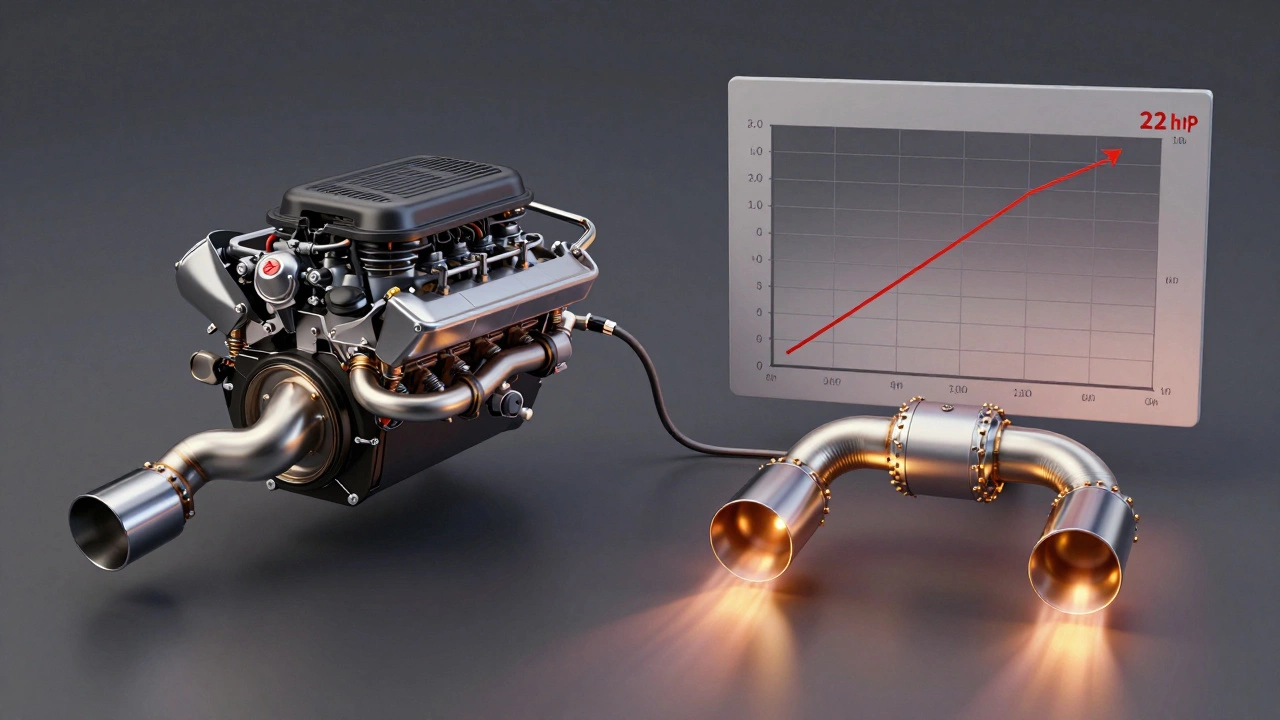
These upgrades can add 10-30 horsepower depending on the engine. A well-tuned cat-back system on a turbocharged 2.0L engine can easily gain 18 hp and 22 lb-ft of torque. That’s measurable. That’s real.
Exhaust Tips vs. Full System: A Quick Comparison
| Component | Typical Horsepower Gain | Cost Range (USD) | Sound Change | Flow Improvement |
|---|---|---|---|---|
| Exhaust Tip Only | 0-0.1 hp | $20-$100 | Moderate | None |
| Performance Cat-Back System | 10-30 hp | $600-$1,800 | Significant | High |
| Headers + Cat-Back | 25-50 hp | $1,500-$3,500 | Very Loud | Very High |
Notice how the tip-only upgrade barely moves the needle. But when you upgrade the entire path the exhaust takes - that’s where the power comes from.
What You Should Do Instead
If you want your car to perform better, don’t waste money on chrome tips. Invest in the parts that matter:
- Start with a high-flow air filter. Easy, cheap, and gives you 3-7 hp.
- Upgrade to a cat-back exhaust system. This is the sweet spot for most drivers.
- Consider a tune from a reputable shop. A good ECU flash can unlock hidden power from your existing hardware.
- Only then, if you still want a flashy look, add matching exhaust tips.
And if you’re just after the sound? Go for a performance muffler. It’ll give you that aggressive tone without the empty promise of more power.
Common Misconceptions
Here are three myths you’ll hear at car shows and YouTube comments:
- Myth: Bigger tip = more power. Truth: Bigger tip only works if the rest of the system can handle it. A 4-inch tip on a 2-inch pipe just looks silly.
- Myth: Dual tips mean double the power. Truth: Dual tips are for aesthetics. Most dual-tip systems are just one pipe split into two outlets.
- Myth: Carbon fiber tips are performance parts. Truth: They’re lightweight and stylish, but they don’t alter exhaust flow.
None of these things add horsepower. They add style. And that’s fine - if you know what you’re paying for.
Final Verdict
Exhaust tips don’t add horsepower. They never have. They never will. They’re decoration. Like a new grille or wheel upgrade. They make your car look cooler. They might make it sound meaner. But if you’re hoping for more power, you’re chasing a mirage.
Want real gains? Focus on the exhaust path - not the end cap. Upgrade the system that moves the gas. Not the part that just shows it off.
Do exhaust tips make a car louder?
Yes, but not because they’re bigger. A larger tip can let sound waves expand more freely, which can make the exhaust note deeper or slightly louder. But the real sound change comes from the muffler and pipe diameter. A tip swap alone won’t make your car noticeably louder unless the original tip was very restrictive - which is rare.
Can exhaust tips damage my engine?
No, exhaust tips cannot damage your engine. They’re passive components. They don’t affect pressure, fuel delivery, or airflow into the engine. Even if you install a tip that’s too large or too small, it won’t hurt performance or reliability. The worst that can happen is you waste money on something that does nothing.
Are stainless steel exhaust tips better than chrome?
Stainless steel tips last longer and resist rust better than chrome. Chrome tips can peel, flake, or turn brown over time, especially in wet climates. Stainless steel is more durable and needs less maintenance. But neither affects performance. It’s purely a cosmetic and longevity choice.
Do exhaust tips affect fuel economy?
No. Exhaust tips have no impact on fuel economy. Fuel efficiency is affected by engine tuning, aerodynamics, weight, and how well the exhaust system flows. Since tips don’t change flow, they won’t improve or hurt your MPG.
Should I install exhaust tips if I’m not upgrading the whole system?
Only if you like the way they look. There’s no performance benefit. If you’re planning a full cat-back upgrade later, wait until then - you can get matching tips as part of the system. Installing tips now is just spending money on something that adds zero value to how your car drives.
Next Steps
If you’re serious about performance, start with a dyno test. Find out what your car really makes before spending a dime. Then, if you want to improve it, focus on the exhaust system’s core components - not the end cap. And if you just want to look cool? Go ahead and get those tips. Just don’t fool yourself into thinking they’re making your car faster.